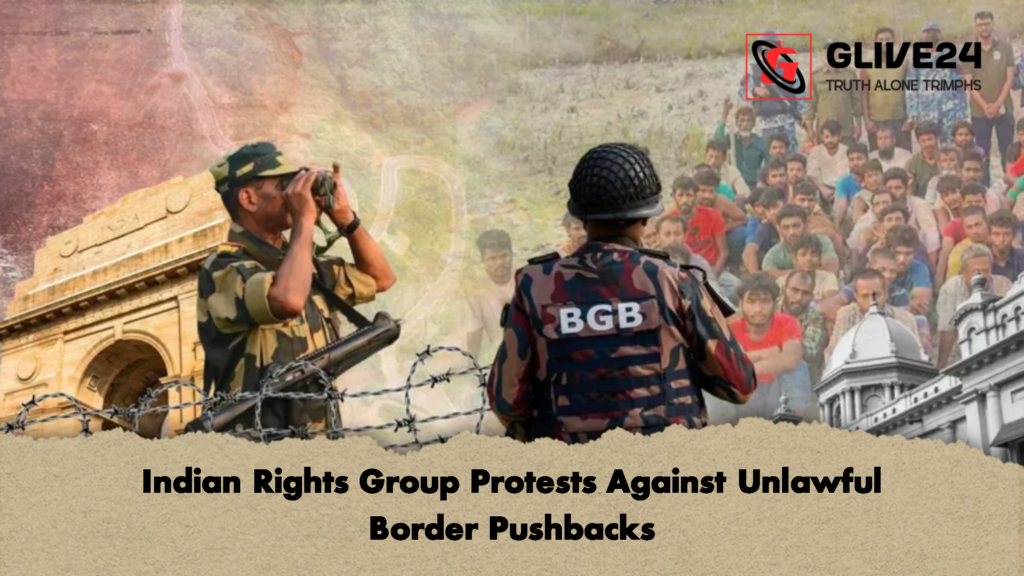
The Association for Protection of Democratic Rights (APDR), a prominent human rights organisation operating within the state of West Bengal, has formally accused the Indian Border Security Force (BSF) of executing systematic and forcible pushback operations targeted at individuals suspected of being undocumented immigrants. According to an official press release distributed by the association on Sunday, 7 June 2026, these actions have resulted in a profound humanitarian crisis along the international boundary separating India and Bangladesh. In response to what it details as widespread unlawful deportations across various frontier sectors, the prominent non-governmental body has declared its intention to orchestrate a public protest demonstration in Malda town on 11 June 2026.
The civil liberties organisation connects the present operational conduct of the border forces directly to the state-level political campaign and subsequent administrative directives of the Bharatiya Janata Party (BJP). The APDR highlights that the political entity had formally incorporated a “Detect, Deport, and Delete” protocol within its election manifesto, explicitly intending to identify and remove suspected irregular foreign nationals from the region. Following the establishment of the state administration, Chief Minister Suvendu Adhikari advanced these specific goals by facilitating structural handovers of local land allocations directly to the BSF. Additionally, the regional administration authorised the implementation of specialized holding centres, or detention camps, designed to hold individuals categorized as alleged illegal immigrants pending the execution of active deportation measures across the border.
Escalation of Frontier Standoffs and Humanitarian Concerns
The human rights body emphasizes that these rigorous administrative shifts and security directives have forced numerous individuals into critical and dangerous circumstances within the border areas. The APDR press release articulates profound institutional concern regarding the direct tactical methods deployed by the border security agency, pointing specifically to an enforcement pattern that disproportionately impacts vulnerable civilian demographics.
“The BSF is rounding up numerous individuals suspected of being Bangladeshi nationals across various parts of the state, particularly women and children,” the APDR press statement recorded. “They are transporting them to the borders of different districts and forcibly pushing them towards Bangladesh under the threat of firearms.”
Parallel to these forced movements, the human rights organisation observed that the Border Guard Bangladesh (BGB) is strictly denying entry to these populations, citing a total absence of formal identification documents or verifiable citizenship certificates. Because neither country recognizes these individuals as legal residents, substantial groups of civilians—including pregnant women and young children—are left trapped inside the demilitarized “no man’s land” or zero-point line that acts as the buffer zone between the two nations. These stranded populations are entirely cut off from regular humanitarian support networks, leaving them without consistent access to essential food items or clean drinking water whilst enduring harsh weather conditions including extreme mid-year heatwaves and heavy seasonal monsoon downpours.
Legal Discrepancies and Constitutional Violations In India
The APDR has harshly criticized the BSF for completely disavowing its institutional duties once the targeted individuals are driven past the physical frontier fencing. The Indian border agency claims that since the individuals are deemed to be undocumented foreigners, the Indian state holds no legal or moral obligation to provide for their material welfare or safety. On the other side of the boundary, the BGB asserts that no verifiable empirical proof exists to demonstrate that the stranded people hold Bangladeshi nationality, instead stating that they are Indian citizens who must remain under the administrative care of New Delhi. Consequently, these populations are left effectively abandoned between the active guard posts and firearms of the two opposing military forces.
The West Bengal rights group has categorized this continuing gridlock as a direct and harmful consequence of India’s unconstitutional “Three-D” state policy. Legal specialists affiliated with the association argue that these aggressive border operations represent an explicit violation of the fundamental constitutional safeguards granted to individuals within the sovereign territory of India, referencing two critical sections of the national constitution:
Article 14: Formally guarantees that the state shall not deny to any person equality before the law or the equal protection of the laws within the territory of India, protecting all individuals regardless of their formal nationality status.
Article 21: Explicitly protects the fundamental right to life and personal liberty, stating that no individual may be deprived of their life or personal freedom except strictly following valid procedures established by law.
Demand for Policy Reversal and International Oversight
Ranjit Sur, the Vice-President of the Association for Protection of Democratic Rights, has launched an urgent appeal demanding that the central government of India immediately cancel its active pushback practices and discard the controversial “Detect, Deport, and Delete” doctrine. The leadership of the human rights council has called upon national authorities to immediately retrieve all the individuals who have been left exposed by the security services within the international zero-point zones.
The rights group concluded its public communication by seeking direct accountability from international bodies regarding the treatment of these border populations. The APDR has filed a formal request with the United Nations Human Rights Council (UNHRC), urging the international body to open an investigation into the current actions of the security forces in West Bengal and to intervene against state policies that violate basic human rights along the international boundary line.