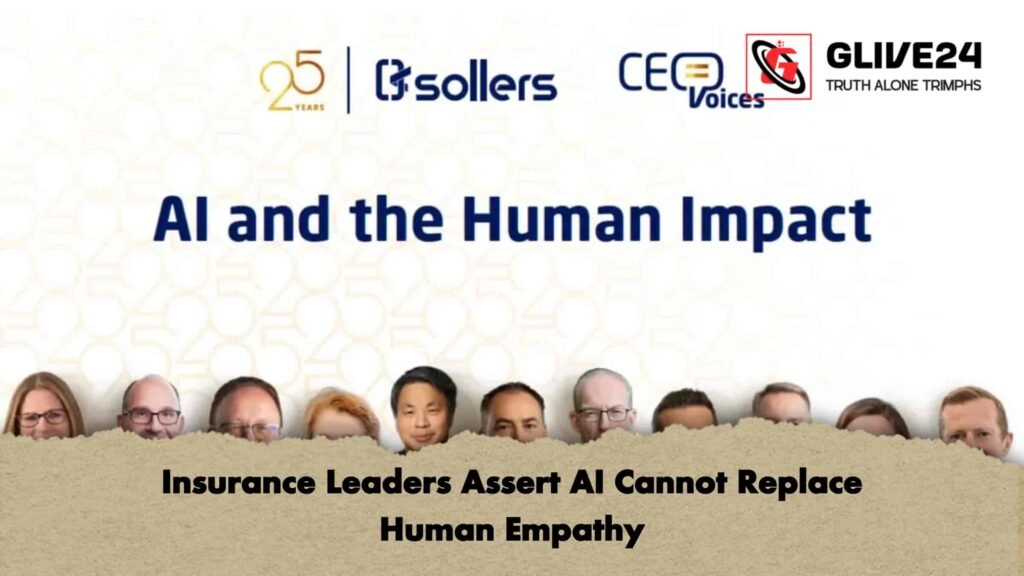
A comprehensive survey of eleven global chief executive officers, conducted by the consultancy firm Sollers, has identified artificial intelligence (AI) as the most significant technological force currently reshaping the insurance industry. The study highlights a strategic shift in how insurers interact with policyholders, stressing that while AI provides unprecedented operational efficiency, it serves as a supplement to, rather than a replacement for, human-centric values such as empathy and personalised service.
Strategic Impact Across the Value Chain
The executives interviewed represent a broad spectrum of the global market, including firms from Europe, North America, and Australia. They collectively emphasised that AI’s influence now permeates the entire insurance value chain. This includes the modernisation of underwriting processes, the refinement of pricing models, and the acceleration of claims handling.
Michal Trochimczuk, President and Co-founder of Sollers, noted that the technology’s primary advantage lies in its ability to process vast quantities of unstructured data. He asserted that future competitiveness will depend heavily on cost control, which necessitates targeted investment in:
-
Intelligent risk selection and predictive analytics.
-
Modernised rating systems and simplified IT architectures.
-
The automation of standard administrative functions.
Participating Chief Executives in the Sollers Study
The research incorporated perspectives from the following industry leaders:
| Executive Name | Organisation | Region |
| Frank Walthes | VKB | Germany |
| Andrew Horton | QBE | Australia |
| Simon Wilson | Markel Insurance | USA |
| Jean-Daniel Laffely | La Vaudoise | Switzerland |
| Ken Norgrove | Intact UK&I | UK & Ireland |
| Isabelle Le Bot | La France Mutualiste | France |
| Agnès Paquin | CNP Assurances | France |
| Andrej Slapar | Triglav | Slovenia |
| Dr Jürg Schiltknecht | Helvetia Germany | Germany |
| Brenda Gibson | Red River Mutual | Canada |
| Marcus Ryu | Battery Ventures | USA |
The Preservation of Personalisation
A central finding of the study is the unwavering importance of face-to-face interaction. The CEOs maintained that as AI becomes embedded in product design and customer interaction, its role must be to enhance the personalisation of services. The consensus among these leaders is that technology should alleviate the burden of data processing, thereby allowing insurance professionals to dedicate more time to empathetic communication and complex problem-solving for clients.
Future Outlook
The Sollers report suggests that AI will eventually be integrated into every aspect of the industry, from initial risk management to the final automation of claims. However, the participating executives concluded that the industry’s long-term success remains tethered to its ability to maintain a human connection. By balancing automated efficiency with traditional personalised service, insurers aim to navigate the technological transition without compromising the trust and emotional intelligence that define the sector.