
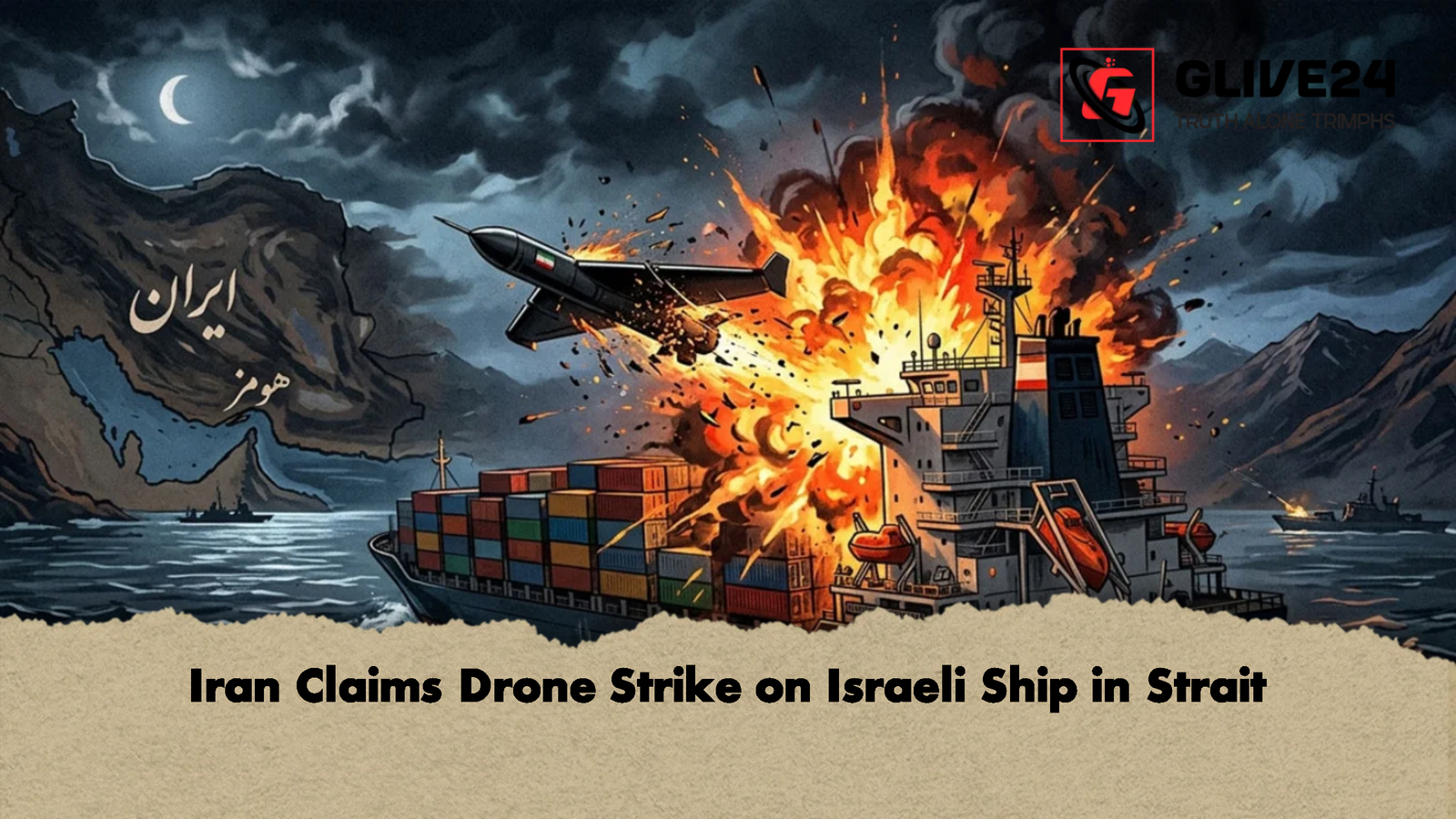
Iran’s Islamic Revolutionary Guard Corps (IRGC) has claimed responsibility for an attack on a vessel allegedly linked to Israel in the strategically vital Strait of Hormuz, one of the world’s most critical maritime routes for global energy supplies.
According to Iran’s state media, citing the IRGC naval commander, the incident involved a drone strike targeting a commercial ship identified as having Israeli affiliations. The vessel reportedly caught fire following the attack, although independent verification of the extent of the damage remains limited at this stage.
The ship has been named by the IRGC as MSC Ishika, a claim that has not yet been independently confirmed by international maritime authorities or the company operating the vessel.
The Strait of Hormuz, located between the Persian Gulf and the Gulf of Oman, is a narrow but highly significant waterway through which a substantial portion of the world’s crude oil and liquefied natural gas shipments pass daily. Any disruption in this corridor is closely monitored by global markets due to its potential impact on energy prices and supply stability.
Table of Contents
IRGC statement and reported attack
In its statement, the IRGC said its naval forces had carried out a targeted drone strike against what it described as an Israeli-associated ship. Iranian state broadcasters reported that the vessel was struck while transiting the region and subsequently caught fire.
The IRGC did not immediately provide detailed coordinates of the incident or confirm whether there were any casualties among the crew. No independent naval authority in the region has yet confirmed the sequence of events described by Tehran.
Iran has frequently accused Israel of conducting covert operations against its interests, while Israel has similarly blamed Iranian-backed groups for maritime and regional security threats. The Strait of Hormuz has previously been a flashpoint for tensions involving Iran, Gulf states, and Western naval forces.
Strategic importance of the Strait of Hormuz
The Strait of Hormuz is widely regarded as one of the most sensitive maritime chokepoints in the world. It connects major oil-producing countries in the Gulf with international shipping routes, making it a crucial artery for global energy security.
| Key Feature | Details |
|---|---|
| Location | Between Iran and Oman |
| Connected waters | Persian Gulf and Gulf of Oman |
| Global significance | Major oil and LNG transit route |
| Strategic concern | Frequent geopolitical tensions |
Even minor disruptions in the strait can trigger fluctuations in global oil prices, prompting heightened security patrols by international naval forces, including Western fleets stationed in the region.
Regional tensions remain high
The reported incident comes amid ongoing geopolitical tensions in the Middle East, where maritime security has repeatedly been tested by drone strikes, seizures of vessels, and military standoffs.
While Iran has claimed responsibility for the attack, no corroborating evidence has yet been presented by independent observers. Maritime tracking organisations and international shipping authorities are expected to review vessel data to determine the accuracy of the claim.
The identity of the ship, MSC Ishika, and its alleged connection to Israel has also not been independently verified, leaving significant uncertainty surrounding the incident.
Global reaction awaited
As of now, there has been no official response from Israeli authorities or the operator of the vessel. International shipping agencies are expected to monitor the situation closely, particularly given the risk of escalation in an already volatile maritime corridor.
Analysts warn that any confirmed attack on commercial shipping in the Strait of Hormuz could have wider implications for global trade, insurance costs, and energy markets, especially if tensions between Iran and Israel continue to intensify.