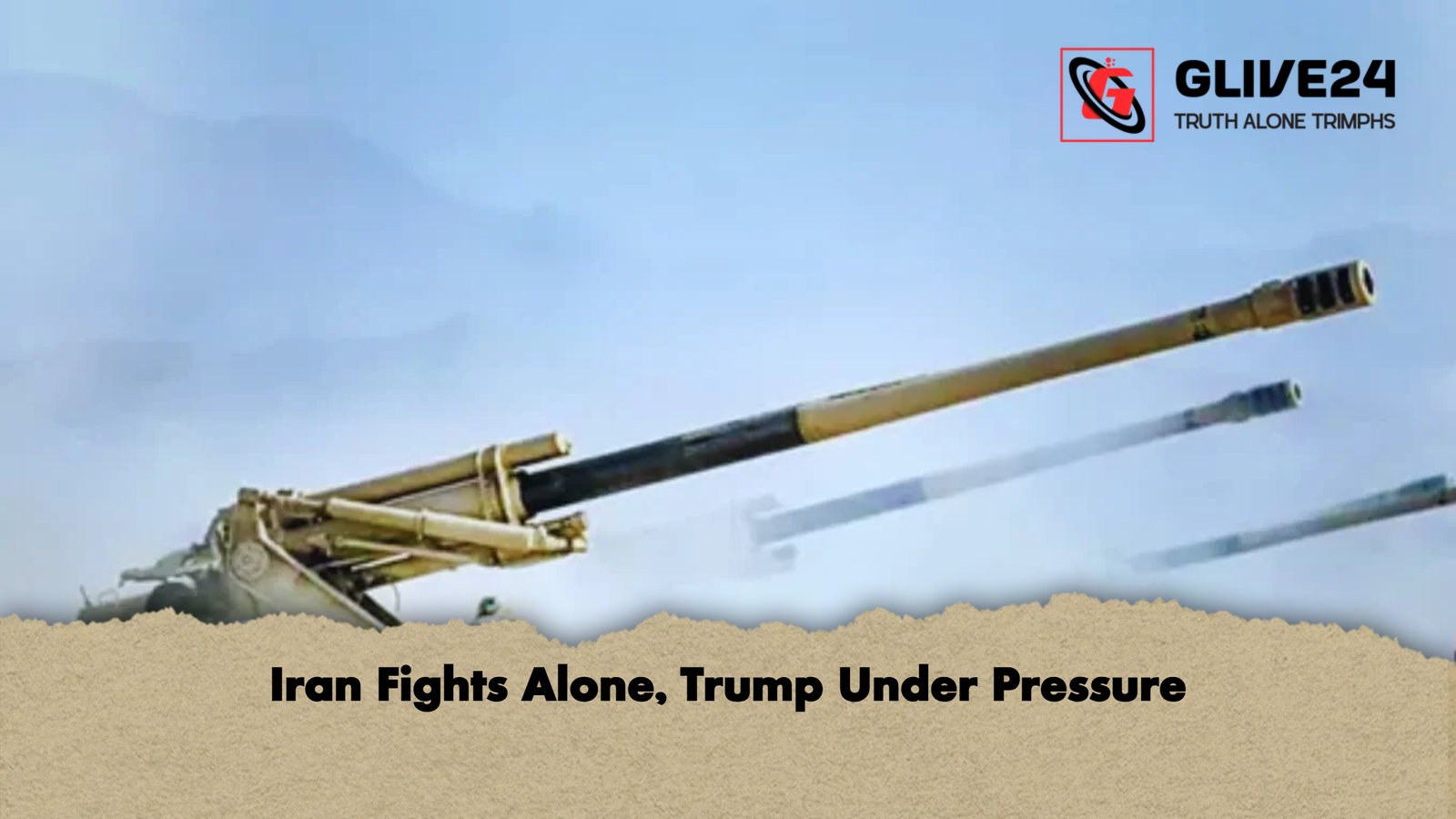
Iran, under the leadership of Supreme Leader Ayatollah Ali Khamenei, is waging a solitary struggle against some of the world’s most formidable powers and their regional allies. On one side stands the technologically advanced military of the United States; on the other, the heavily armed Israeli forces, which dominate parts of the Middle East. Armed with strategic weaponry and tactical acumen, Tehran continues its fight despite mounting assaults.
Even on the fifth day of hostilities, widespread bombings have struck Tehran and surrounding cities. Reports from international media indicate that deafening explosions were heard across multiple locations on Wednesday. The intensifying attacks have caused Iranian casualties to rise sharply. The US-based human rights organisation, Human Rights Activist News Agency (HRANNA), has reported that at least 1,100 people have died.
Meanwhile, an Iranian vessel off the coast of Sri Lanka was targeted by a submarine attack, resulting in 78 injuries and 100 individuals reported missing. Both the United States and Israel have deployed substantial troops in the Middle East, with Washington confirming 50,000 personnel engaged, while Israel has announced a deployment of 100,000 troops. While the US claims Iran’s military capability is diminishing, Iran’s Revolutionary Guard Corps (IRGC) asserts that advanced weaponry remains intact and operational.
Iran has launched continued missile strikes against US bases in the region and Israeli targets. On Tuesday night, Tehran fired ballistic missiles at Israel’s capital, while simultaneously attacking US-linked sites in Qatar and the United Arab Emirates. Saudi Arabia’s CIA station was also targeted, prompting strong warnings and pledges of retaliation from Riyadh.
The conflict has strained President Donald Trump, whose administration has spent $2 billion within the first four days of the war. Congressional Democrats have accused him of misusing the War Powers Resolution, and Congress is set to convene to consider measures limiting his authority. Only 25% of Americans reportedly support Trump’s military actions in Iran, according to a recent Reuters poll, signalling growing domestic disapproval that could impact his prospects in the upcoming midterm elections.
The hostilities have also unsettled global markets. Brent crude prices surpassed $85 per barrel for the first time since July 2024, while European natural gas prices surged due to disrupted Middle Eastern exports and threats to the strategically critical Strait of Hormuz, through which approximately one-fifth of the world’s energy supply passes.
Key Statistics of the Conflict
| Metric | Detail |
|---|---|
| Iranian casualties | 1,100 dead (HRANNA) |
| Injured in Sri Lanka attack | 78 |
| Missing in Sri Lanka attack | 100 |
| US troops deployed | 50,000 |
| Israeli troops deployed | 100,000 |
| Iranian naval losses | 17 ships (including a submarine) |
| US military assets in operation | 200 aircraft, 2 aircraft carriers, over 50,000 personnel |
| Brent crude price | $85+ per barrel |
| Duration of current conflict | 5 days |
Iran continues to assert control over the Strait of Hormuz, maintaining a defiant stance against a coalition of American, Israeli, and European forces. Analysts warn that the conflict could escalate further, with both regional and global ramifications.