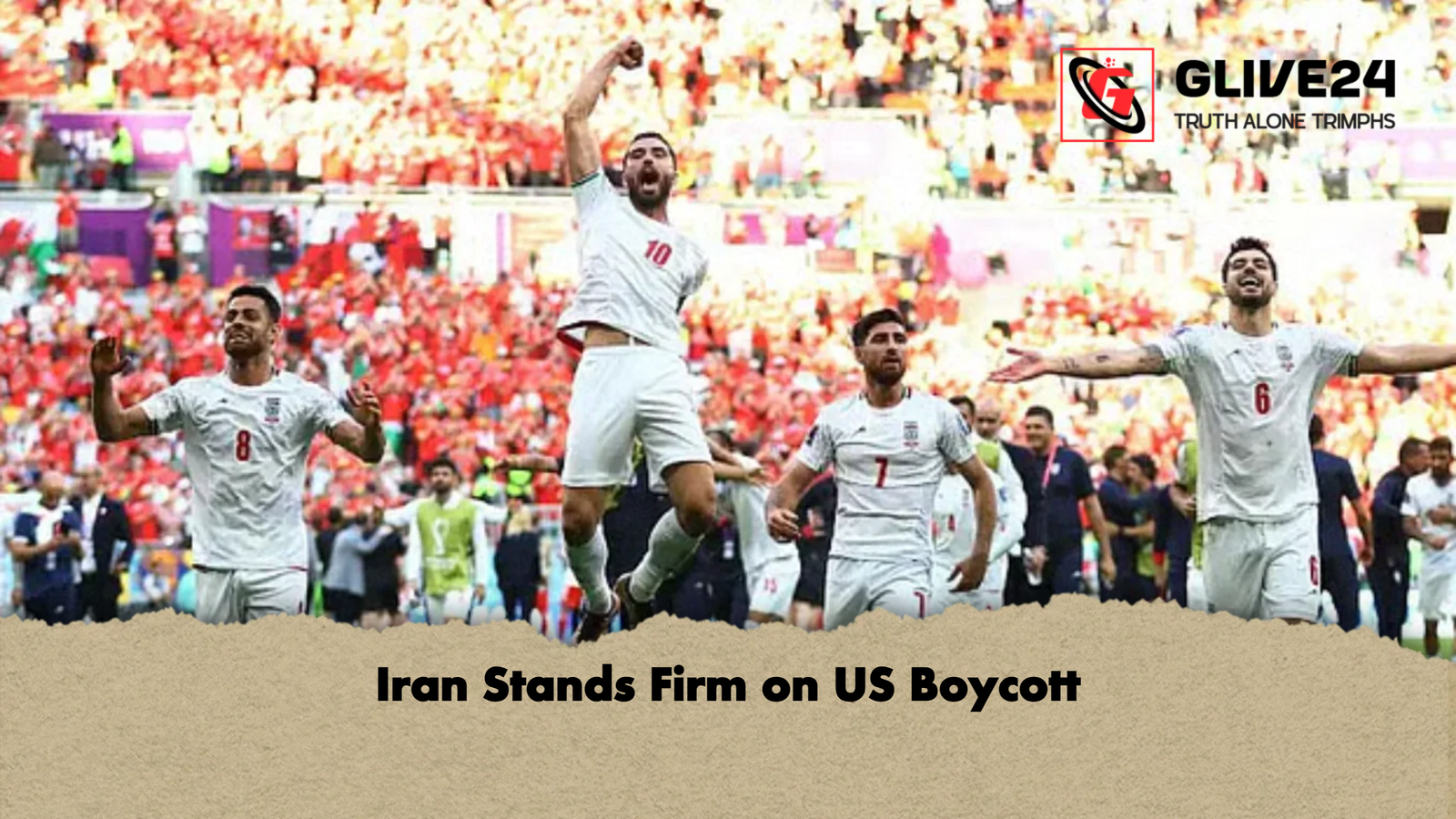
Iran has reiterated its determination to participate in the upcoming FIFA World Cup while refusing to play matches on United States soil, intensifying the intersection of sport and geopolitics ahead of the global tournament. The president of the Iranian Football Federation, Mehdi Taj, made the country’s position unmistakably clear, declaring that Iran would boycott the United States but not withdraw from the World Cup itself.
The 2026 FIFA World Cup, scheduled to take place from 11 June to 19 July, will be jointly hosted by United States, Mexico, and Canada. Iran secured qualification early, underlining its consistent presence in recent editions of the tournament. However, renewed political tensions between Tehran and Washington since late February have cast uncertainty over logistical arrangements for the Iranian team.
According to the official fixture list released by FIFA, Iran is due to play all three of its group-stage matches in the United States. Two fixtures are scheduled in Los Angeles, with the third set to be held in Seattle. Iran’s group opponents include New Zealand, Belgium, and Egypt. Nevertheless, the Iranian federation has formally requested that these matches be relocated to Mexico, citing security concerns and political sensitivities.
The proposed changes are summarised below:
| Opponent | Scheduled Venue (USA) | Proposed Venue |
|---|---|---|
| New Zealand | Los Angeles | Mexico |
| Belgium | Los Angeles | Mexico |
| Egypt | Seattle | Mexico |
Despite the diplomatic strain, Iran’s on-field preparations continue uninterrupted. The national squad is currently training in Antalya, Turkey, where it is participating in a four-nation invitational tournament. Iran is set to face Nigeria on 27 March and Costa Rica four days later. Originally planned to be hosted in Jordan, the competition was relocated to Turkey due to instability in the Middle East, highlighting the broader regional challenges affecting sporting events.
Off the pitch, further controversy has emerged involving Iran’s women’s national team during their participation in the AFC Women’s Asian Cup in Australia. Concerns over player safety prompted the host nation to offer asylum to members of the squad. Although seven players initially considered the offer, only two ultimately chose to remain, while the others returned to Iran after an extended journey. Upon their arrival, they were personally received by Mehdi Taj, underscoring the sensitivity of the situation.
The geopolitical dimension has been further complicated by remarks from the President of the United States, Donald Trump. He publicly encouraged Australia to offer asylum to Iranian players and suggested that there could be concerns regarding their safety should they travel to the United States for the World Cup. Although he later clarified that no threats would originate from the US government, Iranian officials have cited these comments as justification for their request to relocate matches.
Meanwhile, Mexico’s president, Claudia Sheinbaum, has indicated her country’s willingness to host Iran’s June fixtures if required. However, the ultimate decision lies with FIFA, which has stated that it remains in communication with the Iranian federation while expressing its expectation that the tournament will proceed according to the official schedule announced on 6 December 2025.
From a governance perspective, player welfare has become a central concern. The global players’ union, FIFPRO, has emphasised that ensuring the safety and security of all participants is a fundamental responsibility of FIFA. Its president, Bo Busch, stressed that safeguarding human rights must remain a core institutional obligation, encompassing not only players but also supporters attending the tournament.
As tensions persist, Iran’s stance reflects a careful balancing act between political principle and sporting ambition. While firmly rejecting participation in matches hosted by the United States, the nation remains committed to competing on football’s grandest stage, leaving FIFA with a complex challenge in reconciling diplomacy, security, and the integrity of the tournament.