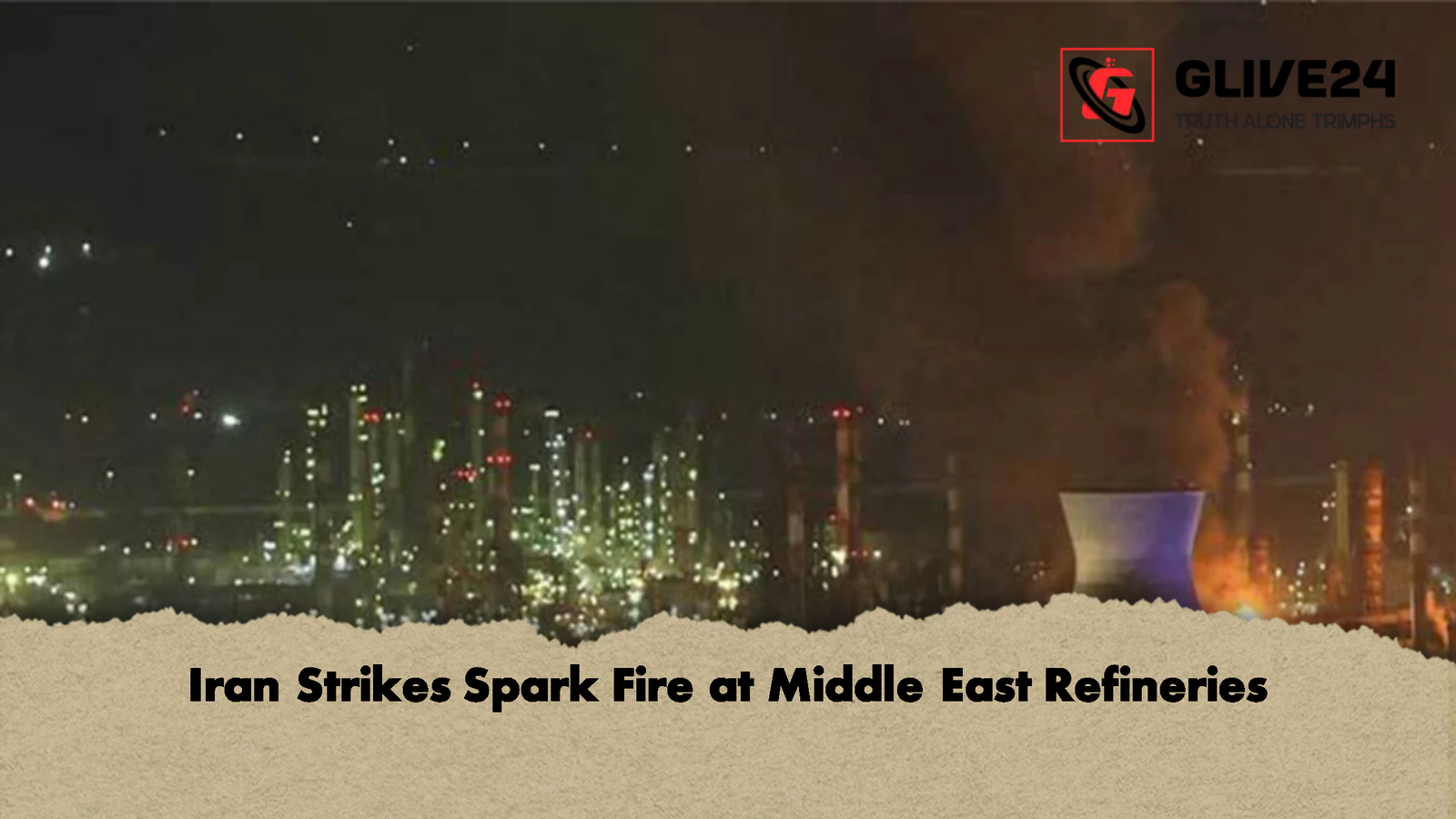
A missile strike attributed to Iran has ignited a fire at a major oil refinery in Haifa, Israel, raising renewed concerns about regional energy security and intensifying tensions in the Middle East. Preliminary reports indicate that missile debris struck the facility, producing visible smoke and igniting a blaze.
As of Thursday night, 19 March 2026, authorities have not confirmed whether the fire has been fully contained. The attack triggered immediate alerts across northern and central Israel, including Jerusalem, where sirens sounded shortly after news of the incident. No casualties have been reported, and the full extent of the material damage remains unclear.
This marks a repeat of last year’s escalation during the 12-day Israel–Iran–US conflict, when the Haifa refinery was similarly targeted, highlighting its strategic importance to Israel’s energy infrastructure.
Simultaneously, in Kuwait, a drone strike struck the Mina Abdullah refinery in the south of the country, triggering a major fire. The Kuwait Petroleum Corporation (KPC) confirmed the operational unit impacted by the drone was severely affected, though no injuries were reported. A prior drone strike had also targeted the Mina Al Ahmadi refinery, causing fire but no casualties.
On Wednesday morning, Israel reportedly launched an airstrike on Iran’s South Pars gas field, one of the world’s largest gas complexes, with portions located in Qatar. In retaliation, Saudi Arabia, Qatar, Kuwait, and the United Arab Emirates carried out counter-attacks on Iranian energy infrastructure. Some sections of Qatar’s Ras Laffan LNG complex caught fire during these strikes, underscoring the vulnerability of regional energy hubs.
Security analysts warn that this rapid succession of attacks could escalate into a “fuel war,” with serious implications for global oil and gas markets. The continued targeting of refineries and petrochemical facilities threatens to disrupt supply chains, potentially driving volatility in international fuel prices.
Recent Middle East Energy Attacks: Key Summary
| Date | Country | Facility | Type of Attack | Impact / Notes |
|---|---|---|---|---|
| 19 Mar 2026 | Israel | Haifa Oil Refinery | Missile strike | Fire reported; extent of damage unclear; no casualties |
| 19 Mar 2026 | Kuwait | Mina Abdullah Refinery | Drone strike | Fire erupted; operational disruption; no injuries |
| Prior | Kuwait | Mina Al Ahmadi Refinery | Drone strike | Fire reported; no casualties |
| 18 Mar 2026 | Iran / Qatar | South Pars Gas Field | Airstrike by Israel | Damage to petrochemical complex; part located in Qatar |
| 18 Mar 2026 | Qatar | Ras Laffan LNG Complex | Iranian missile retaliation | Fire in some sections; no casualties |
The incidents illustrate the fragility of the Middle East’s critical energy infrastructure and highlight the potential global consequences of sustained regional hostilities. Governments and energy operators are reportedly stepping up security measures to safeguard refineries and prevent further disruption, while analysts continue to monitor potential effects on oil prices and international energy markets.