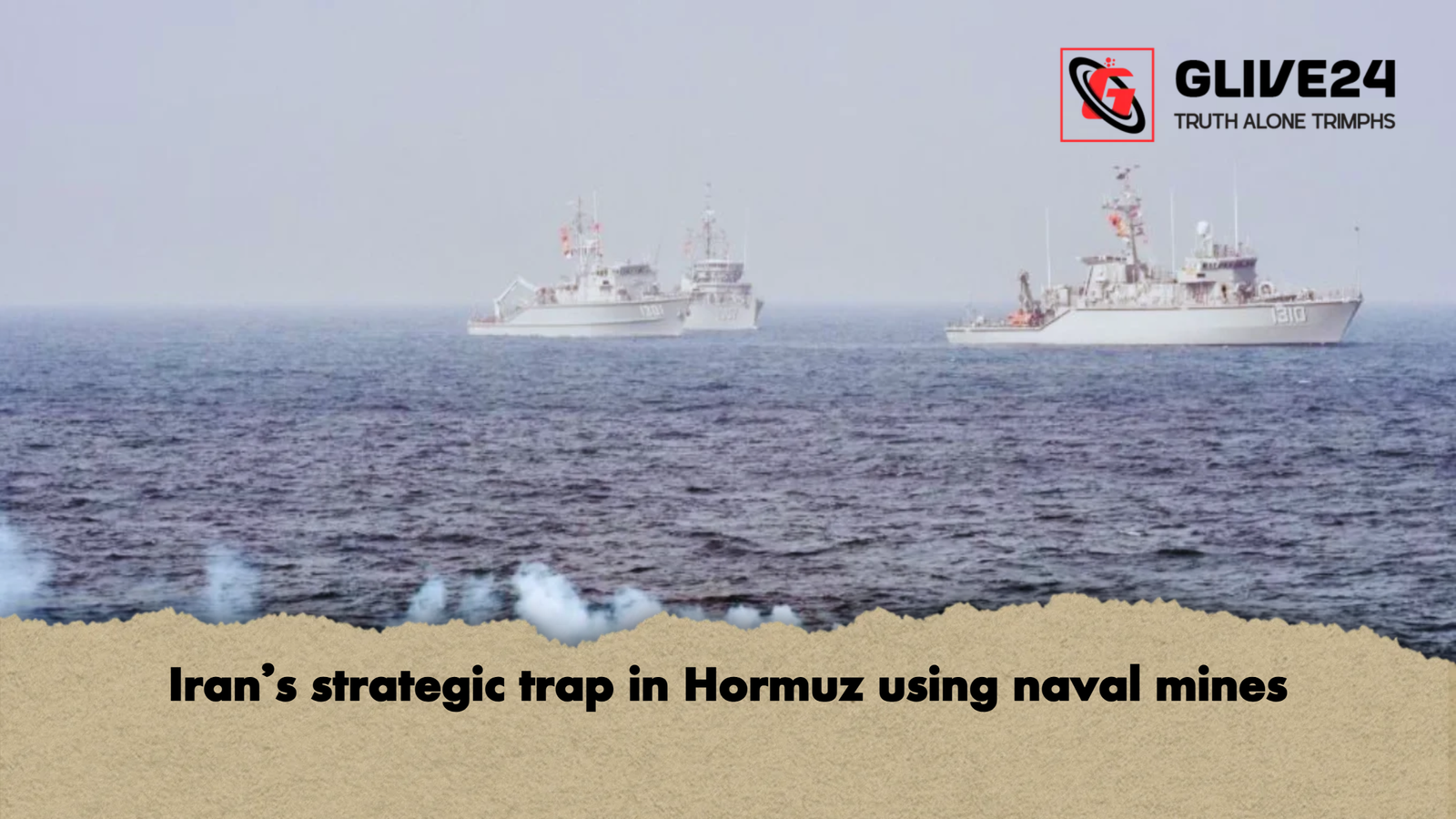
Fresh concerns have emerged over the security of the Strait of Hormuz, one of the world’s most critical maritime chokepoints, amid reports that Iran has deployed naval mines in the region. The development has raised alarms across global energy markets and international shipping corridors, with analysts warning of potentially far-reaching consequences even if the scale of deployment remains limited.
Iran’s Islamic Revolutionary Guard Corps (IRGC) has allegedly positioned at least a dozen advanced naval mines in the strategic waterway. Identified as “Maham-3” and “Maham-7”, these mines are believed to be equipped with modern sensing technologies capable of detecting nearby vessels and detonating upon approach. Such systems are designed not merely for defensive purposes but also to exert strategic control over maritime traffic.
Several American media outlets have suggested that the mines were deployed before the expiration of a two-day ultimatum issued by former US President Donald Trump, specifically around 23 March. However, the precise number and distribution of these devices remain unconfirmed. Defence analysts emphasise that even a small number of strategically placed mines could significantly disrupt shipping operations.
The importance of the Strait of Hormuz to global energy supplies cannot be overstated. It serves as a vital conduit for oil exports from the Persian Gulf to international markets. The following table highlights its strategic significance:
| Key Metric | Estimated Figure |
|---|---|
| Share of global oil transit | প্রায় ২০% |
| দৈনিক তেল পরিবহন | প্রায় ২০ মিলিয়ন ব্যারেল |
| প্রধান সংযোগ | পারস্য উপসাগর থেকে বিশ্ববাজার |
Experts suggest that the mines have not been scattered randomly but positioned with precision in key transit zones. This implies that Iran may be seeking to create a controlled maritime environment—allowing selective passage while retaining the capability to disrupt or block routes if necessary. Such a strategy enables influence without triggering a full-scale closure of the strait.
There are also indications that the mines have not been placed close to Iranian territorial waters. Instead, speculation points to deployment near high-traffic international shipping lanes, possibly closer to the waters off Dubai. This would maximise their disruptive potential while complicating detection and clearance efforts.
Naval historian John Bulkley remarked that controlling global oil flows can serve as a powerful geopolitical lever, often eliminating the need for direct military confrontation. His observation underscores the broader strategic implications of the reported deployment.
Although no vessel has yet been confirmed to have struck a mine, the perceived threat alone has already had tangible effects. Several shipping companies have reportedly reduced their use of the route, while insurance premiums for vessels operating in the area have begun to rise sharply. Additionally, recent drone-related incidents attributed to Iran have further heightened caution among maritime operators.
In response, a number of Western powers—including the United States, the United Kingdom, and France—are closely monitoring the situation and may coordinate efforts to ensure the নিরাপত্তা of the strait. Japan has also signalled its willingness to assist if required. Retired US General Jack Keane has urged heightened vigilance, noting the challenges of dealing with a state actor whose past conduct has often been viewed with suspicion.
For now, the Strait of Hormuz remains open. However, it is no longer perceived as entirely secure. With tensions simmering and strategic assets reportedly in place, even a minor incident could trigger significant volatility in global oil markets, underscoring the fragility of this crucial maritime artery.