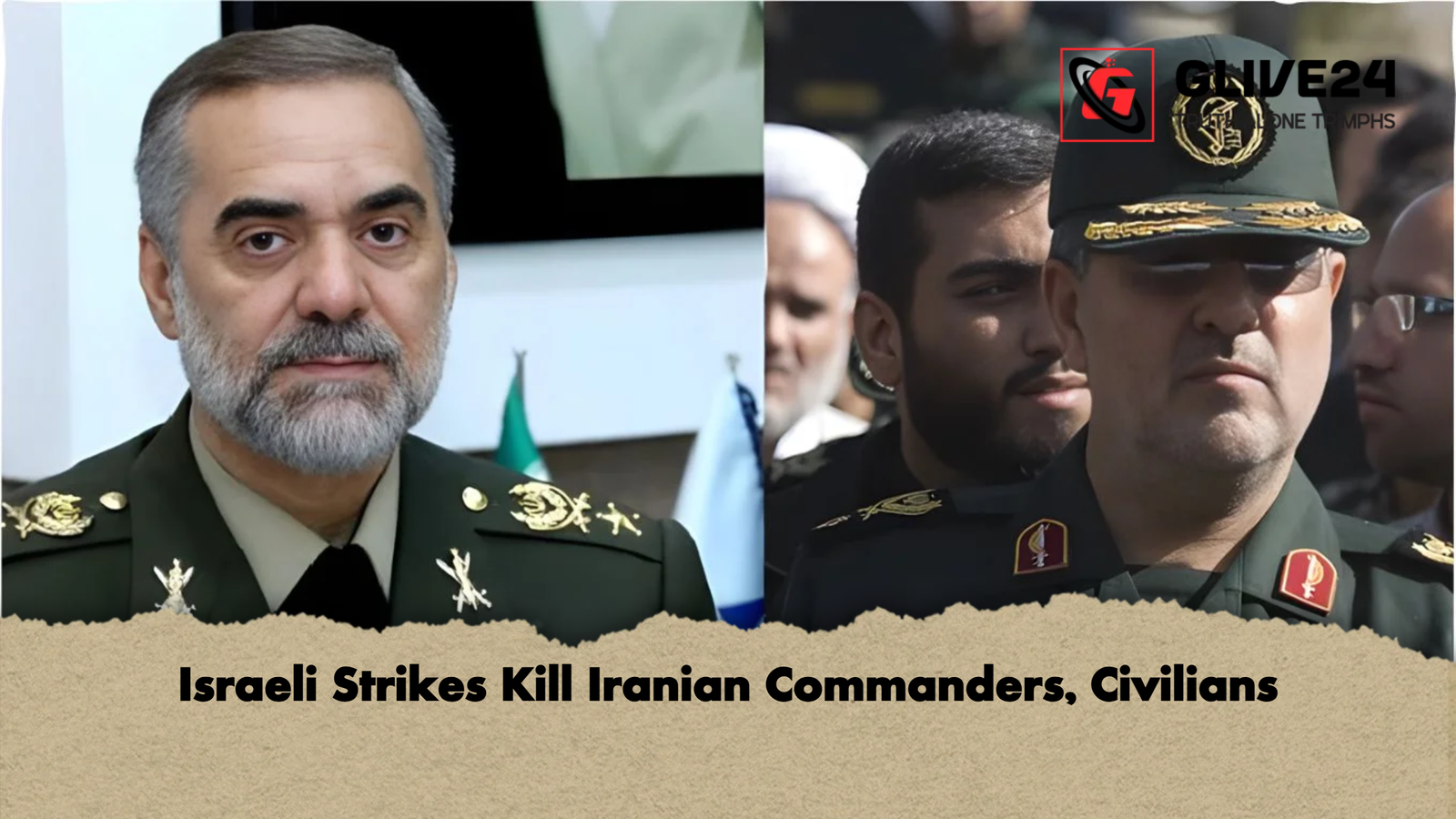
Reports indicate that Israel’s recent military strikes have resulted in the deaths of top commanders within Iran’s defence sector. According to the news agency Reuters, Iran’s Defence Minister Amir Nasirzadeh and Revolutionary Guard commander Mohammad Pakpur are believed to have been killed. This information comes from two sources familiar with Israeli military operations and a regional intelligence source. Details regarding the exact timing and nature of the attacks remain unclear.
Despite the reported fatalities, Iran’s Foreign Minister Abbas Araghchi has downplayed the impact, describing the loss of commanders as “not a major issue.” He stated, “We may have lost a few commanders, but this does not significantly affect overall security.” International analysts suggest that the strikes by Israel and the United States were intended to target multiple military and political centres across Iran, including Tehran.
The attacks have also struck civilian locations, particularly educational institutions. In the southern province of Hormozgan, at least 51 people were killed when an Israeli strike hit a girls’ school in the city of Minab. On the same day, another school in eastern Tehran was also targeted, resulting in casualties.
Preliminary Casualty Details
| Location | Target | Death Toll | Source |
|---|---|---|---|
| Minab, Hormozgan | Girls’ School | 51 | Iranian State Media |
| Tehran, Eastern District | School | 2 | MEHR News Agency |
State television in Iran has broadcast videos and images from the attack sites, highlighting the scale of devastation. Analysts note that the strikes appear to pursue not only civilian targets but also the systematic elimination of top military leadership.
Following the incidents, tensions between Iran and Israel have escalated sharply. Iran’s internal security apparatus has been placed on high alert, while international observers are closely monitoring developments.
Experts warn that these strikes mark a new chapter in the longstanding Iran–Israel tensions. Targeting both military and civilian sites carries the risk of further escalation, potentially paving the way for a broader regional conflict. The international community remains concerned over the potential humanitarian and geopolitical consequences.