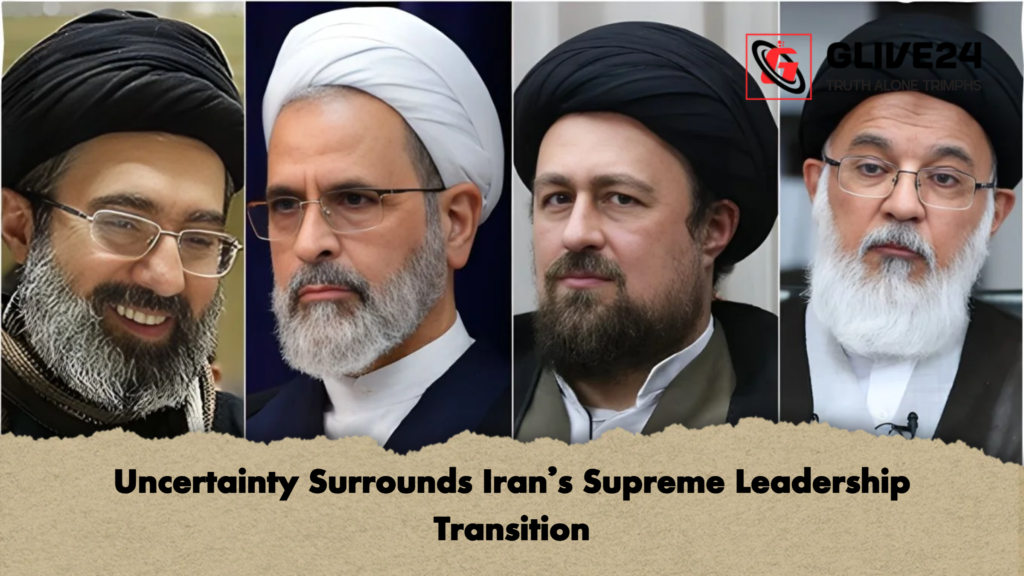
Following the confirmed reports of Ayatollah Ali Khamenei’s death, unrest has emerged around the highest office in Iran. State media outlets have repeatedly confirmed his passing, while both the United States and Israel have attributed it to a joint military operation. However, under the Iranian constitution, no formal successor has yet been announced.
According to the constitution, the 88-member Assembly of Experts is tasked with electing the new Supreme Leader. Analysts suggest that several potential candidates are under consideration, each wielding different levels of political and religious influence.
Profiles of Potential Successors
| Candidate | Age | Current Position | Political/Religious Influence | Remarks |
|---|---|---|---|---|
| Mojtaba Khamenei | 56 | Second son of the Supreme Leader | Close ties with IRGC and Basij | Transfer of power from father to son is contentious; no formal post |
| Alireza Arafi | 67 | Deputy Chairman, Assembly of Experts | Head of seminary system; limited political influence | Limited ties with security forces; relatively unknown politically |
| Mohammad Mehdi Mirbagheri | 60 | Member, Assembly of Experts | Head, Qom Islamic Sciences Academy | Hardline, anti-Western, represents conservative religious faction |
| Hassan Khomeini | 50 | Overseer, Khamenei Mausoleum | Familial legacy; limited security influence | No prominent public office; less hardline |
| Hashem Hosseini Bushehri | 60 | First Deputy Chairman, Assembly of Experts | Directly involved in succession process | Close to Khamenei; limited visible ties to IRGC |
Succession Process and Implications
The position of Iran’s Supreme Leader holds extraordinary authority, controlling the military, judiciary, state media, and key institutions. Consequently, the upcoming selection will not only shape domestic politics but could also significantly influence Middle Eastern geopolitics.
Experts stress that the Assembly of Experts’ deliberations will ultimately determine the successor. The election of a new leader will clarify the political and religious trajectory of Iran, impacting policy both internally and internationally. Over the next few weeks, international observers will closely monitor this process, as the new leadership could directly affect regional stability and diplomatic relations.
Amid these developments, domestic political tensions and the activities of security forces are likely to come under close scrutiny, particularly as regional powers strategise around this transition.
The process of appointing Iran’s next Supreme Leader is now the focal point of national and international attention, where religion, political influence, and family legacy will collectively shape the future direction of the country.