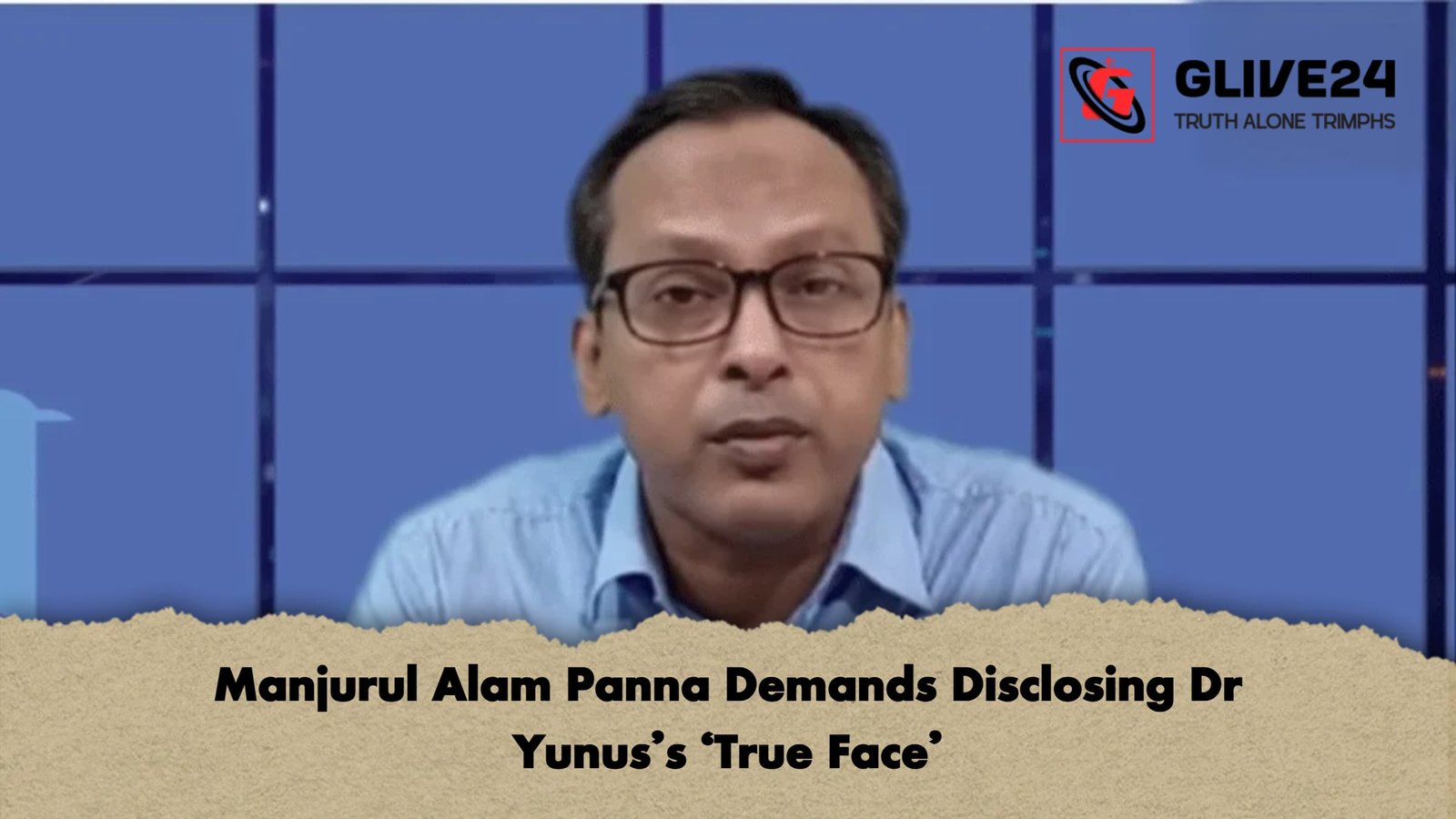
The veteran journalist Manjurul Alam Panna has ignited a firestorm of controversy following a blistering critique of Dr Muhammad Yunus, the Nobel laureate and current Chief Adviser of the interim government. In a series of provocative statements that have rapidly circulated across social media, Panna characterized the economist as the “primary enemy and greatest betrayer” in the 55-year history of Bangladesh.
A Call for Academic Censure
During a recent address, Panna—who operates the popular YouTube channel Map (Manchitra) and is a frequent guest on political talk shows—demanded that Dr Yunus’s name be formally included in national school textbooks. However, rather than celebrating his global accolades, Panna insisted he be identified as the country’s “foremost collaborator (Razakar)” and “traitor” of the post-independence era.
“The responsibility lies with all of us to unmask this individual before the global community,” Panna asserted. His rhetoric suggests a fundamental rejection of the interim government’s legitimacy, framing the Nobel laureate’s role not as a reformer, but as a figure detrimental to the sovereignty and spirit of the Liberation War.
The Context of Dissent
Panna’s outspoken stance follows a period of personal legal turmoil. In late August last year, he was among several journalists detained on charges related to their public criticism of the administration. Although he was subsequently released on bail, his arrest drew significant concern from international human rights organisations regarding the shrinking space for freedom of speech in the country.
| Key Figure | Role/Background | Core Allegation/Demand |
| Dr Muhammad Yunus | Chief Adviser & Nobel Laureate | Labelled as “primary enemy” and “traitor”. |
| Manjurul Alam Panna | Journalist & Broadcaster | Demands Yunus be branded a “Razakar” in textbooks. |
| Nila Israfil | Social Media Influencer | Amplified Panna’s claims via verified Facebook page. |
| Interim Government | Transitional Administration | Accused of suppressing dissent through arrests. |
Social Media Amplification
The journalist’s views gained significant traction after being shared by the verified Facebook profile of Nila Israfil, who echoed the sentiment that the academic curriculum must reflect Dr Yunus’s alleged betrayals. This digital endorsement has split public opinion, with supporters viewing the comments as a courageous stand against the current establishment, while critics argue they constitute inflammatory hate speech.
As the country navigates a complex political transition, the discourse surrounding Dr Yunus continues to polarise. While the international community largely views the Chief Adviser as a stabilizing force, voices like Panna’s represent a domestic faction that views the interim leadership with deep-seated suspicion and ideological hostility.