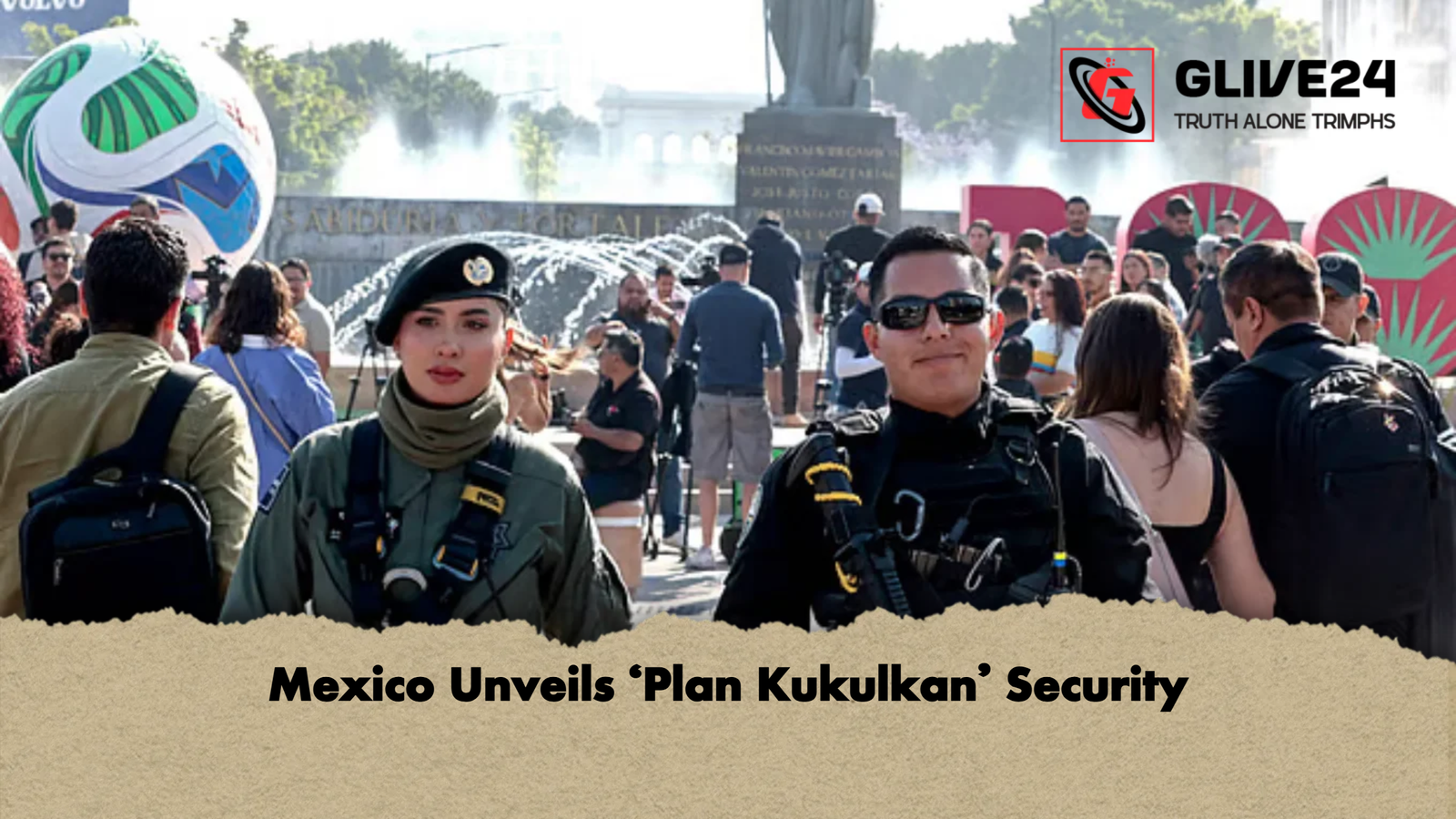
As anticipation builds for the 2026 FIFA World Cup, Mexico has unveiled an extensive security strategy designed to safeguard players, officials, and the hundreds of thousands of supporters expected to travel to the country. The initiative, known as “Plan Kukulkan”, will see the deployment of nearly 100,000 security personnel across host cities, reflecting the government’s determination to ensure a safe and orderly tournament despite persistent concerns about organised crime and cartel violence.
Mexico will jointly host the 2026 tournament alongside the United States and Canada, marking the first time in history that the World Cup will be staged across three nations. Within Mexico, matches will be held in three major cities: Guadalajara in the state of Jalisco, Monterrey in Nuevo León, and the capital, Mexico City. While Monterrey and Mexico City have remained relatively unaffected by recent unrest, Guadalajara has drawn particular attention due to escalating violence linked to organised criminal groups.
The tournament is scheduled to begin on 11 June and conclude on 19 July 2026. During that period, Mexico is expected to welcome several hundred thousand international visitors, in addition to vast numbers of domestic fans. Ensuring their safety has therefore become a central priority for the Mexican government.
Security concerns have intensified following recent developments involving the Jalisco New Generation Cartel (CJNG), widely regarded as one of Mexico’s most powerful and violent criminal organisations. Its leader, Nemesio Oseguera Cervantes—better known as “El Mencho”—was reportedly killed during a military operation. His death has heightened tensions, triggering confrontations between cartel members and the Mexican armed forces in several regions.
“El Mencho” had long been one of Mexico’s most wanted fugitives. Authorities in the United States had also pursued him aggressively, offering a reward of 15 million dollars for information leading to his capture. Following his death, he was buried earlier this week in a cemetery near a military installation in the city of Zapopan, Jalisco.
Against this backdrop, Mexican President Claudia Sheinbaum presented the government’s comprehensive World Cup security framework on Friday. Both the Mexican government and FIFA have emphasised that recent incidents of violence will not affect the tournament’s organisation.
The security plan takes its name from Kukulkan, the feathered serpent deity revered in ancient Mayan civilisation. Officials say the title symbolises protection and vigilance. According to Román Villalvazo, head of Mexico’s World Cup Coordination Centre, more than 99,000 security personnel will be deployed throughout the tournament.
The operation will combine military forces, federal and local police, and private security contractors. Advanced surveillance technology and specialised response units will also be employed to protect stadiums, transport networks, hotels, and key tourist districts.
Below is a summary of the primary security resources planned for the tournament in Mexico:
| Security Component | Estimated Deployment |
|---|---|
| Total security personnel | Over 99,000 |
| Military personnel | About 20,000 |
| Police officers | Around 55,000 |
| Military and civilian vehicles | Approximately 2,500 |
| Aircraft | 24 |
| Additional measures | Anti-drone systems, bomb-detection dogs |
Authorities will also utilise drones, modern surveillance cameras, and intelligence-sharing systems to monitor crowd movements and detect potential threats. Specialised canine units trained to identify explosives and hazardous materials will be stationed at stadiums and transport hubs.
The tournament’s opening match in Mexico will take place in Mexico City, where the host nation is scheduled to face South Africa. FIFA President Gianni Infantino has expressed strong confidence in Mexico’s preparations, stating that he feels “very reassured” by the country’s security measures and organisational readiness.
With large-scale planning already under way, Mexican officials remain determined that the World Cup will showcase the nation’s hospitality, culture, and footballing passion while maintaining the highest standards of safety for all involved.