
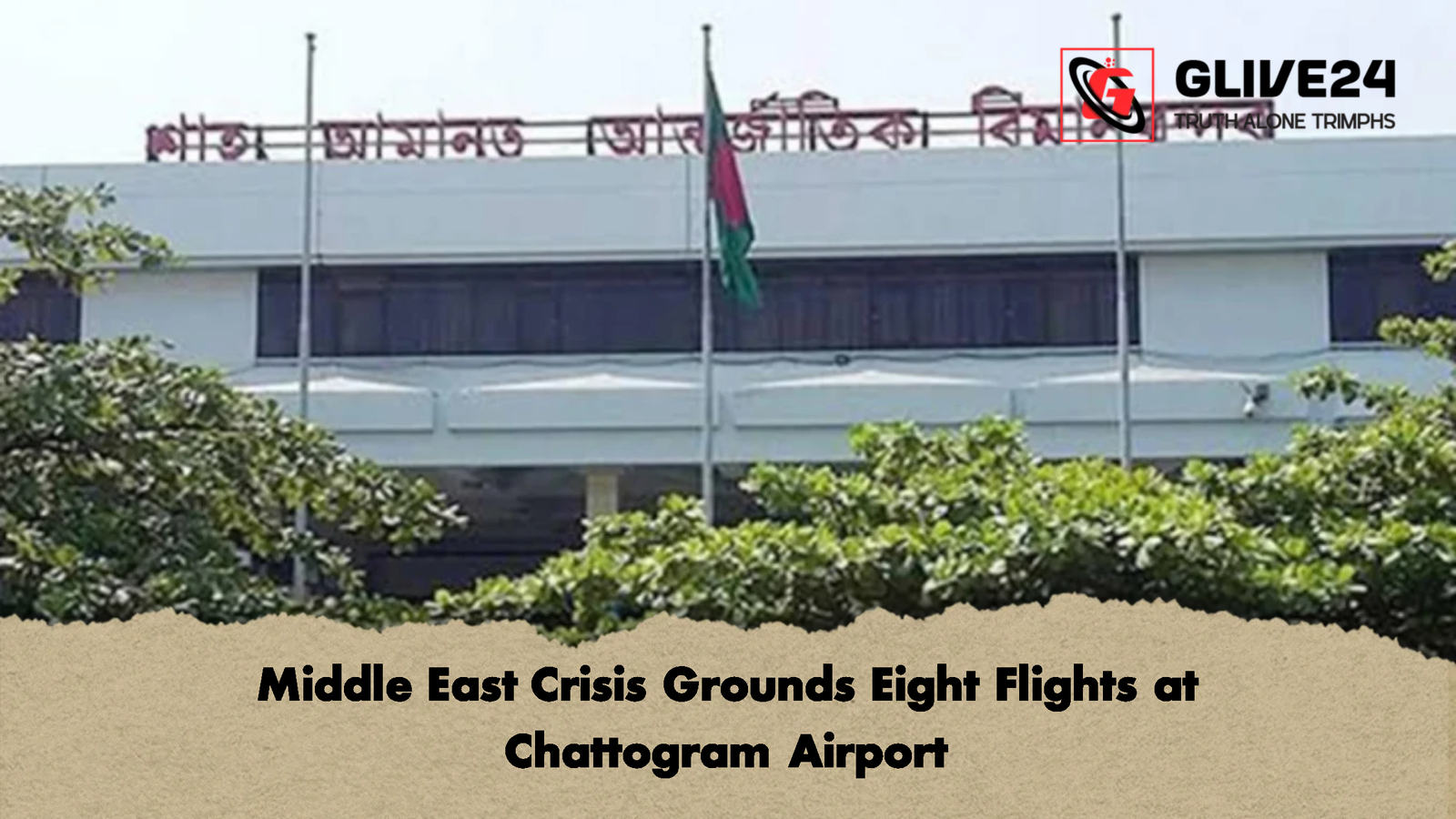
Chattogram’s Shah Amanat International Airport has witnessed the cancellation of a further eight international flights over the past two days, as ongoing geopolitical tensions in the Middle East continue to disrupt air connectivity across key Gulf routes.
Airport authorities confirmed that the cancellations are directly linked to the closure or operational restrictions affecting major airports in Dubai, Abu Dhabi, Sharjah, and Doha, amid escalating conflict conditions in the region. The disruptions have significantly affected scheduled operations of multiple Middle Eastern and South Asian carriers operating through Bangladesh.
The confirmation was provided on Tuesday night (7 April) at 9:28 pm by the airport’s Public Relations Officer, Engineer Mohammad Ibrahim Khalil.
Table of Contents
Flights cancelled over two days
According to airport sources, the latest cancellations include services operated by US-Bangla Airlines, Air Arabia, and SalamAir.
Breakdown of cancelled flights
| Airline | Type of flight | Number of cancellations |
|---|---|---|
| US-Bangla Airlines | Arrival + Departure | 2 flights |
| Air Arabia | Arrival + Departure | 4 flights |
| SalamAir | Arrival + Departure | 2 flights |
| Total | 8 flights |
Officials noted that among the cancellations, US-Bangla Airlines had one inbound and one outbound service affected, while Air Arabia accounted for two arrivals and two departures. SalamAir also saw one arrival and one departure flight suspended.
Despite the disruption, airport operations were not entirely paralysed. On the same day, five incoming and three outgoing international flights managed to operate, primarily on alternative Middle Eastern routes that remain partially functional.
Ongoing disruption across Gulf routes
Authorities stated that flight suspensions involving Sharjah, Dubai, and Abu Dhabi routes remain ongoing, particularly affecting services operated by SalamAir, Air Arabia, and US-Bangla Airlines. The instability has forced airlines to continuously revise schedules, with several flights either delayed, rerouted, or cancelled at short notice.
Airport officials emphasised that the situation remains fluid, with operational decisions largely dependent on advisories issued by aviation regulators and airspace control authorities in the Gulf region.
Cumulative impact since February
The Shah Amanat International Airport administration further confirmed that the scale of disruption has been substantial over the past several weeks. According to Engineer Mohammad Ibrahim Khalil, a total of 277 international flights have been cancelled since 28 February due to the continuing crisis in the Middle East.
This includes services across multiple carriers operating between Chattogram and major Gulf hubs, which serve as critical transit points for Bangladeshi migrant workers and business travellers.
Wider implications for passengers and aviation sector
The ongoing cancellations have created significant uncertainty for passengers, particularly expatriate workers travelling between Bangladesh and Gulf countries for employment purposes. Many travellers have been forced to reschedule journeys or seek alternative routes through other international hubs.
Aviation analysts note that persistent instability in Gulf airspace not only affects direct connectivity but also places additional pressure on airline operations, including aircraft rotation, crew scheduling, and ticket pricing.
Airport authority monitoring situation
The Shah Amanat International Airport authority has stated that it is closely monitoring developments in coordination with international aviation bodies. Airlines operating from Chattogram have been advised to remain in constant contact with relevant air traffic control authorities and adjust operations in line with updated safety and routing instructions.
Officials also indicated that normalisation of services will depend entirely on the restoration of stability across affected Gulf air corridors. Until then, intermittent cancellations and schedule disruptions are expected to continue impacting flight operations at one of Bangladesh’s key international gateways.