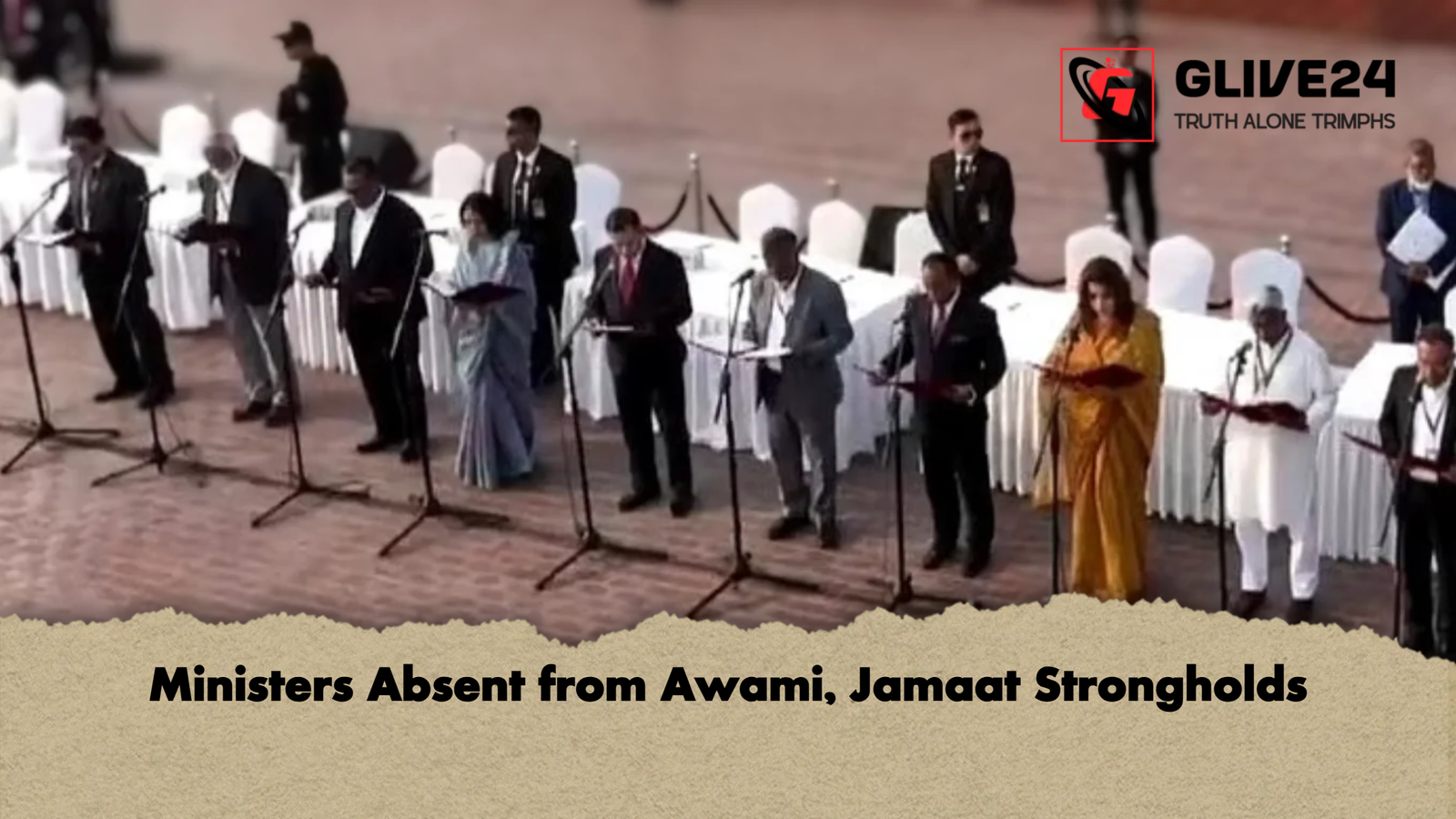
In the newly formed government led by Tarique Rahman, ministers and state ministers have been conspicuously absent from 25 districts across Bangladesh. Notably, no leaders from BNP stronghold Noakhali have been included in the cabinet. Similarly, several districts historically dominated by the Awami League, including Gopalganj, have also been excluded. Regions in the north and south-west, traditionally influenced by Jamaat-e-Islami, have likewise been left without ministerial representation.
Table of Contents
Geographical Imbalances and Family Influence
Analysis of the cabinet list shows a clear reflection of electoral success in some regions. For instance, Comilla saw strong performance by BNP candidates, which translated into three ministerial appointments. Interestingly, several new ministers and state ministers are children of former BNP ministers, demonstrating the continued influence of political families.
Despite having representation in the capital, several districts surrounding Dhaka have been entirely excluded from ministerial positions.
| Districts with No Representation | Seats Contested | BNP Wins | Minister/State Minister |
|---|---|---|---|
| Kurigram | 5 | 0 | – |
| Nilphamari | 4 | 0 | – |
| Gaibandha | 4 | 0 | – |
| Rangpur | 9 | 0 | – |
| Chapainawabganj | 3 | 0 | – |
| Meherpur | 2 | 0 | – |
| Satkhira | 3 | 0 | – |
| Chuadanga | 3 | 0 | – |
| Noakhali | 6 | 0 | – |
Additionally, major districts like Khulna saw BNP winning four out of six seats, yet no cabinet posts were allocated. In Jessore, BNP secured only one seat out of six; that winner, Anind Islam, has been appointed state minister.
Awami League Strongholds Excluded
The prime minister’s birthplace, Gopalganj, which, along with Madaripur and Shariatpur, has been dominated historically by the Awami League, sees no representation in the cabinet. Faridpur and Rajbari each secured a state minister: Shama Obayed Islam, daughter of former BNP minister K.M. Obayedur Rahman, and Ali Newaz Mahmud Khaiyam, respectively.
In Dhaka, BNP won 15 out of 20 seats. Sheikh Robiul Alam from the capital has been appointed full minister of Roads, Railways, and Shipping. Former footballer Aminul Haque, who lost in Dhaka-16, was included as a technocrat state minister. Surrounding districts such as Munshiganj, Narayanganj, and Gazipur, historically key BNP territories, have no cabinet representation.
Northern and Rajshahi Divisions
BNP’s performance in the north was comparatively modest, but ministerial appointments reflect a strategic focus in the region.
| Division | Seats Won (BNP) | Ministers | State Ministers |
|---|---|---|---|
| Rangpur | 13/33 | Mirza Fakhrul Islam Alamgir (Thakurgaon), A.Z.M. Zahid Hossain (Dinajpur), Asadul Habib Dulu (Lalmonirhat) | Farhad Hossain Azad (Panchagarh) |
| Rajshahi | 28/39 | Mizanur Rahman Minu (Rajshahi), Iqbal Hasan Mahmud (Sirajganj) | Mir Shah Alam (Bogra), Farzana Sharmin (Natore), Abdul Bari (Joypurhat), M.A. Muhit (Sirajganj) |
Comilla–Noakhali Region
BNP swept the Greater Noakhali–Comilla region, winning eight out of eleven Comilla seats. Three ministers were appointed from Comilla: Mohammad Amin ur Rashid (technocrat), Zakaria Taher, and Shah Mofazzal Hossain Kaykobad. Other appointments include A.N.M. Ehsanul Haque Milon from Chandpur as full minister and Jonaid Saki from Brahmanbaria as state minister. Noakhali district remains unrepresented, though Feni’s Abdul Awal Mintu and Laxmipur’s Shahid Uddin Chowdhury Annie have been appointed ministers.
New cabinet members took the oath of office on Tuesday afternoon, administered by President Mohammad Sahabuddin.
This cabinet clearly illustrates a strategic balance between electoral success, regional considerations, and political legacies, while leaving several traditional power bases without ministerial representation.