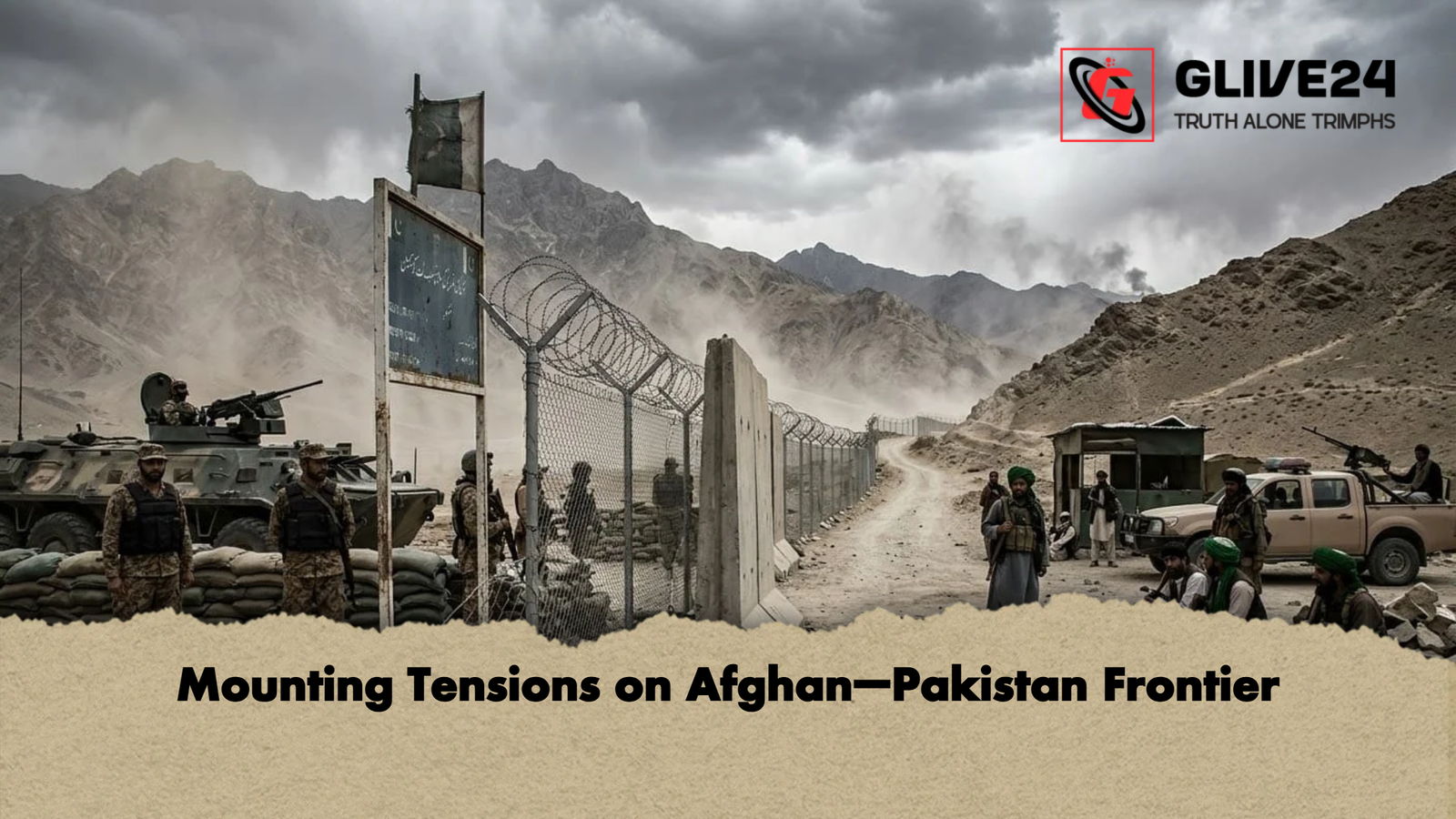
A protracted and increasingly volatile confrontation between Afghanistan and Pakistan has been unfolding over the past six months, raising concerns of a de facto war between the neighbouring states. Although not formally declared as such, the scale and intensity of hostilities—particularly air strikes deep Afghan territory and retaliatory cross-border attacks—suggest a conflict that has moved well beyond routine border skirmishes.
Recent incidents, including a controversial night-time strike on a rehabilitation facility in Kabul, have further escalated tensions. While Afghan authorities have portrayed the attack as a strike on a civilian medical centre, Pakistan has firmly denied this, asserting instead that the targeted site was a training ground for suicide attackers. As is often the case in modern conflicts, verifying such claims has proven difficult, especially amid the proliferation of manipulated digital content and competing narratives.
Historically, cross-border ethnic and religious ties—particularly among Pashtun communities—have often united populations on both sides against external forces, as seen during the Soviet intervention in 1979 and the United States-led campaign beginning in 2001. The current intra-regional conflict, therefore, marks a notable departure from past patterns of unity.
At the core of the dispute lies the long-contested Durand Line, a border demarcation dating back to 1893. However, analysts argue that this alone does not explain the timing or intensity of the current escalation. Instead, broader geopolitical dynamics appear to be at play, including strategic competition, ideological divergence, and the influence of external powers.
Some regional observers suggest that global strategic interests—particularly those involving surveillance and military positioning in South and Central Asia—have indirectly contributed to the escalation. Allegations have surfaced that efforts to re-establish foreign military footholds in Afghanistan may have heightened regional tensions, though such claims remain disputed and politically sensitive.
Meanwhile, Pakistan’s security concerns are closely tied to the activities of Tehrik-i-Taliban Pakistan (TTP), a militant group responsible for numerous attacks Pakistani territory. Islamabad accuses Afghan authorities of either harbouring or failing to effectively control these while Kabul maintains that managing such groups remains a complex challenge due to ideological and operational factors.
The strategic calculations of both nations can be summarised as follows:
| Factor | Afghanistan’s Position | Pakistan’s Position |
|---|---|---|
| Border Legitimacy | Rejects Durand Line as permanent border | Recognises it as official boundary |
| Militant Groups | Struggles to fully control TTP | Sees TTP as existential threat |
| Strategic Goals | Maintain sovereignty and independence | Ensure strategic depth and internal stability |
| External Relations | Resistant to foreign military presence | Balances regional and global alliances |
Additionally, Pakistan’s concept of “strategic depth”—aimed at limiting rival influence in Afghanistan—continues to shape its security doctrine. Conversely, Afghan appears cautious about directly confronting militant factions that share ideological roots with its own power structure, fearing internal fragmentation.
Accusations of third-party involvement have also surfaced, with some Pakistani commentators alleging external for anti-state groups. These claims, however, remain unverified and are consistently denied by the accused parties.
Ultimately, the Afghanistan–Pakistan conflict cannot be reduced to a simple border dispute. It is a complex interplay of historical grievances, security dilemmas, ideological tensions, and power politics. As casualties mount and instability deepens along the approximately 2,600-kilometre frontier, there is a growing that the situation will draw greater global attention in the near future.