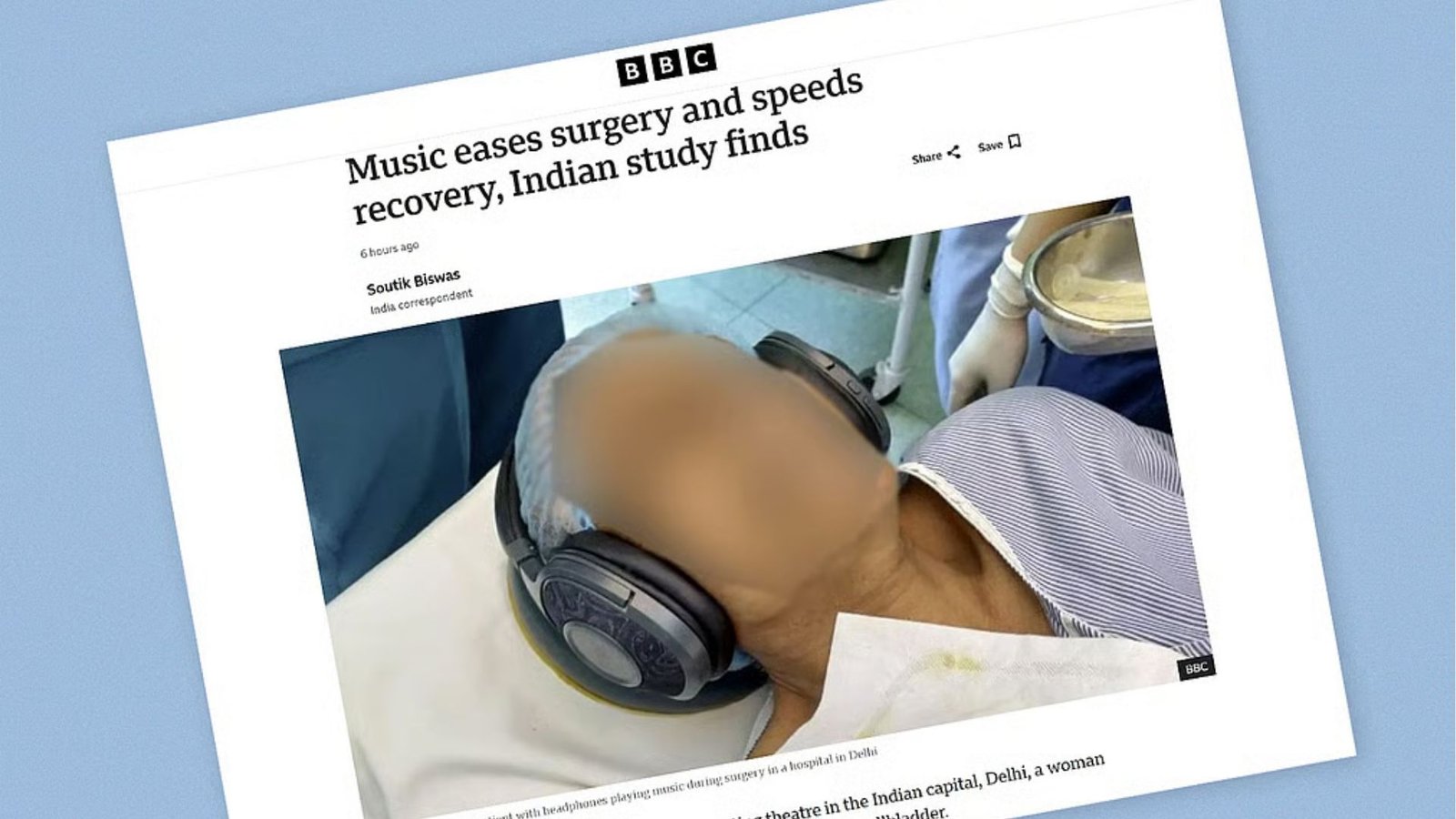
Playing music during surgery may not just be soothing—it could also reduce the amount of anaesthetic needed and help patients recover faster, according to new research from Maulana Azad Medical College in New Delhi.
The study involved 56 adults undergoing laparoscopic gallbladder surgery, a keyhole procedure that requires only small incisions. During the operation, patients were given general anaesthesia and fitted with headphones. One group listened to soft piano or flute music, while the other did not. Although patients were unconscious, parts of their brains remained responsive to sound.
Results were striking. Those who listened to music required lower doses of anaesthetic drugs, recovered consciousness more quickly, and showed lower levels of stress hormones such as cortisol. Their heart rates and blood pressure remained more stable during surgery, indicating reduced physiological stress.
“Even under anaesthesia, the body reacts to surgical stress,” said Dr Farah Hussain, an anaesthetist and certified music therapist involved in the study. “Music helps to calm the body internally, allowing patients to wake up faster, more alert, and less affected by post-operative stress.”
Professor Sonia Wadhawan, director of the intensive care unit, added that surgical stress begins even before the first incision, such as during intubation. Music, by soothing these reactions, can improve both patient comfort and clinical outcomes.
While music therapy is not new in medical care, its use in the operating theatre represents a subtle innovation that combines science and patient-centred care. Researchers believe this approach could change conventional surgery, making the operating room a more humane and less stressful environment for patients.