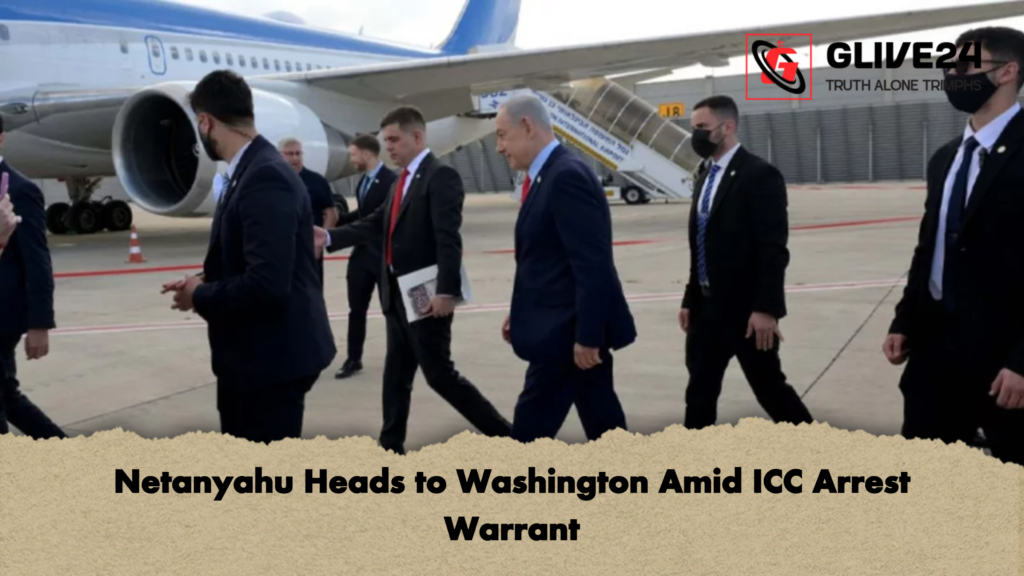
Israeli Prime Minister Benjamin Netanyahu has travelled to the United States at the invitation of US President Donald Trump, despite an International Criminal Court (ICC) arrest warrant remaining in force against him.
According to Israel’s official Arabic-language government account on X, Netanyahu departed for Washington, where he is expected to hold talks with Trump on bilateral relations between Israel and the United States. The discussions are also likely to cover the rapidly evolving situation in the Middle East, as well as regional and international issues considered important to both countries.
The meeting is attracting considerable attention because of the close political, diplomatic and security ties between Washington and Jerusalem, and because of the two leaders’ prominent roles in shaping US and Israeli policy towards the war in Gaza and the wider Israeli-Palestinian conflict.
The talks will mark the seventh meeting between Netanyahu and Trump since the latter returned to the White House for a second term in January 2025. If the meeting takes place as expected, Netanyahu will have met Trump more often during his current presidency than any other world leader. Their relationship has been closely watched internationally, particularly over disagreements and shared positions concerning Gaza, Israel’s security and the future of the wider Middle East.
The most politically sensitive aspect of Netanyahu’s visit, however, is the ICC arrest warrant issued against him. In November 2024, the court issued warrants for Netanyahu and Israel’s former Defence Minister Yoav Gallant over alleged crimes against humanity linked to Israel’s military campaign in Gaza. The allegations include serious offences against civilians. Israel has rejected the accusations and has challenged the ICC’s jurisdiction and the legitimacy of its actions.
The arrest warrant has generated a wider debate over the obligations of countries that are parties to the Rome Statute, the treaty that established the ICC. The United States is not a member of the court, meaning the legal circumstances surrounding Netanyahu’s visit to American territory differ from those in countries that recognise the court’s jurisdiction. The issue has nevertheless added a significant diplomatic and legal dimension to his trip.
The visit has also drawn political criticism within the United States. New York City Mayor Zohran Mamdani has called for Netanyahu to be arrested over alleged war crimes. His position has added to the political controversy surrounding the Israeli leader’s presence in the country, particularly as international criticism continues over the humanitarian consequences of the Gaza conflict.
During their meeting, Trump and Netanyahu could discuss the future of the Gaza war, efforts to secure stability in the Middle East, Israel’s security needs and the strategic partnership between the two countries. The conflict’s humanitarian impact and the broader question of regional security are also likely to remain central to international attention.
No detailed official agenda or specific decisions expected from the meeting have been publicly announced. Still, the timing of Netanyahu’s visit is significant. Israel’s military operations in Gaza, the humanitarian crisis affecting civilians and the application of international law remain subjects of intense global debate.
Against that backdrop, the talks between Trump and Netanyahu are expected to carry implications well beyond the bilateral relationship. Any signals emerging from Washington could influence perceptions of US policy towards Israel, the future direction of the Gaza conflict and wider diplomatic efforts aimed at addressing instability across the Middle East.