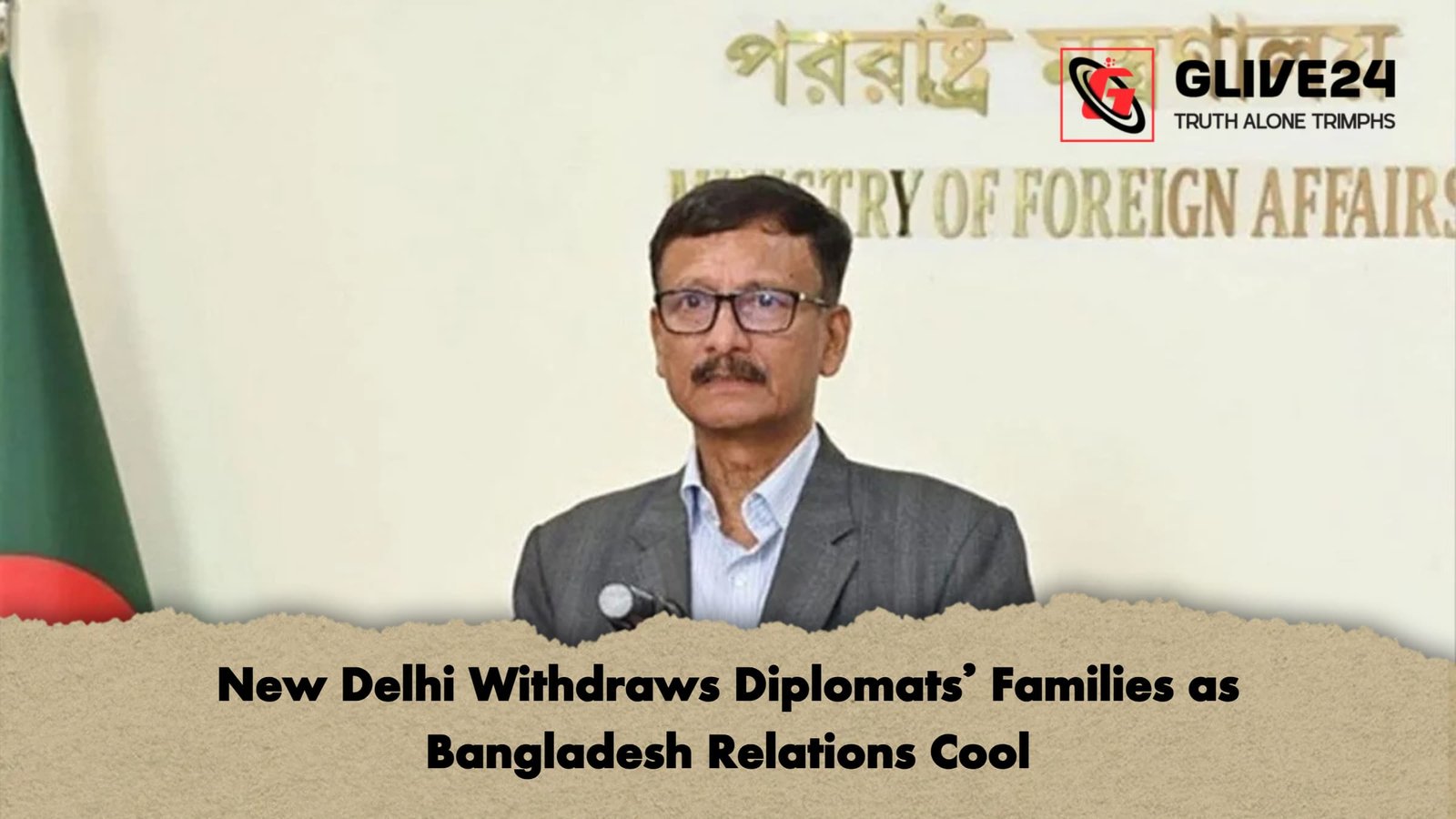
In a move that underscores the deepening diplomatic rift between New Delhi and Dhaka, India has ordered the families of its diplomats and government officials to leave Bangladesh. This decision, predicated on “security concerns,” has prompted a sharp response from the Bangladeshi interim administration, which views the move as an unnecessary escalation of bilateral tensions.
While the Indian High Commission in Dhaka and its consulates in Chittagong, Rajshahi, Sylhet, and Khulna will remain operational, the withdrawal of dependents marks a significant downgrade in the perceived stability of the country. This development, reported by the Press Trust of India (PTI) on 20 January, arrives as Bangladesh prepares for the 13th National Parliamentary Election—a period historically fraught with political volatility.
Table of Contents
A Stark Diplomatic Downgrade
The gravity of New Delhi’s decision is reflected in its new administrative classification. According to reports, India’s Ministry of External Affairs now categorises Bangladesh as a “non-family” station. This designation effectively places the country on the same security footing as nations grappling with extreme conflict or systemic hostility.
India’s Diplomatic Posting Classifications
| Classification Level | Countries Included | Implications for Staff |
| Family Station | USA, UK, Japan, UAE | Dependents permitted; full residency. |
| Non-Family (New) | Bangladesh, Pakistan, Sudan | Repatriation of families; staff only. |
| Hazardous/Conflict | Afghanistan, Ukraine, Libya | Skeleton staff; high-security protocols. |
Dhaka’s Reaction: Regret and Disappointment
The Bangladesh Foreign Advisor, Md. Touhid Hossain, addressed the reclassification during an interview with BBC Hindi. He categorically rejected the notion that Indian nationals were at risk, stating, “There is no evidence to suggest that we have been unable to guarantee the security of Indian citizens.”
Hossain did not mince words regarding the comparison to Pakistan. “If India chooses to equate Bangladesh with Pakistan, that is entirely their decision. It is undoubtedly regrettable, but I cannot dictate their internal policy,” he remarked.
“Overreaction” and the Risk to Bilateral Ties
Reflecting on his 40-year career in diplomacy, Hossain suggested that New Delhi’s reaction was disproportionate. He cautioned that if both nations do not act with maturity, the relationship—which has faced significant strain since the political transition in August 2024—could suffer permanent damage.
“If we genuinely want a healthy bilateral relationship, we must commit to it. If we keep taking steps that fracture the bond, the collapse of that relationship is inevitable,” Hossain warned. He concluded by noting that he had expected a more “refined and measured” response from India, rather than what he characterised as an “overreaction.”
The withdrawal of families is expected to complicate diplomatic communication at a time when both nations need to coordinate on shared border security and trade issues ahead of the February polls.