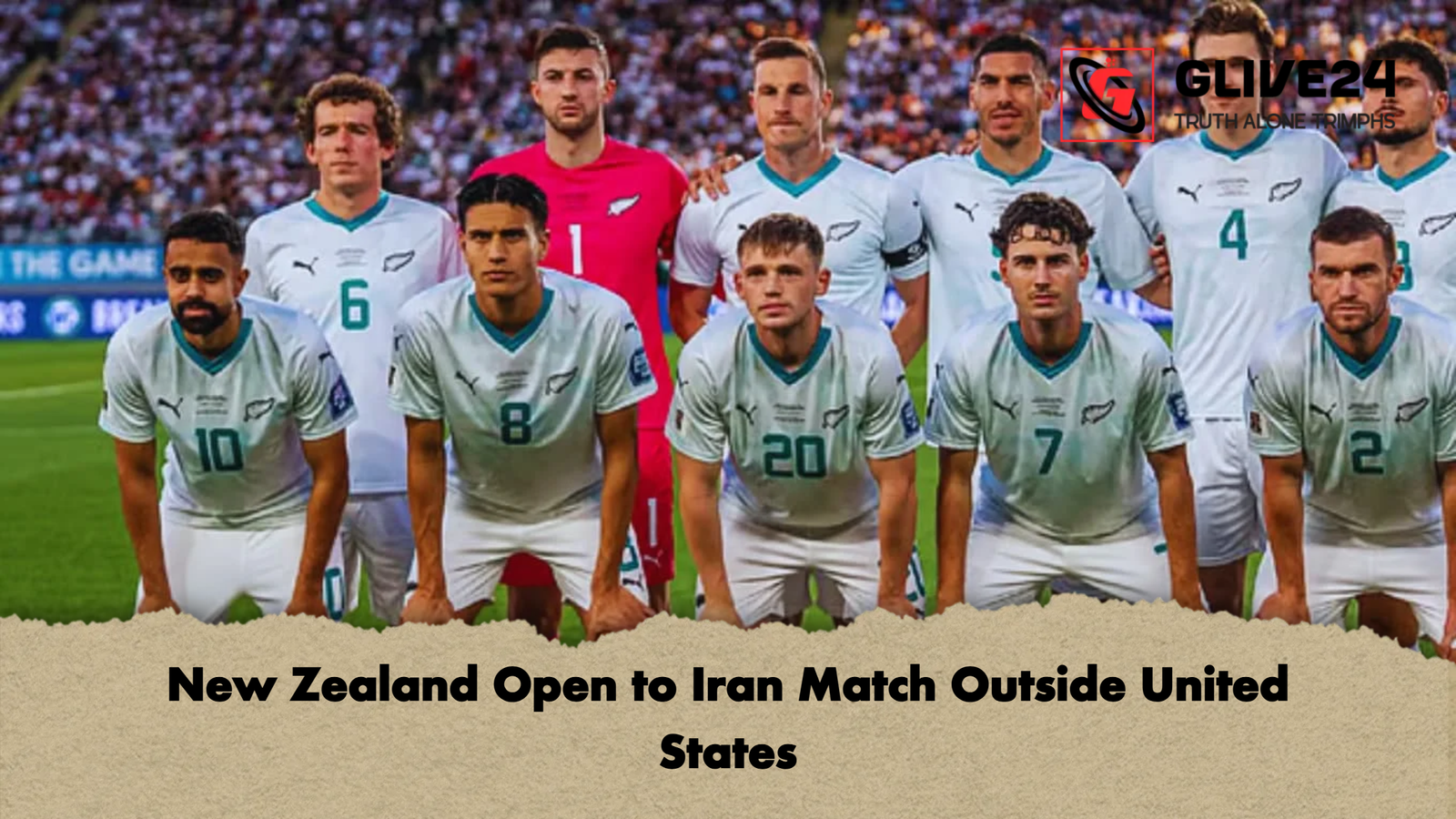
In the 2026 FIFA World Cup, Group G sees Iran competing alongside Belgium, Egypt, and New Zealand. According to the official schedule, New Zealand will face Iran on 15 June at SoFi Stadium in Los Angeles. For both teams, this marks their first match of the tournament. New Zealand players have made it clear that they have no objection to playing Iran outside the United States if circumstances require.
Tensions escalated in late February when the United States and Israel launched military strikes on Iran, sparking regional conflict in the Middle East. Since then, Iran’s participation in the World Cup has faced uncertainty. The Iranian Football Federation previously announced plans to discuss relocating their U.S.-based matches to Mexico with FIFA. British media outlet The Times reported that FIFA would not entertain this proposal, although no official statement has yet been issued.
Mehdi Taj, head of the Iranian Football Federation, stated explicitly: “We will boycott the United States, but not the World Cup.” This means Iran is committed to competing but prefers not to play on U.S. soil. Former U.S. President Donald Trump had earlier warned that playing in the United States might pose safety concerns for Iranian players, though he later clarified that no threat would come from the American side. Taj’s request for venue changes draws on these safety concerns.
Despite the geopolitical tensions, Iran’s World Cup preparations continue uninterrupted. The team is currently holding a training camp in Turkey, where they will play two friendly matches. Meanwhile, New Zealand is preparing for the match in Los Angeles as scheduled. However, the squad has stated that if the fixture is moved elsewhere in the U.S. or beyond, they are willing to adapt.
Midfielder Ryan Thomas highlighted Iran’s credentials, stating that they “earned their place through qualification” and that New Zealand is fully capable of handling the added pressure. He added in a Reuters interview: “Whether we play them in Mexico or Canada, it makes no major difference to us.”
The 2026 tournament, starting 11 June, is jointly hosted by the United States, Mexico, and Canada. New Zealand’s main base camp will be in San Diego, California, close to the Mexican border. Mexican President Claudia Sheinbaum confirmed last week that her country is ready to host Iran’s matches if required, although final decisions rest solely with FIFA.
New Zealand winger Costa Barbarouses emphasised that venue decisions are “the authorities’ responsibility” and insisted that any relocation would not negatively affect their World Cup campaign. He told Reuters: “We already have a pre-match camp, so a change in venue won’t disrupt our preparations.”
FIFA has refrained from commenting directly on the potential venue changes but confirmed ongoing communications with the Iranian Football Federation and expects all teams to participate as per the current schedule.
Below is the confirmed Group G schedule:
| Date | Team 1 | Team 2 | Venue | City |
|---|---|---|---|---|
| 15 June | New Zealand | Iran | SoFi Stadium | Los Angeles |
| 21 June | Iran | Belgium | SoFi Stadium | Los Angeles |
| 26 June | Iran | Egypt | Lumen Field | Seattle |
Concerns over safety in Los Angeles for the New Zealand–Iran match have been acknowledged by 36-year-old forward Costa Barbarouses, who is participating in his first World Cup since 2010. He expressed full confidence in the organisers’ ability to ensure safety for players, their families, and supporters. “It’s natural to feel some anxiety,” he said, “but I want my family in the stands, and I am confident they will be safe. They wouldn’t want to miss this opportunity.”
The unfolding situation has added a complex dimension to the tournament, where teams must navigate not only sporting challenges but also international geopolitical considerations.