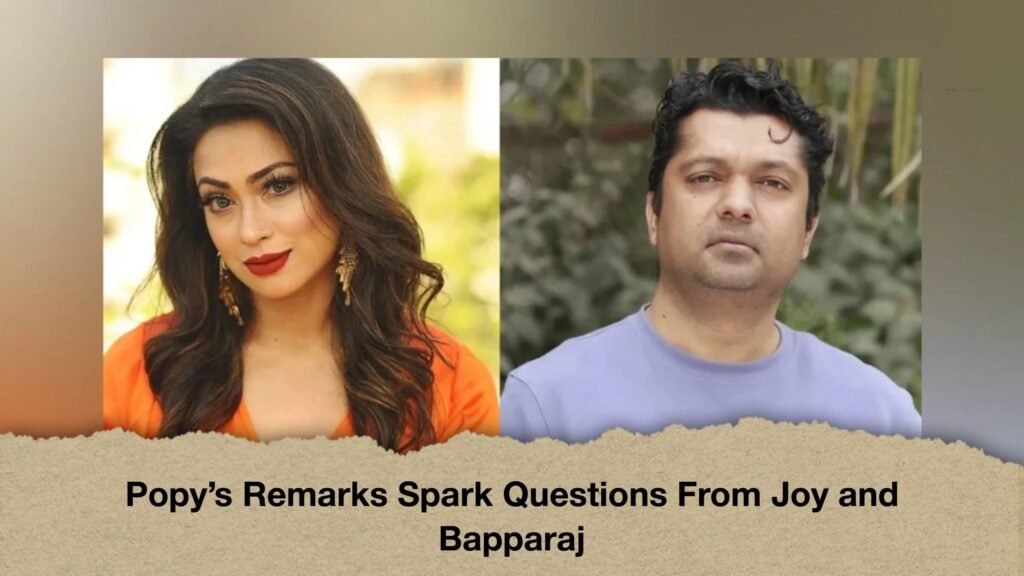
Former Dhallywood star Sadika Parvin Popy has sparked fresh debate after suggesting that she wants to leave her acting career behind and devote the rest of her life to peace and religious practice.
Popy, once one of the most popular actresses in Bangladeshi cinema, has been away from acting for several years and has largely remained out of the public eye. During the 2000s, she enjoyed a particularly busy period in the film industry, appearing regularly on the big screen and building a strong following among audiences.
Her latest comments, however, have drawn renewed attention to her decision to remain away from the film industry.
In a recent interview with a media outlet, Popy spoke openly about how she now views her life and what she wants for the years ahead. Referring to a new chapter in her life, she said she wanted to live peacefully, remember Allah and spend her remaining years in religious practice.
Popy also expressed regret over what she described as the sins she had accumulated throughout her life, saying she wanted to cleanse herself of them and live the rest of her life in a better way.
Her remarks were widely interpreted as referring to her years in the film industry, particularly her work as an actress, and this interpretation quickly became a subject of discussion among audiences and people connected with the entertainment industry.
The comments also prompted actor and television presenter Shahriar Nazim Joy to respond on social media.
On Monday, 31 August, Joy published a post referring to Popy’s remarks and drew a comparison with comments previously made by actress Moushumi. His post questioned what such statements mean for the fans who had admired and followed the actresses throughout their careers.
Moushumi had also spoken in an earlier interview about leaving acting and devoting the rest of her life to religion. She had even spoken about removing her films, although she subsequently appeared in acting projects again.
Drawing on that earlier episode, Joy wrote that Moushumi had said something similar to what Popy was now saying. He then mentioned Shabnur and Purnima, joking that if they made similar statements, it would complete a generation of actresses making the same realisation.
Joy’s central question was directed towards the actresses’ followers. He argued that while the performers might have come to reconsider their past choices, their fans had admired them without necessarily viewing their work through the same lens.
In his post, Joy wrote: “But my question is—if you came to understand it fully and later realised it was wrong, what happens to us, who became your fans and, without understanding anything, made mistakes and sinned?”
Joy also asked the actresses to remember their fans in their prayers. He questioned whether today’s popular performers might eventually make similar statements about their past careers.
His remarks generated considerable discussion in the comments section, with a number of social media users expressing agreement with the point he had raised. Others focused on the broader question of how artists reconcile their professional lives with personal changes in belief and priorities.
Actor Bapparaj also joined the discussion by commenting on Joy’s post.
Bapparaj took a more direct approach, questioning whether the perception of acting as sinful changes depending on an individual’s professional circumstances. He wrote: “When there is income, it does not feel like a sin. When one becomes unemployed, it feels like one has sinned before.”
He added that worship and religious practice should be maintained at all times, rather than being associated only with periods when someone is no longer working.
The exchange has brought renewed attention to Popy, whose absence from mainstream cinema has itself been a subject of curiosity among her long-time audience. Once a familiar face in Bangladeshi films, she has gradually withdrawn from public appearances and professional activities.
At present, her comments suggest that she is looking towards a quieter life centred on personal reflection and religious practice. Whether she has made a definitive decision never to return to acting remains less clear, but her latest remarks have certainly intensified speculation about the direction of her life and career.
The discussion also reflects a wider conversation within the entertainment industry: when established performers reassess their careers later in life, their decisions often prompt questions from the audiences who grew up watching them. In Popy’s case, those questions have now extended beyond her own career to the relationship between performers, their public image and the fans who have followed them for years.