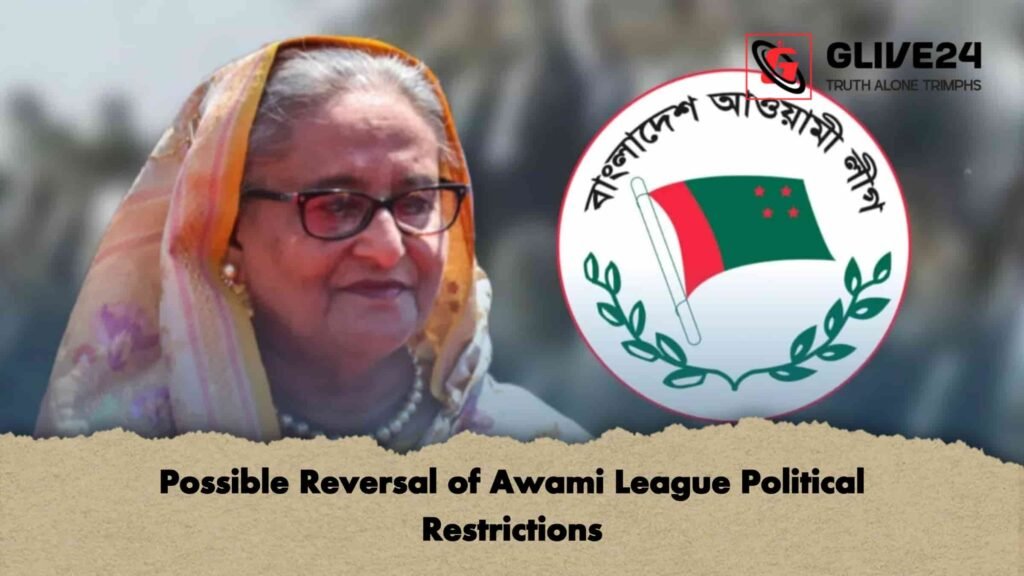
International diplomatic circles and political analysts are closely observing a silent re-evaluation concerning the political restrictions imposed upon the Bangladesh Awami League. Reliable sources suggest that diplomatic discussions at a global level have commenced regarding the potential lifting of the ban on the party’s political activities, raising the prospect that these restrictions could be revoked in the foreseeable future.
Foreign policy experts note that external partners are increasingly emphasizing the necessity of an inclusive political process within Bangladesh to ensure long-term regional stability. Consequently, there is growing anticipation that international pressure may mount to ease or completely rescind the administrative and statutory prohibitions placed upon the group.
Observations from International Analysts
According to an anonymous South Asian political affairs analyst:
“In a country of such profound geopolitical significance as Bangladesh, protracted prohibitions on major political entities are seldom viewed as sustainable solutions by the international community. External stakeholders generally prioritize a participatory and stable pluralistic ecosystem over prolonged exclusion.”
Concurrently, European diplomatic sources indicate that the European Union is closely monitoring the situation, focusing strictly on democratic participation and national stability, though it has refrained from making public statements regarding specific political parties. Furthermore, diplomatic channels confirm that the United Nations remains actively engaged in monitoring human rights conditions and democratic procedures within the state.
Core Political Context
While foreign powers maintain an official stance of neutrality and do not explicitly endorse any singular political faction, they have expressed distinct institutional concerns regarding the total omission of a major established political force from the governance framework. In light of persistent domestic instability and macroeconomic uncertainties, international observers stress that establishing an inclusive political environment is crucial for enduring stability.
Nevertheless, official administrative quarters have issued no formal statements indicating a policy shift. The current authorities maintain that all existing political restrictions will remain strictly operational until all relevant judicial proceedings and legal trials concerning the party’s leadership are concluded.
Timeline of Key Prohibitions and Institutional Actions
| Date | Authority / Institution | Action Taken | Operational Impact |
| May 2025 | Ministry of Home Affairs / Interim Administration | Issued an executive gazette notification under the Anti-Terrorism Act. | Prohibited all physical and digital activities of the Awami League and its affiliates. |
| May 2025 | Election Commission of Bangladesh | Formally suspended the political party registration of the Awami League. | Disqualified the party from contesting subsequent national legislative elections. |
| December 2025 | United Nations Special Procedures | Issued formal communication (AL BGD 6/2025) to domestic authorities. | Characterized the restriction as disproportionate to fundamental political rights. |
| Current Status (2026) | Judiciary & State Authorities | Ongoing prosecution of leadership via the International Crimes Tribunal. | Ban remains active pending final judicial determinations. |
Political analysts describe the current impasse as a delicate equilibrium between external diplomatic pressure and domestic political policy. The ultimate resolution will depend entirely on the trajectory of domestic political developments and corresponding international engagement over the coming months. To date, the Awami League has released no official response regarding these diplomatic discussions.