A deeply personal and humane chapter in the life of Bangladesh’s National Poet, Kazi Nazrul Islam, remains closely connected to the historic village of Teota in Manikganj. More than a geographical location, Teota represented the ancestral roots of the poet’s wife and became a place for which Nazrul himself developed a lasting emotional attachment.
The village is associated not only with Nazrul’s family life but also with elements of his literary work. His well-known poem Chhoto Hitler includes the lines:
“Mago! Ami juddhe jabo-i nishedh ki ma ar mani,
Ratrite roj ghumer majhe dake Poland-Jarmani…”
The poem was composed in a style intended to echo the voices of his two sons, Sani and Nini. Teota was their maternal family home, and through that connection the village became Nazrul’s in-laws’ residence and an important part of his personal world.
Table of Contents
From Ashalata to Promila
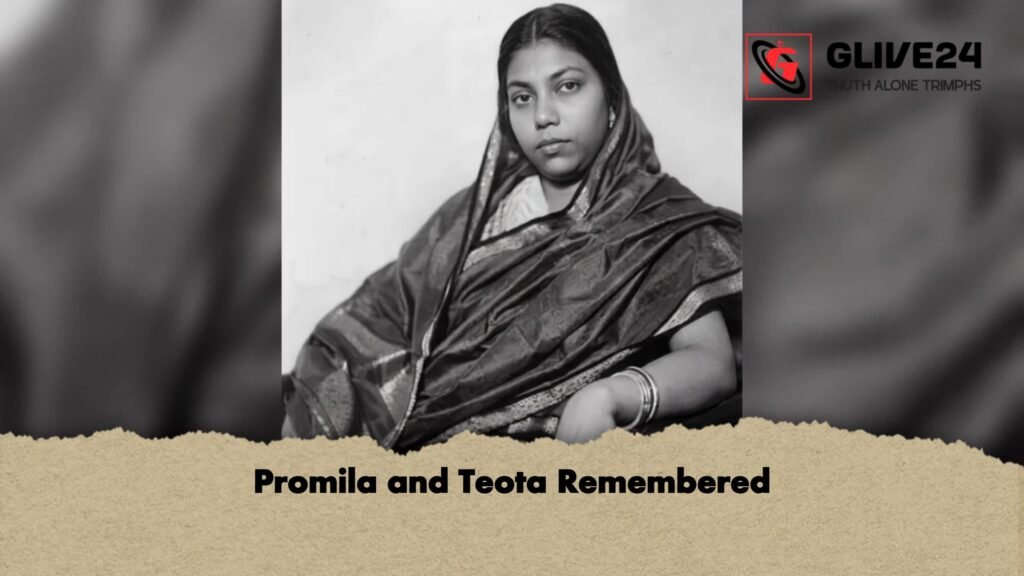
On 10 May 1908, a daughter named Ashalata Sengupta was born in Teota village. Within the family she was affectionately known as Duli. In later years she became widely known as Promila Nazrul, the lifelong companion of the poet.
Nazrul and Ashalata were married in কলকাতা (Calcutta) on 25 April 1924. It was Nazrul himself who gave her the name “Promila”. Over time she became known by several names, including Promila Devi, Promila Nazrul Islam and Promila Sengupta.
Family Background and Early Life
Promila’s father, Basanta Kumar Sengupta, and her mother, Giribala Devi, were both natives of Teota village. Following the death of her father, Giribala Devi moved with young Duli to the residence of her brother-in-law, Indra Kumar Sen, in Kandirpar, Comilla.
It was during one of Nazrul’s visits to Comilla that he stayed at the Sen household. There he became closely acquainted with the family environment, including the maternal affection of Birajasundari Devi and the musical talent of the young Duli, whose singing reportedly impressed the poet. Their acquaintance gradually developed into a close relationship that later culminated in marriage.
Literary Dedication and Family Life
Nazrul dedicated his second poetry collection, Dolonchapa, to Promila. The book was first published in the Bengali month of Ashwin in the year 1330 of the Bengali calendar. The dedication remains one of the notable literary markers of their relationship.
The couple’s family life was centred around their two sons, Sabyasachi and Aniruddha. In later years, their descendants continued to carry forward the family legacy associated with the poet and his wife.
Illness, Care and Final Years
Throughout the later years of their marriage, Promila remained beside Nazrul during periods marked by illness and hardship. She continued caring for him despite her own health difficulties.
Promila Devi died on 30 June 1962 after prolonged illness. Her life is remembered for devotion, endurance and quiet dedication to both her family and the poet.
Key Historical Information
| Subject | Details |
|---|---|
| Birth name | Ashalata Sengupta |
| Nickname | Duli |
| Later name | Promila Nazrul |
| Date of birth | 10 May 1908 |
| Birthplace | Teota village, Manikganj |
| Husband | Kazi Nazrul Islam |
| Marriage date | 25 April 1924 |
| Marriage location | Calcutta |
| Children | Sabyasachi and Aniruddha |
| Notable dedication | Dolonchapa poetry collection |
| Date of death | 30 June 1962 |
Teota village therefore occupies a distinctive place in the personal history of Kazi Nazrul Islam. Through Promila, the village became intertwined with the poet’s emotional life, literary inspiration and family history. Promila herself remains remembered not merely as the wife of the National Poet, but as a steadfast companion whose presence shaped an important chapter of Nazrul’s life and work.