Table of Contents
Comparison with Historical Benchmarks
Prior to this event, the industry’s definitive benchmark for marine liability was the Costa Concordia disaster in 2012. The grounding of that luxury cruise liner off the Italian coast resulted in roughly $1.6 billion in insured losses. The Baltimore collapse has now surpassed this milestone by over $1.2 billion, fundamentally resetting expectations for catastrophe modelling within the marine and specialty reinsurance markets. Market analysts note that whereas the Costa Concordia loss was driven by complex salvage operations and litigation lasting over a decade, the Baltimore event’s scale is primarily dictated by the sheer cost of infrastructure replacement and significant third-party liabilities.
Drivers of the Valuation Surge
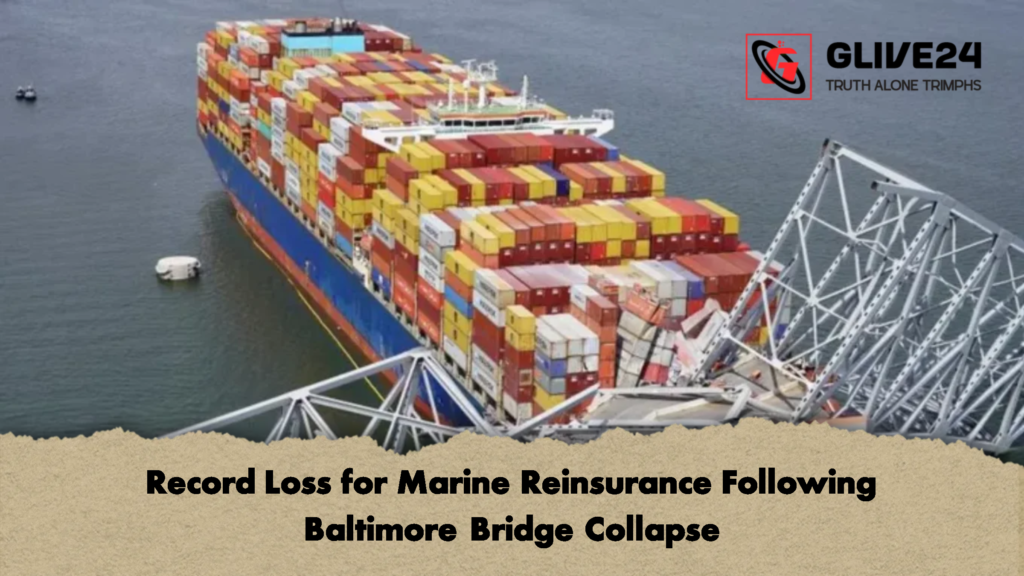
The substantial upward revision in loss estimates is largely attributed to the escalating costs associated with rebuilding the bridge. In a pivotal development, a settlement framework between the State of Maryland and the insurer Chubb (specifically its subsidiary ACE) accounts for approximately $2.5 billion of the total insured loss. This agreement addresses the state’s property claims and the urgent requirement for a replacement crossing.
Further contributing to the $2.8 billion total are several complex liability streams:
Wreck Removal and Salvage: The initial phase involved the United States Army Corps of Engineers clearing the shipping channel to reopen the Port of Baltimore.
Pollution and Environmental Liabilities: Addressing potential hazardous leaks from the Dali’s containers.
Lost Toll Revenue: The Maryland Transportation Authority (MDTA) reported substantial revenue deficits, as the bridge previously carried approximately 11.5 million vehicles annually.
Wrongful Death Claims: Legal settlements involving the families of the six construction workers who perished during the collapse.
Concentration of Risk in Reinsurance Markets
The financial impact of the Baltimore incident is expected to bypass primary insurers, falling instead upon the global reinsurance and retrocession markets. This is due to the structure of marine liability insurance, specifically the International Group of P&I Clubs (IG). The IG, which provides cover for approximately 90% of the world’s ocean-going tonnage, manages claims through a sophisticated pooling mechanism and a massive excess-of-loss reinsurance tower.
Whilst early projections suggested that the full $3 billion limit of the International Group’s reinsurance placement might be exhausted, the final settlement did not rely on statutory shipowner liability limits under the Limitation of Liability Act of 1851. Consequently, the loss has permeated multiple layers of the reinsurance “tower,” concentrating the impact among major global reinsurers. For specific market participants, a single loss event of this magnitude represents a significant percentage of their annual capital allocation for specialty risks.
Market Resilience and Future Implications
Despite the record-breaking nature of the claim, the broader (re)insurance market has demonstrated sufficient capacity to absorb the blow. Marine and energy portfolios are typically managed alongside peak natural catastrophe (nat-cat) exposures, such as U.S. hurricanes, where single-event losses can frequently exceed $100 billion.
However, the Baltimore collapse has acted as a “speed-bump” for falling premium rates in the marine sector. At the April 2026 renewals, reinsurers began adjusting their risk appetite, particularly for large-scale infrastructure and P&I liabilities. While the entry of fresh capital has prevented a widespread “hard market,” the industry remains cautious. The incident serves as a stark reminder of the “long-tail” nature of marine claims, with the full legal and reconstruction process projected to extend until the new bridge opens, currently estimated for late 2030.