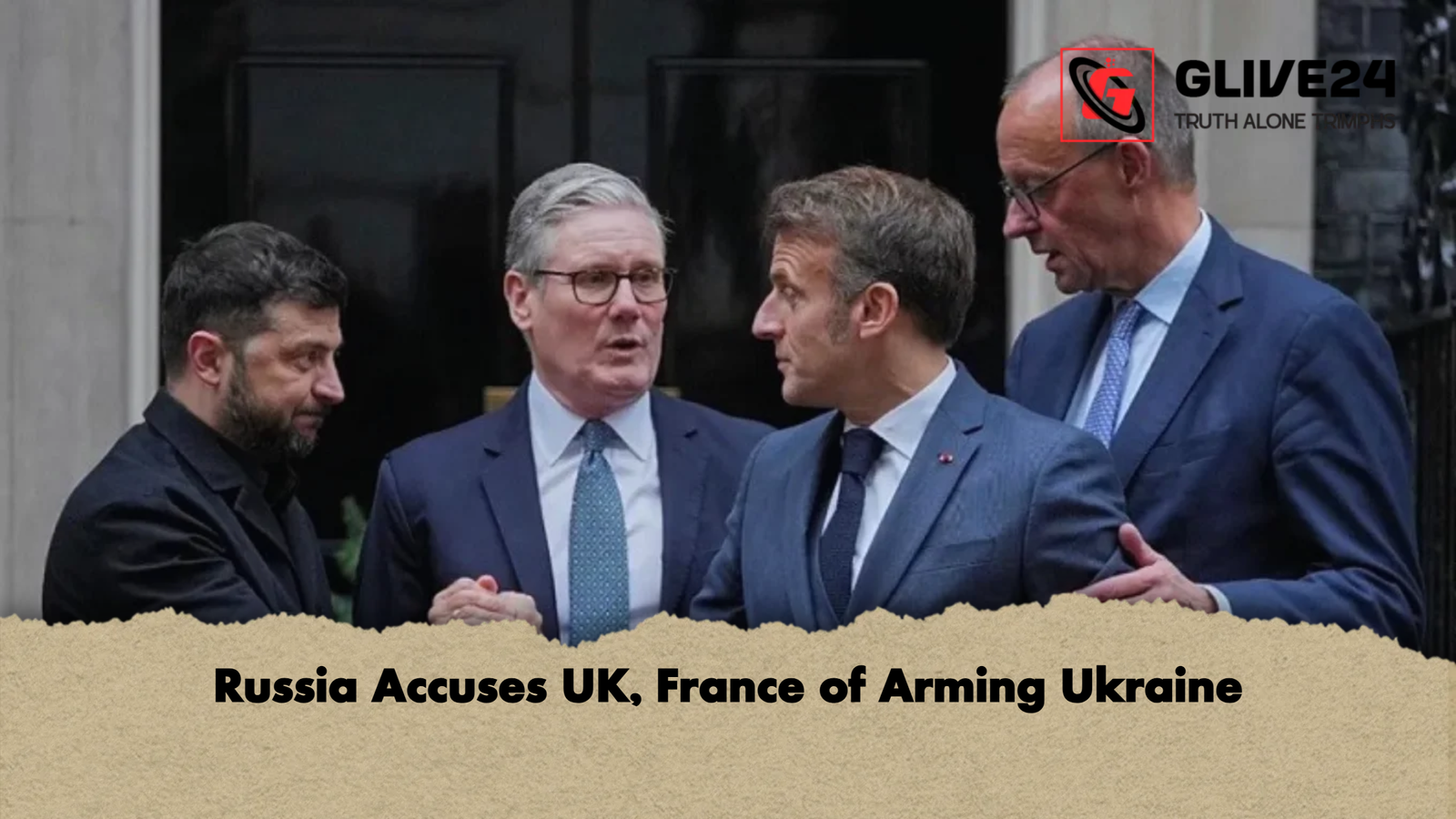
Russia has accused the United Kingdom and France of secretly preparing to supply Ukraine with nuclear weapon components and related technology, a claim that has heightened global tensions.
On Tuesday, 24 February, Russia’s foreign intelligence agency, the SVR, made the allegations, prompting the Russian Ministry of Foreign Affairs to issue a stern warning. The ministry cautioned that direct confrontation between nuclear-armed states could have catastrophic consequences for the entire world.
According to Moscow, the two European powers are allegedly assisting Ukraine in developing nuclear capabilities. However, the SVR has not provided any documentary evidence to substantiate these claims. France’s embassy in Moscow categorically rejected the allegations as entirely false, while the UK government has not yet issued a response. The Russian foreign ministry reiterated that any military conflict between nuclear powers would be disastrous on a global scale.
This accusation comes as Ukraine enters the fifth year of Russia’s full-scale invasion, following four years of intense conflict. European leaders have reaffirmed their commitment to supporting Kyiv, though divisions among Ukraine’s allies are becoming increasingly apparent.
Recently, Hungary vetoed a crucial €90 billion loan intended to support Ukraine and blocked new European Union sanctions against Russia. Nevertheless, EU Commission President Ursula von der Leyen visited Kyiv and reassured Ukrainian officials that the European Union would ensure the financial assistance is delivered through alternative channels.
On the fourth anniversary of the invasion, G7 leaders, including US President Donald Trump, reiterated their unwavering support for Ukraine. This joint declaration marks the first time G7 leaders have come together to make such a statement since Trump returned to the White House. The leaders expressed support for a peace process mediated by Trump, encouraging direct dialogue between the warring sides. However, they emphasised that a lasting peace can only be achieved through good-faith negotiations between Ukraine and Russia.
Meanwhile, the conflict on the ground remains intense. Russian forces continue missile and drone strikes on Ukrainian cities, disrupting electricity and infrastructure, while making only limited territorial gains. President Vladimir Putin has accused Ukraine of attempting to impede peace efforts. Conversely, Ukraine has refused to relinquish the final 20 per cent of its industrially rich Donetsk region.
In an emotional address, Ukrainian President Volodymyr Zelensky declared, “We will never surrender our homeland, won at the cost of thousands of lives, to the enemy.” In Kyiv, citizens, exhausted by years of warfare, silently commemorate fallen soldiers, creating a somber atmosphere throughout the city.
Ukraine Conflict Overview
| Aspect | Details |
|---|---|
| Alleged Nuclear Assistance | UK & France accused of supplying nuclear components |
| Russian Military Actions | Missile & drone strikes; infrastructure disruption; limited gains |
| Ukrainian Resistance | Refusal to cede Donetsk’s remaining 20% territory |
| International Support | G7 reaffirm support; EU guarantees financial aid despite Hungary veto |
| Peace Efforts | US mediation supported; lasting peace dependent on bilateral negotiations |
The combination of escalating accusations, ongoing military operations, and complex international diplomacy underscores the continued fragility of peace in the region. Global observers are closely monitoring these developments, aware that any misstep among nuclear-capable nations could have far-reaching consequences.