
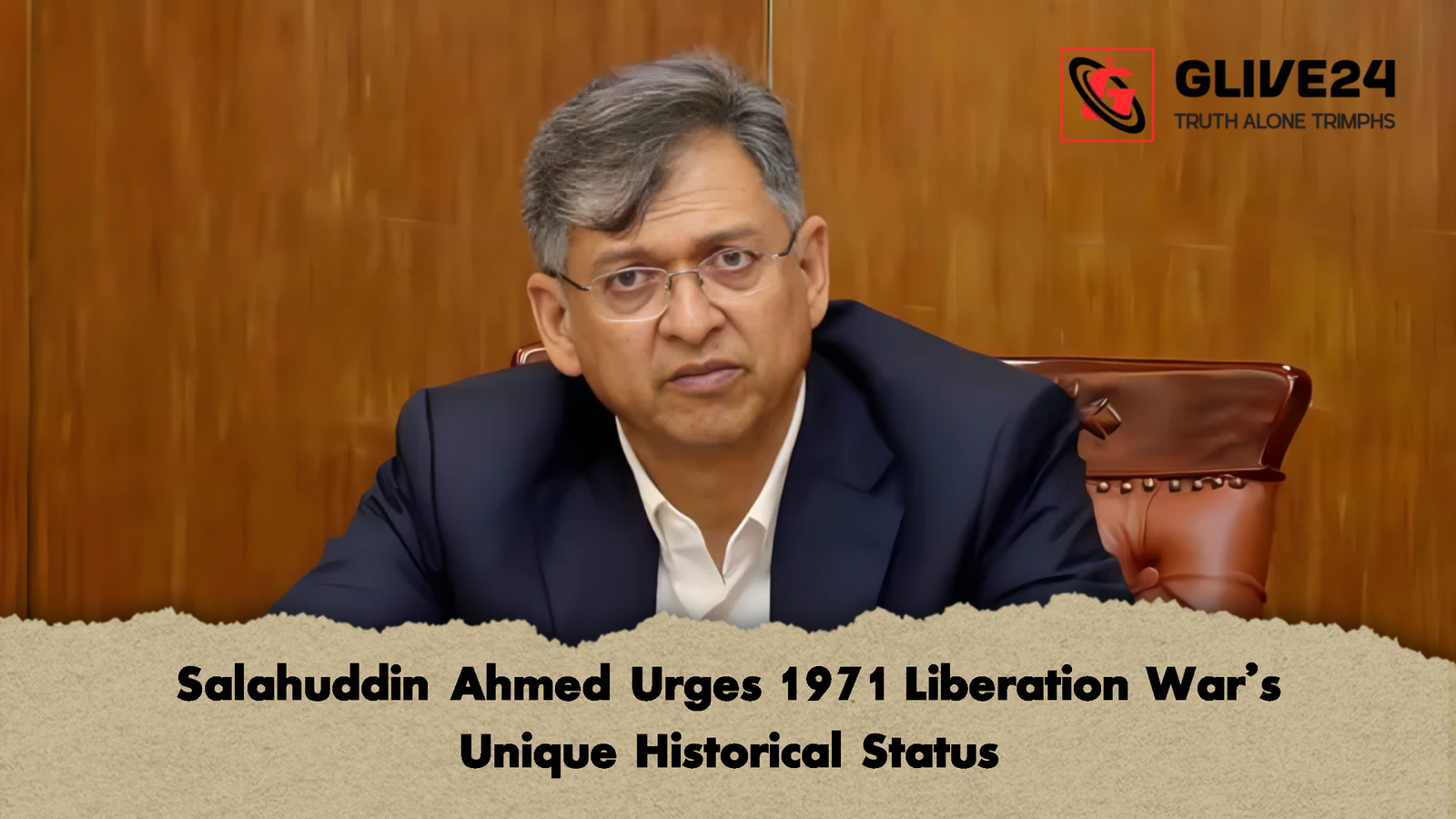
Home Minister Salahuddin Ahmed has called for the 1971 Liberation War to be recognised as an unparalleled and defining chapter in Bangladesh’s national history, stressing that it must not be equated with any other political or historical development.
He made the remarks while addressing a discussion meeting organised by the Bangladesh Nationalist Party (BNP) at the Institution of Engineers, Bangladesh auditorium in Dhaka on Friday (27 March), held in observance of Independence and National Day.
Table of Contents
“1971 stands above all historical periods”
Speaking before party leaders and invited guests, the Home Minister underscored the central importance of the Liberation War in shaping the identity and sovereignty of Bangladesh.
“1971 cannot be compared with any other historical period,” he said. “1971 comes first, everything else comes afterwards. The BNP does not deny anyone’s contribution to the nation’s history.”
He further emphasised that national unity should be grounded in respect for the Liberation War, cautioning against attempts to reinterpret or merge it with subsequent political events.
Reference to declaration of independence
Salahuddin Ahmed also referred to widely known accounts regarding the declaration of Bangladesh’s independence, stating that the public has long been familiar with the announcement broadcast from the Kalurghat radio station.
He added that on 27 March 1971, then Major Ziaur Rahman, acting in a provisional leadership capacity during the Liberation War, formally announced the declaration of independence. His comments reflected longstanding political narratives associated with the BNP’s interpretation of the events of 1971.
Recognition of broader historical movements
The Home Minister further stated that his party acknowledges the contributions of individuals involved in various democratic movements and uprisings throughout the country’s history.
He noted that those who sacrificed their lives or played leadership roles in mass movements have made significant contributions to Bangladesh’s political development, and that such contributions are widely recognised.
“We do not seek to take away anyone’s victory,” he said. “All contributions must be respected. However, the history of 1971 must be honoured above all.”
Key historical references highlighted
| Historical Theme | Position Presented | Context |
|---|---|---|
| Liberation War (1971) | Foremost and foundational national event | Birth of Bangladesh |
| Independence declaration | Broadcast from Kalurghat radio station | Wartime communication narrative |
| Role of Ziaur Rahman | Declared independence on 27 March in provisional capacity | Contested historical interpretation |
| Democratic movements | Contributions of all uprisings acknowledged | Broader political history |
Call for unity and historical respect
In concluding his speech, Salahuddin Ahmed reiterated that while differing political interpretations of history may exist, the significance of 1971 should remain beyond comparison or dispute.
He urged political stakeholders to uphold national unity by placing the Liberation War at the core of Bangladesh’s collective memory and identity.
“Whatever our differences, 1971 must remain at the forefront of our national consciousness,” he said. “It is a history that stands apart and must never be equated with any other event.”
The event formed part of the BNP’s Independence and National Day programme, during which senior party figures reflected on Bangladesh’s liberation history as well as contemporary political developments.