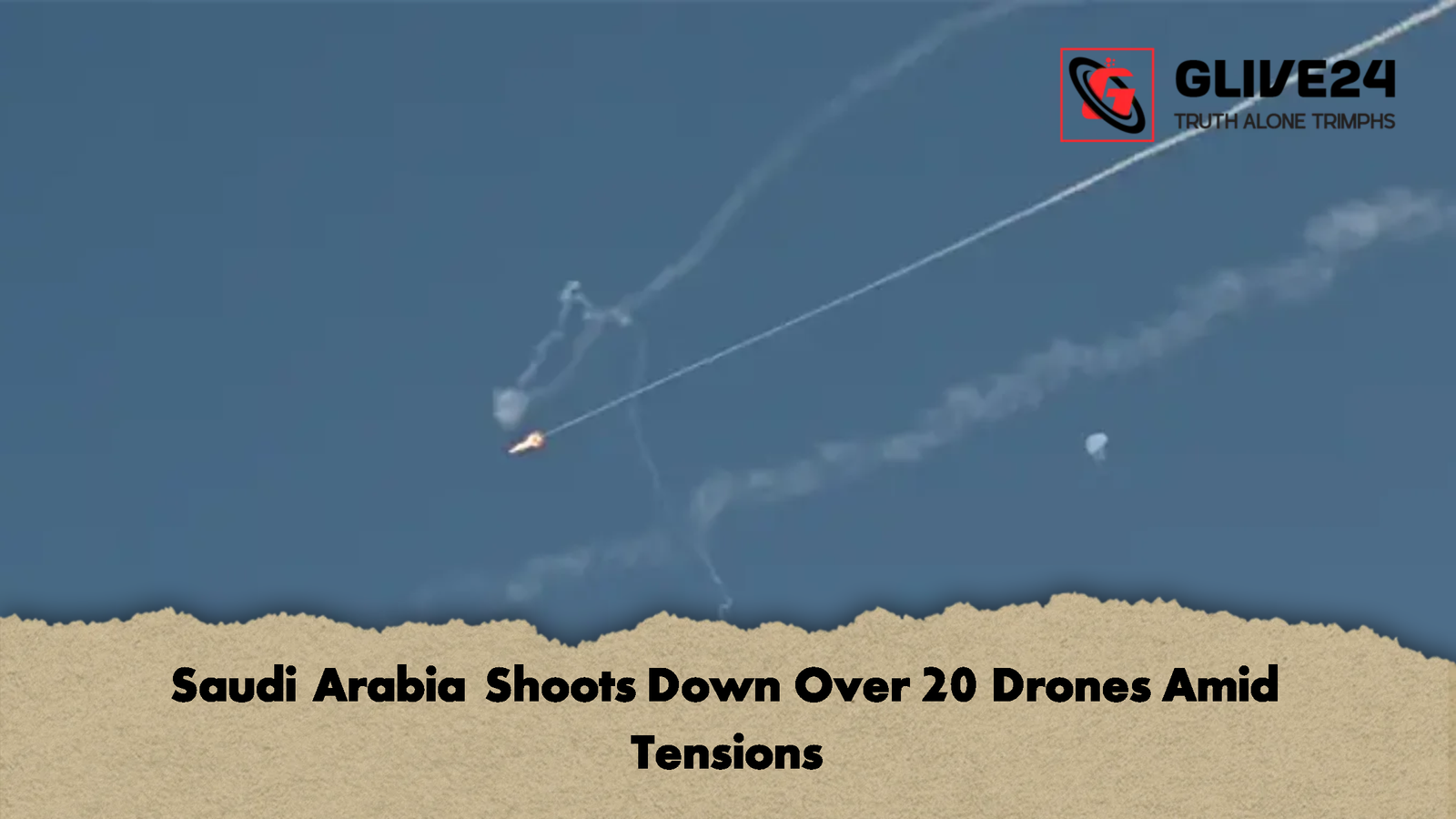
Saudi Arabia’s eastern provinces witnessed heightened security alerts on Saturday as the kingdom successfully intercepted more than twenty drones in a single day, underscoring escalating regional tensions. The Saudi Ministry of Defence confirmed that a total of 22 unmanned aerial vehicles (UAVs) were neutralised, demonstrating the capability and readiness of the country’s air defence systems.
Official updates posted on the social media platform X indicated that ten drones were first intercepted and destroyed over the eastern provinces. Later, a further twelve UAVs were reportedly downed by the kingdom’s air defence forces in the same region, reflecting a coordinated and rapid response to the aerial threat.
The strikes form part of a broader pattern of retaliatory attacks linked to Iran, which has intensified operations against Gulf countries, including Saudi Arabia, in response to US and Israeli military measures. Analysts note that the rising frequency of drone and missile strikes in recent weeks has aggravated regional instability and raised concerns over a possible wider conflict across the Middle East.
AFP reported that the drones primarily targeted strategic energy infrastructure, particularly oil facilities, which are vital not only for national security but also for global energy markets. Experts warn that continued assaults could disrupt production, exacerbate supply chain vulnerabilities, and push energy prices higher amid already tense international markets.
Saudi authorities stressed that their air defence network is fully prepared to counter UAV threats and reassured citizens that critical infrastructure remains protected. No casualties or significant damage were reported in connection with Saturday’s interceptions.
The broader regional picture highlights the complex security dynamics in the Gulf, where energy-rich nations must balance the protection of key installations against the risk of escalation that could draw in external powers. The persistent use of drones in these conflicts signals a shift in modern warfare, emphasising asymmetric capabilities and the vulnerability of high-value assets.
Saudi Drone Interceptions: Key Facts
| Aspect | Details |
|---|---|
| Date | Saturday, 21 March 2026 |
| Location | Eastern provinces, Saudi Arabia |
| Drones Intercepted | 22 (10 initial + 12 subsequent) |
| Defence Authority | Saudi Ministry of Defence |
| Threat Type | Unmanned aerial vehicles targeting strategic locations |
| Regional Context | Iran-led retaliatory operations in Gulf countries following US-Israel actions |
| Potential Implications | Disruption of energy infrastructure; pressure on global oil markets |
| Casualties/Damage | None reported |
The recent interceptions underline the strategic vulnerability of energy infrastructure in geopolitically sensitive regions and the evolving nature of modern drone warfare. Gulf states continue to enhance their defence capabilities while closely monitoring Iranian-backed operations.
As tensions remain high, international observers caution that further escalation could have wide-reaching geopolitical and economic consequences, demonstrating that modern unmanned threats are reshaping regional security strategies and global energy stability.