
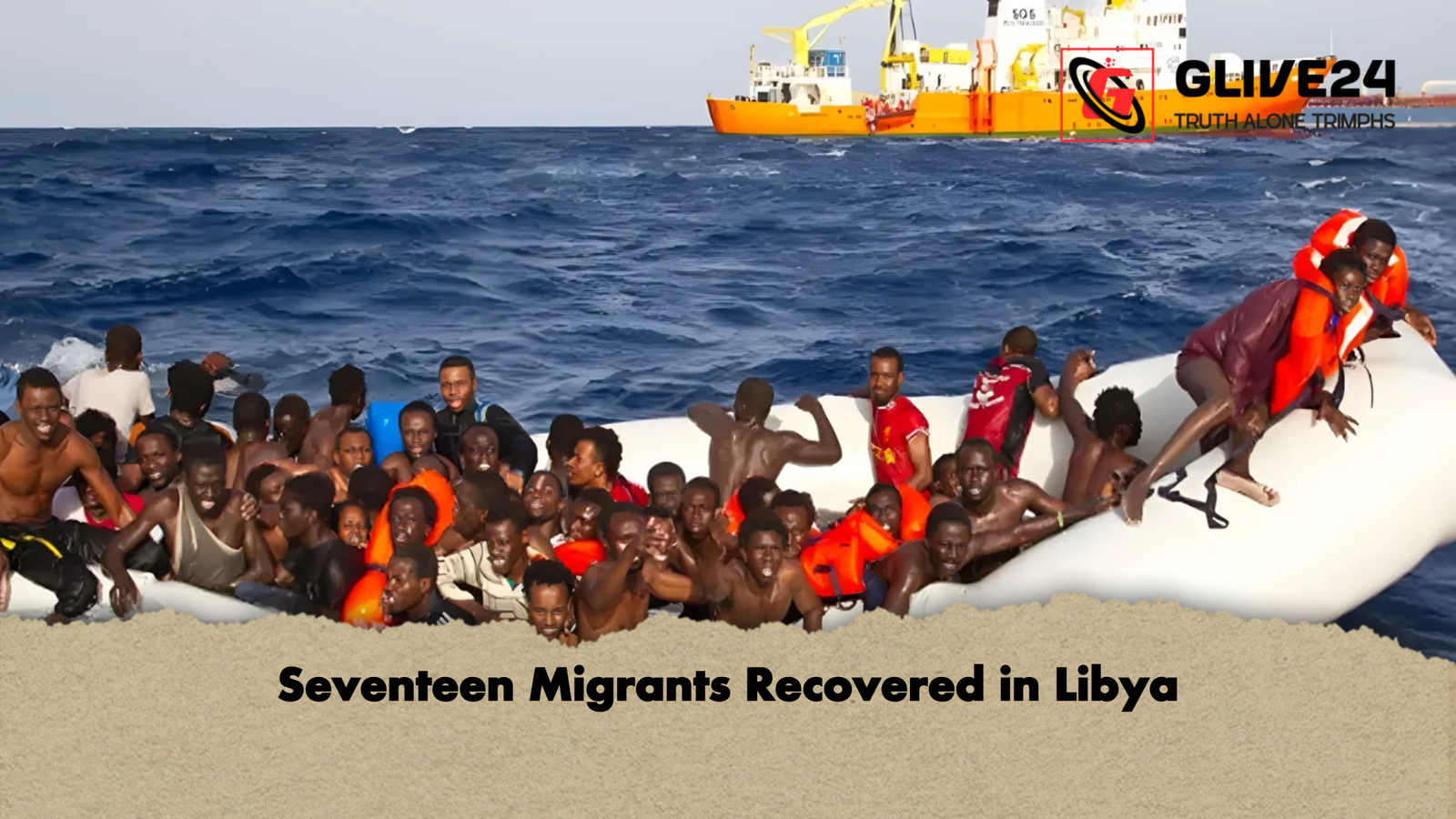
Seventeen migrants, including a Bangladeshi national, have been found dead along the western Libyan coastline near Zuwara, according to local authorities. The bodies were recovered over several days from the shoreline approximately 117 kilometres west of the capital, Tripoli.
The recovery operation was carried out by the Emergency Medicine and Support Centre (EMSC), which operates under Libya’s Ministry of Health. The centre confirmed that its teams retrieved the bodies from different points along the coast and transported them in accordance with established medical and legal procedures. Photographs released by the authorities show medical personnel handling the remains with caution and placing them in white body bags before loading them into ambulances.
Table of Contents
Recovery and identification details
Authorities stated that the deceased were among individuals attempting irregular sea crossings towards Europe via the central Mediterranean route. Libya has remained a key transit point for such journeys, particularly since 2011, due to ongoing instability and limited border enforcement capacity.
Of the 17 bodies recovered, 14 have already been buried in accordance with applicable religious and legal procedures. Two bodies remain unidentified, and efforts to establish their identities are ongoing. One of the deceased has been confirmed as a Bangladeshi national, and his body has been handed over to his family in Tripoli.
Summary of recovered bodies
| Category | Number / Status |
|---|---|
| Total bodies recovered | 17 |
| Bangladeshi national | 1 |
| Buried | 14 |
| Unidentified | 2 |
| Handed to family | 1 (Bangladeshi national) |
Context of migration route
Since 2011, Libya has been widely used as a transit country for irregular migration towards Europe. The central Mediterranean route is one of the most frequently used pathways for migrants departing from North African shores. Individuals from various parts of Asia and Africa often attempt the crossing in overcrowded and unseaworthy inflatable or wooden boats.
These journeys are widely recognised by international organisations as high-risk due to unstable maritime conditions, limited safety equipment, and the involvement of informal trafficking networks. In addition to maritime risks, migrants travelling through desert routes towards coastal departure points also face severe environmental conditions and shortages of food and water.
Operational response
The Emergency Medicine and Support Centre confirmed that its teams coordinated the recovery operation in cooperation with local authorities. The process included retrieval from multiple coastal locations, transportation to designated facilities, and subsequent handling under official procedures.
The authorities have not released further details regarding the circumstances leading to the deaths. Investigations into identification and documentation of the deceased continue, particularly in cases where personal identity could not be established at the time of recovery.
The incident adds to a continuing record of fatalities reported along the Libyan coast, where irregular migration flows remain active due to persistent regional displacement pressures and the country’s role as a transit corridor towards Europe.