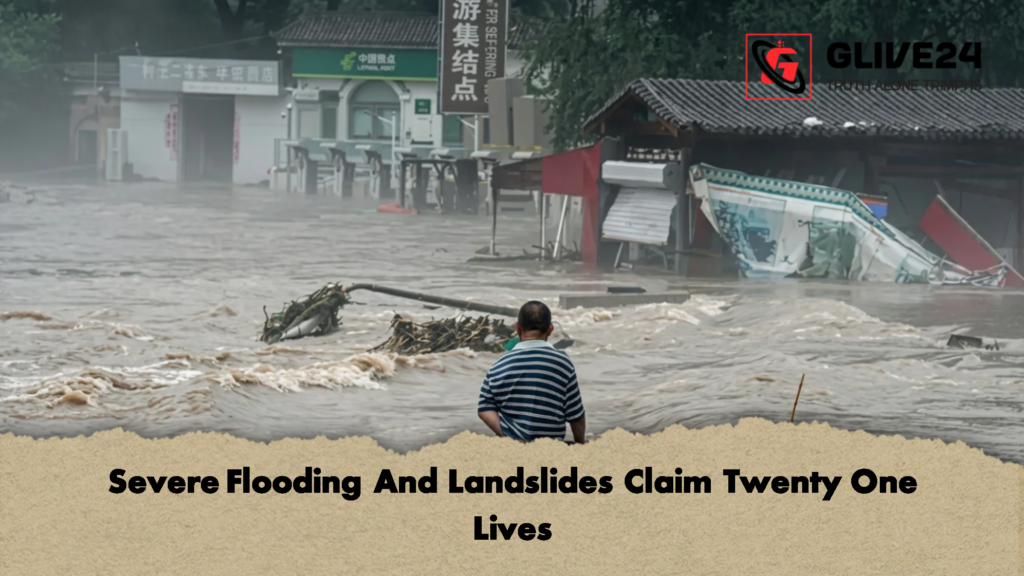
Continuous and torrential rainfall across the southern and central regions of China has triggered catastrophic flooding and widespread landslides, resulting in the confirmed deaths of at least 21 individuals. The intense meteorological event has severely disrupted daily life, causing the suspension of educational institutions, the complete severance of major road networks, and extensive failures within the regional electrical power grids.
According to an official media report published by the Reuters news agency on Tuesday, 19 May, the Chinese military has been formally deployed to the worst-affected geographical zones to spearhead urgent emergency response operations. Video footage broadcast by the state-run media outlet China Central Television (CCTV) showed rescue personnel and military units navigating deeply submerged urban areas to evacuate trapped residents and transport them to designated temporary shelters.
Atmospheric Confluence Zones Drive Substantial Precipitation Volumes
Meteorological specialists and climate scientists have identified a complex weather pattern driving the historic deluge. According to official assessments, a massive volume of highly humid air originating from three separate marine bodies—the Bay of Bengal, the South China Sea, and the Pacific Ocean—converged simultaneously over the Chinese mainland.
This rare atmospheric confluence has generated a massive storm system that stretches across an expansive front exceeding 1,000 kilometres in length. The sheer volume of moisture carried by these combined maritime air currents has caused prolonged and unprecedented downpours over multiple provinces, completely overwhelming local drainage systems and saturated soil structures.
National Emergency Financial Allocation and Meteorological Warnings
In direct response to the escalating humanitarian and infrastructural crisis, the central government has authorized an immediate financial intervention. Authorities have formally allocated an emergency fund of 150 million Yuan to support disaster relief operations, reinforce damaged flood barriers, and provide essential aid to displaced populations across the impacted municipalities.
Despite these immediate mitigation efforts, the China Meteorological Administration has issued a stern advisory indicating that the overall risk of rain-induced secondary disasters remains exceptionally high, particularly throughout the southern provinces. Local administrative bodies have renewed their emergency declarations, urging citizens residing in vulnerable low-lying regions or mountainous zones to remain highly vigilant, monitor official weather bulletins continuously, and adhere strictly to any mandatory evacuation protocols issued by emergency workers.