
Khabor Wala Desk
Published: 9th February 2026, 6:24 AM
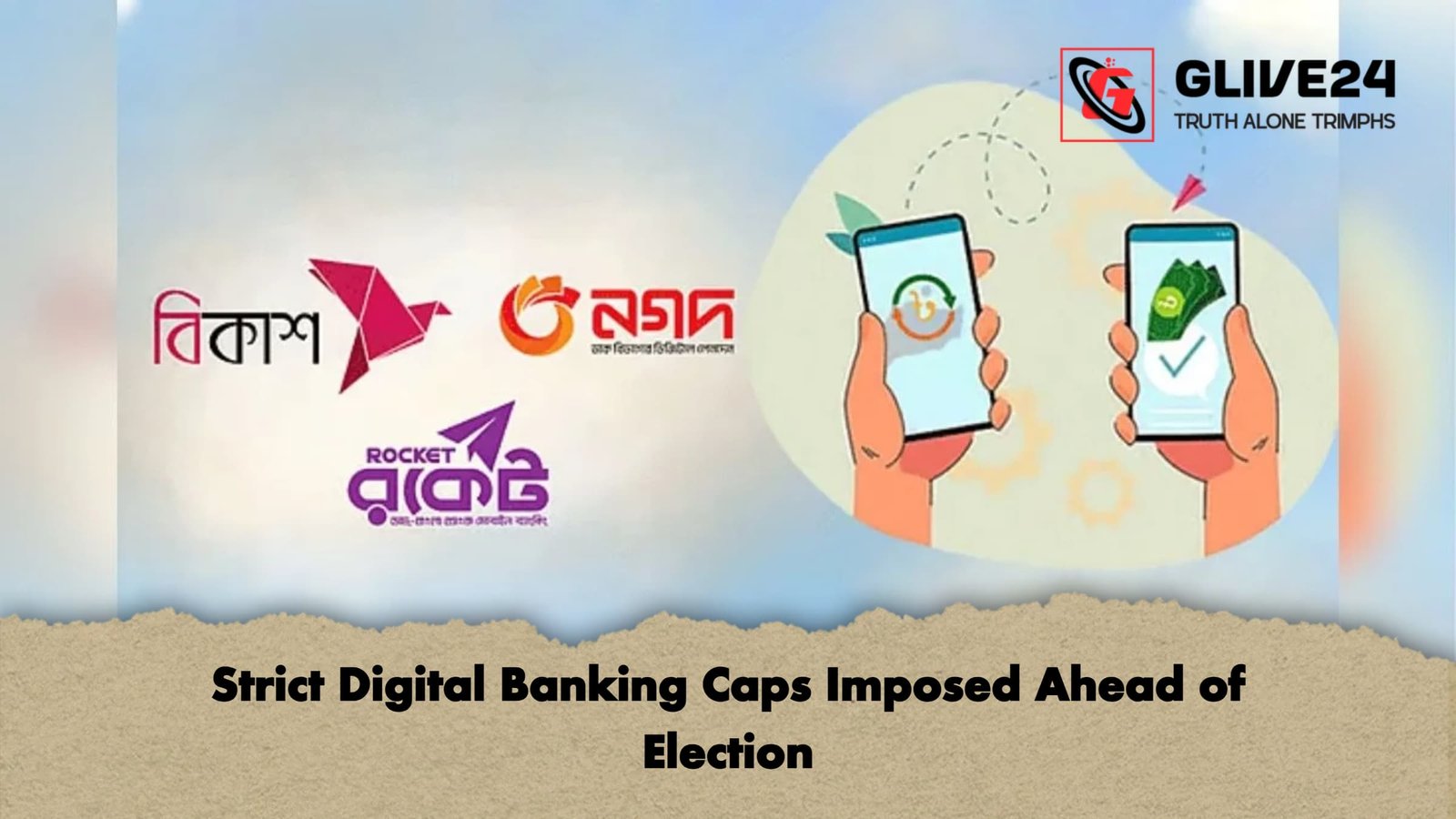
In a sweeping move to curb the illicit flow of capital during the upcoming electoral cycle, Bangladesh Bank has announced drastic restrictions on Mobile Financial Services (MFS) and internet banking. The regulatory intervention, aimed at preventing the “misuse of funds” during the 13th National Parliamentary Election, will come into effect at midnight tonight and remain in place until 11:59 pm on 12 February 2026.
Table of Contents
Under the new directives, popular digital wallet platforms such as bKash, Rocket, and Nagad will see their functionality significantly curtailed. For the duration of this 96-hour window, Person-to-Person (P2P) transfers will be capped at a mere 1,000 Taka per transaction. Furthermore, customers will be restricted to a maximum of ten such transactions per day, effectively placing a 10,000 Taka daily ceiling on mobile fund transfers.
Central bank officials stated that these measures are essential to maintain the integrity of the democratic process. By limiting the volume and frequency of digital transfers, authorities hope to mitigate the risk of vote-buying and other forms of financial coercion that often shadow high-stakes elections.
| Service Category | Restriction Status | New Transaction Limit |
| MFS P2P Transfers | Heavily Restricted | 1,000 Taka per transfer |
| Daily MFS Limit | Capped | 10,000 Taka (Max 10 transfers) |
| Internet Banking (IBFT) | Suspended | No P2P transfers allowed |
| Merchant Payments | Unaffected | Standard limits apply |
| Utility Bill Payments | Unaffected | Standard limits apply |
While MFS users retain limited transfer capabilities, users of traditional internet banking and mobile banking apps face a total suspension of Person-to-Person transfers via the Interbank Fund Transfer (IBFT) network under the National Payment Switch Bangladesh. This effectively freezes the ability of individuals to move money between different bank accounts using digital interfaces for the next four days.
However, in an effort to minimise disruption to essential commerce, the central bank confirmed that merchant payments and utility bill settlements remain exempt from these restrictions. Businesses and consumers can continue to pay for goods and services at retail outlets and settle their electricity or water bills through existing digital channels.
The central bank’s notification also mandates that all MFS providers establish Emergency Response Cells to monitor transactions in real-time. Providers are under strict instructions to place all activities under “close monitoring” and must report any suspicious or “abnormal” transaction patterns to the nearest law enforcement agencies immediately.
Financial institutions and MFS providers have further been directed to provide full cooperation to the Election Commission and security forces. These agencies may request transaction logs or data to assist in the investigation of potential financial crimes related to the election.



Comments