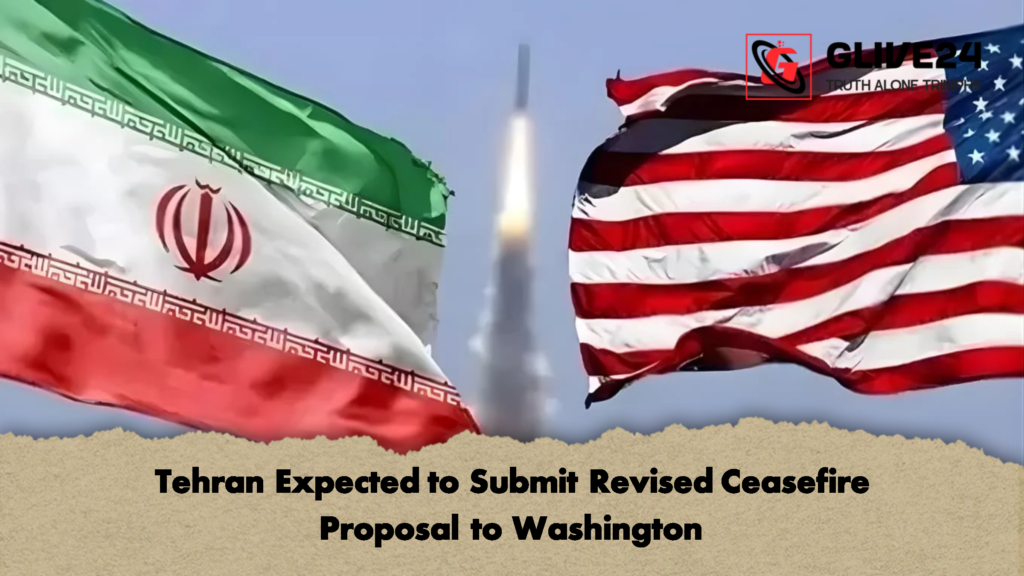
In a notable development within the complex geopolitical framework of the Middle East, reports indicate that the Islamic Republic of Iran is preparing to submit a revised diplomatic proposal to the United States. This new overture, aimed at de-escalating regional hostilities and securing a definitive ceasefire, follows a period of heightened friction and public discourse between the two nations.
Intermediaries in Pakistan have indicated their expectation that the modified draft will be formally relayed to the American administration within the coming days. The Pakistani government continues to serve as a vital diplomatic conduit, facilitating communication between Tehran and Washington in the absence of direct bilateral ties.
Consultations and Internal Deliberations in Tehran
The push for a revised framework follows a period of significant diplomatic activity for Iran’s senior leadership. Abbas Araghchi, the Iranian Foreign Minister, returned to Tehran on Tuesday, 28 April 2026, following the conclusion of an official visit to Russia. Upon his arrival, Mr Araghchi began consultations with high-ranking government officials and national security strategists to refine the terms of the proposal.
The previous iteration of the Iranian proposal was reportedly met with considerable dissatisfaction from the White House. Under those terms, Tehran insisted upon an immediate cessation of military hostilities as a mandatory precursor to any dialogue concerning its nuclear programme or broader regional security concerns. Sources cited by CNN suggest that President Donald Trump had previously signalled a firm rejection of this “ceasefire-first” approach, necessitating a structural rethink within the Iranian foreign ministry.
However, the pace of these amendments is expected to be measured. Internal decision-making in Tehran is currently described as “slow” due to the highly restricted nature of communication with the Supreme Leader, Mojtaba Khamenei. This restricted access to the highest level of authority suggests that any final diplomatic document will undergo rigorous internal scrutiny before being dispatched.
Presidential Rhetoric and the Strait of Hormuz
The volatility of the current diplomatic climate was underscored on Tuesday by a series of statements made by President Donald Trump. Utilising his social media platform, Truth Social, the American President offered a stern assessment of Iran’s internal stability. He claimed that the Iranian leadership had reached out to Washington regarding the Strait of Hormuz—the world’s most critical maritime chokepoint for petroleum exports.
President Trump stated:
“Iran has just informed us that they are a mess. They want us to open up the Strait of Hormuz as soon as possible. Iranians are now looking for their leadership. I hope they are successful.”
The President further asserted that the Iranian state was in a condition of “collapse” and suggested that the nation’s officials were struggling to identify their own hierarchy. These claims imply a shift in the regional power dynamic, suggesting that Tehran is under significant pressure to ensure the continued flow of maritime commerce through the Strait, which facilitates approximately 20% of global oil consumption.
Geopolitical Implications of a Revised Deal
The forthcoming proposal is being viewed by international observers as a pivotal litmus test for regional stability. The “turmoil” described by diplomatic sources reflects a state of high uncertainty; the acceptability of the revised terms will depend entirely on whether they align with the stringent requirements set forth by the Trump administration.
If the new draft fails to address fundamental American concerns regarding nuclear proliferation and regional influence, the current state of “high-intensity friction” is expected to endure. For the present, the international community remains focused on the Pakistani intermediaries, whose delivery of the document will determine if a diplomatic path to peace remains viable or if the geopolitical deadlock in the Middle East will intensify.