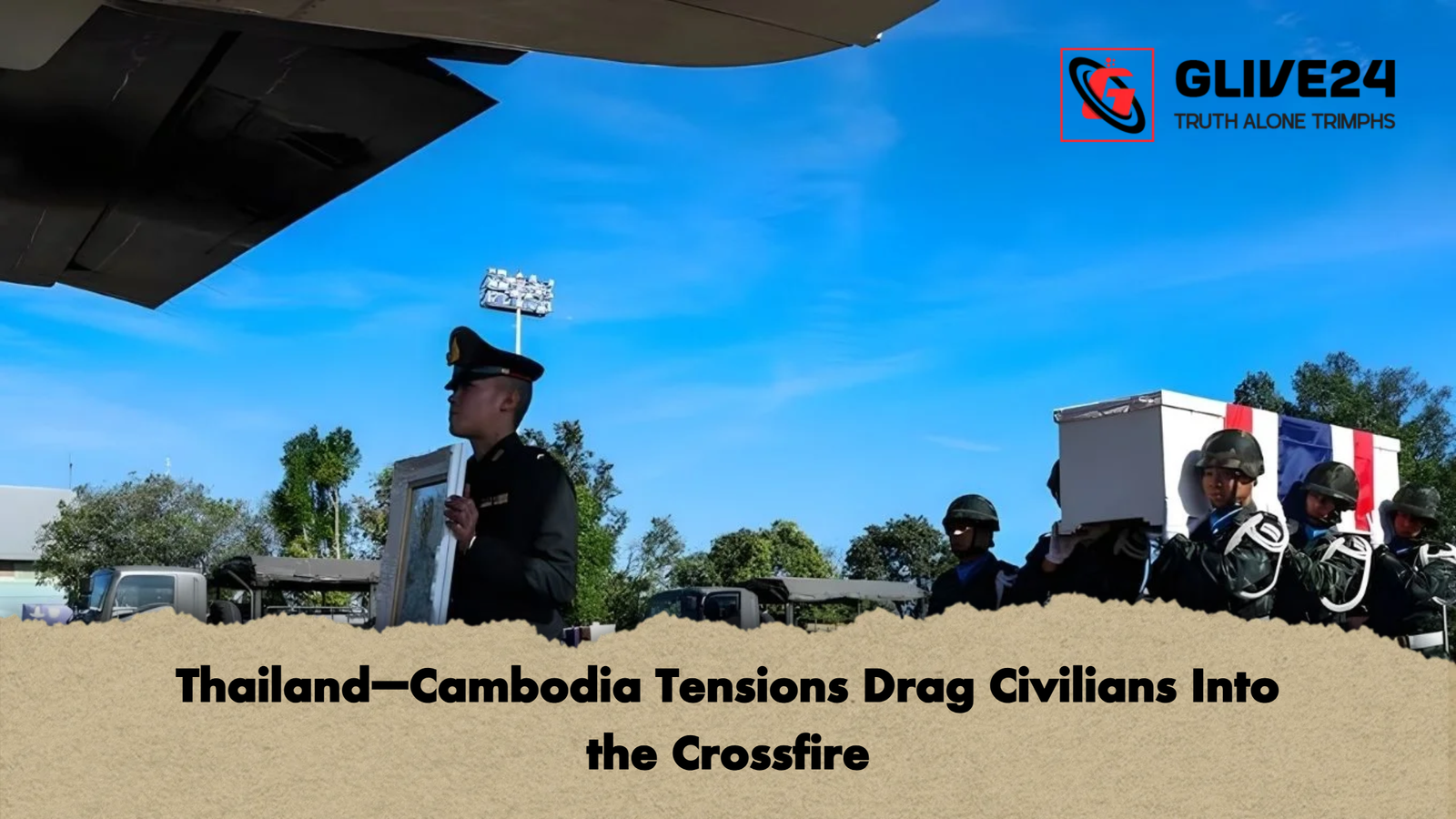
The latest flare‑up between Thailand and Cambodia has once again exposed the deep scars left by decades of unresolved border disputes. What began as isolated military incidents has rapidly evolved into sustained confrontations, prompting emergency curfews, military deployments, and widespread displacement of civilians living near the frontier.
The epicentre of the current crisis lies along Thailand’s south‑eastern border, particularly in Trat province, where authorities have imposed strict night‑time restrictions in five districts. The curfew reflects growing fears that sporadic clashes could escalate further, pulling local communities into a conflict shaped more by history and politics than by present‑day necessity.
This year alone, Thailand and Cambodia have faced multiple episodes of tension. In May, the killing of a Cambodian soldier during a border skirmish reignited old hostilities that many believed had cooled. Instead, the incident reopened wounds dating back generations, rooted in disputed maps, colonial‑era demarcations, and national pride on both sides.
As the violence intensified, hundreds of thousands of people were forced to flee their homes. Makeshift shelters sprang up almost overnight, while humanitarian agencies struggled to respond to rapidly changing conditions. Farmers abandoned fields, traders lost livelihoods, and children saw their schooling disrupted as uncertainty became the new normal.
Thailand’s military actions over the weekend marked a significant turning point. Officials confirmed the destruction of a bridge allegedly used to move Cambodian heavy weaponry, alongside strikes targeting artillery units stationed in Cambodia’s Koh Kong province. Thai leaders insist these actions were defensive and necessary, designed to prevent further escalation.
Cambodia, however, has presented a starkly different narrative. Phnom Penh has accused Thailand of attacking civilian infrastructure, fuelling anger among its population and placing additional pressure on its government to respond forcefully. The competing accounts highlight the information war running parallel to the fighting on the ground.
Political rhetoric has hardened accordingly. Thailand’s defence ministry has stated unequivocally that negotiations cannot begin while Cambodian forces remain active in disputed areas. Cambodia, in turn, has demanded international scrutiny, calling for accountability and restraint.
Efforts at mediation have so far failed to deliver tangible results. Although Donald Trump claimed credit for brokering a ceasefire earlier this year with Malaysian assistance, the current outbreak suggests that any agreements reached were fragile at best. Trump’s recent phone calls with both national leaders raised hopes of renewed calm, but those hopes were quickly dashed by fresh exchanges of fire.
Prime Minister Anutin Charnvirakul’s declaration that Thailand will continue fighting until all threats are neutralised has resonated strongly with nationalist sentiment at home. Yet critics warn that prolonged confrontation risks entrenching hostility and destabilising the wider region.
For civilians caught in the middle, political posturing offers little comfort. As curfews tighten and gunfire echoes across borders, families are left wondering how long they must live under the shadow of a conflict that seems destined to repeat itself.