Table of Contents
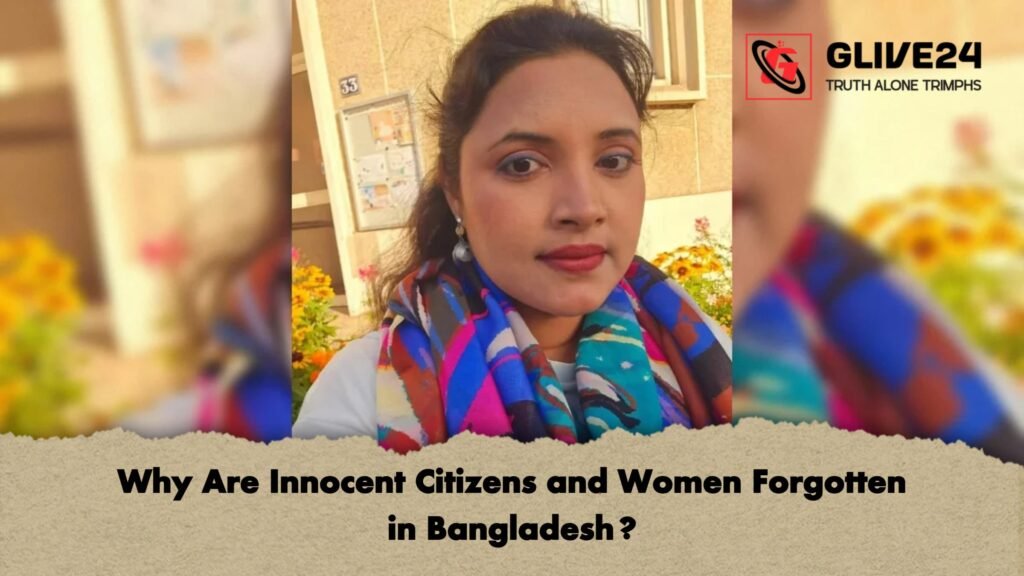
— Atika Nuri —
Following the mass uprising, when the interim government assumed power, the expectations that swelled within the hearts of ordinary citizens were, in a word, skyrocketing. Having endured over a decade and a half of unfulfilled promises, mountain-like discrimination, and institutional injustice, the aggrieved public perhaps believed that total redress would materialize overnight. While it is true that sweeping reforms cannot be achieved in such a brief window, the public’s faith would not have eroded into this sharp distrust and despair had the government managed to ensure at least a baseline of good governance and relief in a few critical sectors.
Among these, the most urgent issue that must be addressed is the severe deterioration of the law and order situation. The very uprising that was fueled by the dream of a non-discriminatory, safe Bangladesh bound by the rule of law—where administrative frameworks would be reformed, mob justice brought to a halt, women’s safety guaranteed, and the harassment of innocent people through fabricated cases or physical assault ended—has instead left us confronting a starkly different reality on that same promised land.
The Reverse Gear of Darkness and ‘Mob Justice’
We had envisioned ourselves as passengers on a new, progressive train. In particular, a profound ambition had kindled within us to witness the empowerment of women across all spheres, including politics, in post-uprising Bangladesh. Reality, however, presented a diametrically opposed picture. Since the uprising, the country appears to have retrograded down a strange, backward path. Certain radical, extremist, and hard-line right-wing factions have reared their heads anew. They remain active both behind the scenes and in the open, striving to impose rigid social mandates, block the path of progress, and drag the nation back into a world of darkness.
The culture of ‘mob justice’ or kangaroo courts that has recently emerged under the guise of narcotics control is particularly glaring. We all stand firmly against drug abuse, but celebrating impunity in its name can never be a solution; rather, it poses a monumental threat to the rule of law. Today, certain newly emerged extremists and overzealous individuals are engaging in criminal activities—including launching attacks on homes, vandalism, and looting—under the pretext of anti-drug drives.
This begs the question: is there no longer any need for laws and courts in this country? Why is the state spending millions to maintain the Department of Narcotics Control or the police administration? How is it justifiable for an excited mob to gather and inflict medieval-style torture on any individual based on a mere, unverified allegation of drug trading or possession? What kind of civilization is mirrored when a son is brutally beaten before his mother’s eyes with his hands and eyes bound? If this culture of bypassing the administration and taking the law into one’s own hands is not curbed, drugs will not be eradicated; instead, the state will hurtle toward absolute anarchy.
The ‘Epidemic’ of Rape and the Cries of Impunity
It is impossible not to address the plight of women. In contemporary Bangladesh, the abuse, murder, and rape of women and children have assumed the proportions of a social epidemic. To label this pervasive brutality an ‘epidemic,’ just how much more atrocities must we witness? No matter our socio-economic strata, we all live equally traumatized, alarmed, and devastated by the persistent terror of sexual violence. Will we ever be able to rein in or tame this monstrous affliction called rape?
Combating rape and sexual violence requires more than just legal measures; it demands a deep psychological and cultural resistance. A profound soul-searching and upheaval are necessary across every tier of society—originating within families and extending through educational institutions and the media. Eradicating this disease is impossible without social sensitivity, awareness, and the collective, uncompromising participation of the legal and judicial systems. Tragically, these criminal networks do not stop at sexual violence alone; they murder their victims and brutally mutilate the corpses. A civilized society stands as a mute witness to these most grotesque acts. No child, adolescent girl, or elderly woman is safe from these monsters today.
This piece is written primarily for the spirits of Ramisa and Achia. Much like Achia from Magura who met a cruel fate, Ramisa’s destiny proved no different. Recently, reports emerged regarding the mysterious death of a young woman named Noyonmoni in Shibganj, Rajshahi-Chapainawabganj, amidst allegations of a premeditated murder. From Teknaf to Tetulia, thousands of stories detailing the brutal torture, murder, and rape of children, adolescents, the elderly, or mentally unstable women lie buried in the corners of Bangladesh. Statistics indicate that less than a quarter of these occurrences ever surface in the media.
Why are malice, criminality, and volatility surging all around us? Why do rape and murder persist unabated in an independent and sovereign Bangladesh? Here, the cry of justice literally weeps in silence. Why must parents live in perpetual, suffocating anxiety over the safety of their children, particularly their daughters? Who will answer these questions? The state? The government? Society? Or the Almighty? If the answers remain unknown, then tell us at least this much—who is the next victim after Achia and Ramisa? Will it be me, or the daughters of the generations to follow yours?
Political and Religious Apologia for Crime
The most terrifying aspect is when excuses are forged for rapists and murderers under the banner of society or religion. Those who justify or indirectly abet the actions of these criminals play a deeply sinister role. For instance, the notorious religious speaker Enayetullah Abbasii consistently attempts to find warped justifications or engage in ‘victim-blaming’ for nearly every instance of violence against women. During a widely discussed television talk show hosted by journalist Khaled Mohiuddin, he remarked that rape cannot be legally proven without the testimony of four eyewitnesses or the accused’s own confession! He then supplemented this by asserting that if Sharia law were established in the country, women would no longer be raped. Such institutionalization and religious misinterpretation of crime embolden perpetrators, giving them the audacity to believe they can escape entirely unscathed.
Meanwhile, turning our gaze to the political arena, even after the newly elected government assumed office following the 2026 general elections, no visible or positive transformation in the law and order situation has caught the public eye. Granted, this is not the failure of a single administration; a form of post-election instability has historically lingered within the political reality of Bangladesh. This period routinely witnesses vindictive violence, clashes, and vandalism alongside political rivalry, directly putting the lives and livelihoods of ordinary citizens at risk. Consequently, a deep-seated sense of insecurity and apprehension blankets society.
Women in Politics: The Chasm Between Dream and Reality
The data surrounding the inclusion of female candidates by political parties in the 2026 elections has left us profoundly disheartened. The number of women aboard the recent electoral train was abysmal, easily counted on one’s fingers. Several political parties, including the faith-based Jamaat-e-Islami which now occupies the main opposition bench in parliament, did not field a single female candidate! Jamaat, along with most of the country’s major parties, failed to dismantle even the bare minimum of this discrimination when it came to women contesting via direct ballots.
In such a landscape, it is entirely natural for skepticism to brew regarding the future of women’s empowerment and equal rights in Bangladesh. We know that throughout the long history of Bangladesh’s struggles and movements, women have been the very definition of inspiration and valor. Yet, while women maintained a fierce and front-line presence on the streets during anti-authoritarian or anti-discrimination uprisings, we continue to witness a radical imbalance at the decision-making tables and leadership seats.
According to several academics, political thinkers, and women’s rights activists, the moment a woman enters public spaces or politics today, she is instantly targeted with vile online trolling and character assassination. Fearing this social humiliation, families pull back. Furthermore, women do not receive the institutional backing or reassurance from political parties that would grant them the fortitude to fight. As a result, the very women who stood shoulder-to-shoulder to make the anti-discrimination movement successful find themselves, at the end of the day, the greatest victims of discrimination.
Concluding Thoughts
The active participation of women in social, political, and state policymaking spheres is not merely a matter of ‘women’s rights’ or establishing equality; rather, it is a fundamental prerequisite for building an effective, inclusive, and sustainable state.
Justice in Representation: Women constitute nearly half of the country’s population. Therefore, their absence from decision-making nodes leaves the state democratically crippled.
Qualitative Improvement of Policy: Global research and practical experience demonstrate that when women participate in policymaking, legislation concerning education, healthcare, family welfare, workplace safety, and social justice becomes far more humane and realistic.
Therefore, merely offering tokenistic gestures or quotas to women is insufficient. Instead, ensuring their effective participation through education, political training, safe working environments, and institutional support must be treated as a primary priority for the state at this juncture. Unless we dismantle this culture of impunity and forge a humane Bangladesh, this independence and sovereignty will remain entirely meaningless to the ordinary citizen.
The Writer: Women’s Rights Activist and Author.