
Political labels, much like politics itself, often appear to be distant, abstract titles—something discussed by commentators, academics, or politicians rather than ordinary people. Because of this perceived distance, many of us rarely stop to consider how deeply political labelling operates within our own social spaces, shaping conversations, relationships, and even our understanding of the world.
At their best, political labels exist to foster unity and solidarity. Identifying under a shared label allows individuals to organise collectively, pursue common goals, and develop a sense of belonging. Labels can help people find like-minded allies, articulate values, and mobilise around causes. Yet, while these benefits are frequently emphasised, the limitations and unintended consequences of labels are often overlooked—sometimes to the point where they actively undermine the very goals they were meant to advance.
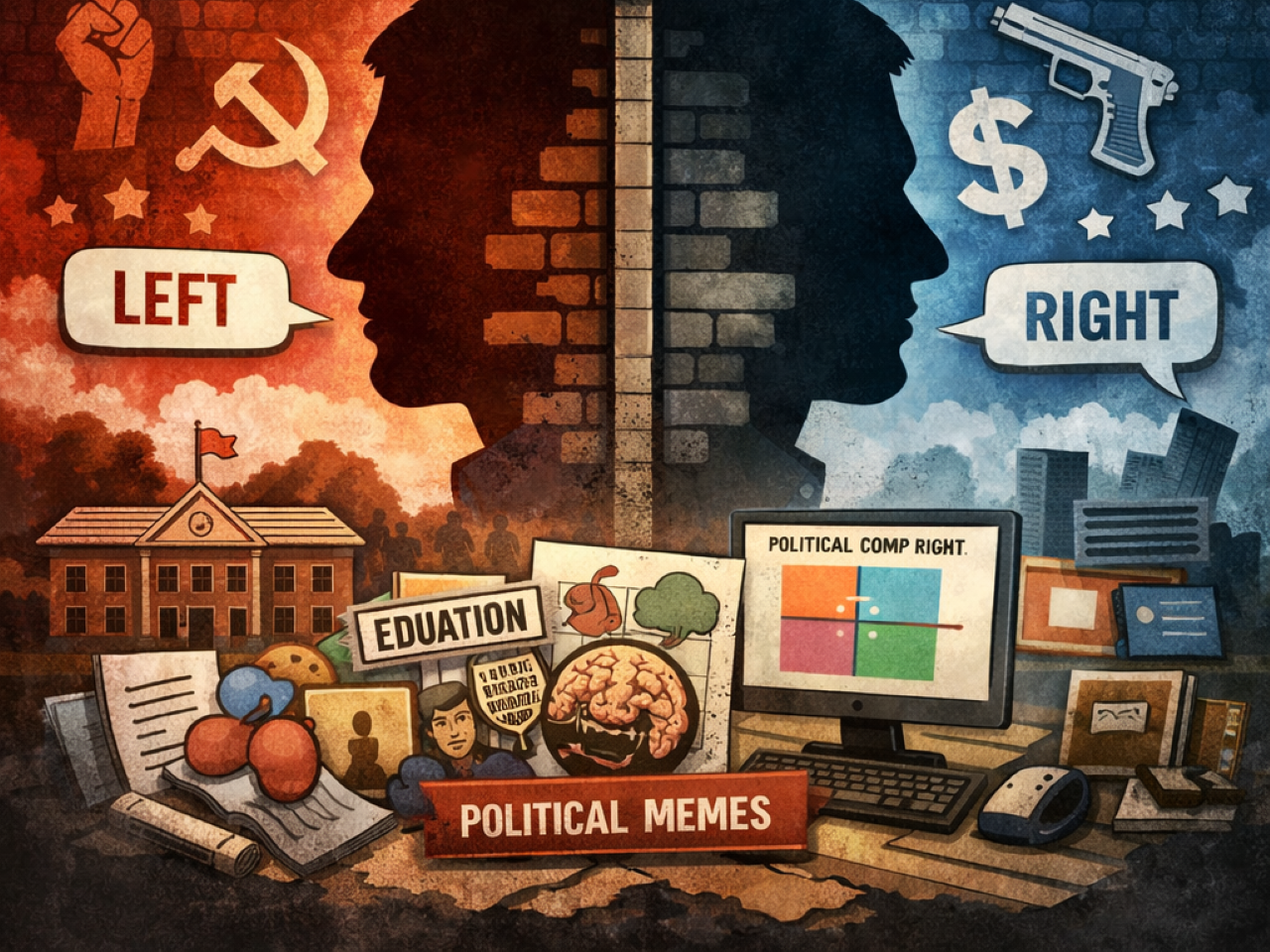
Table of Contents
What Political Labels Often Miss
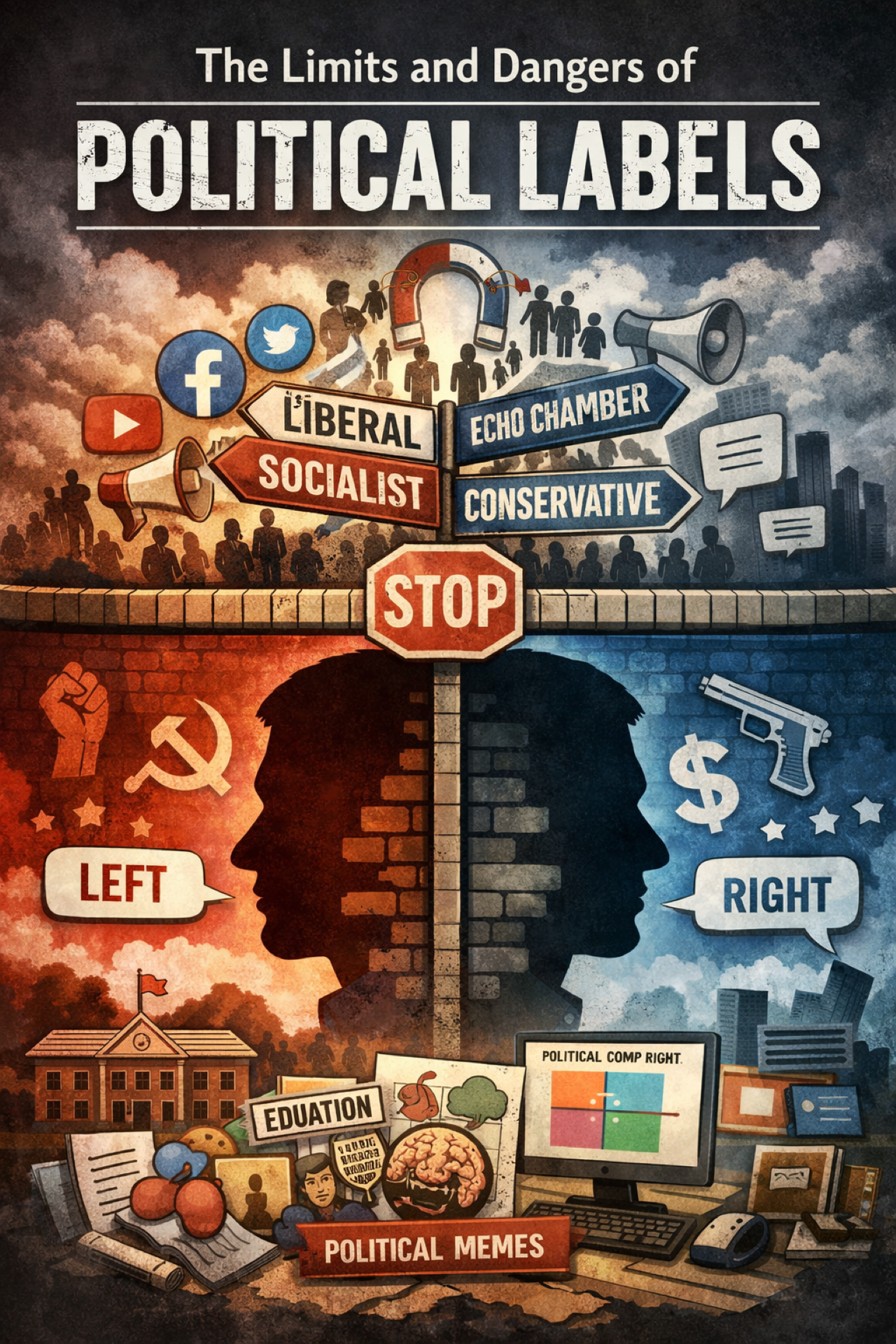
A recurring feature of political discourse in many countries is the tendency to conflate distinct ideologies under a single label. One common example is the merging of “the left” and “liberals” by critics on the right. This conflation ignores fundamental ideological differences—particularly when it comes to critiques of neoliberalism, capitalism, and state power. As a result, people are often dismissed not for their actual arguments, but for the label attached to them.
Over time, it becomes evident that labels can be used not merely to describe political positions, but to obscure, mislead, and deflect. Once a label is applied, it shapes expectations: people assume certain beliefs, behaviours, and motivations based solely on that tag. Nuance is lost, and individuals are reduced to stereotypes.
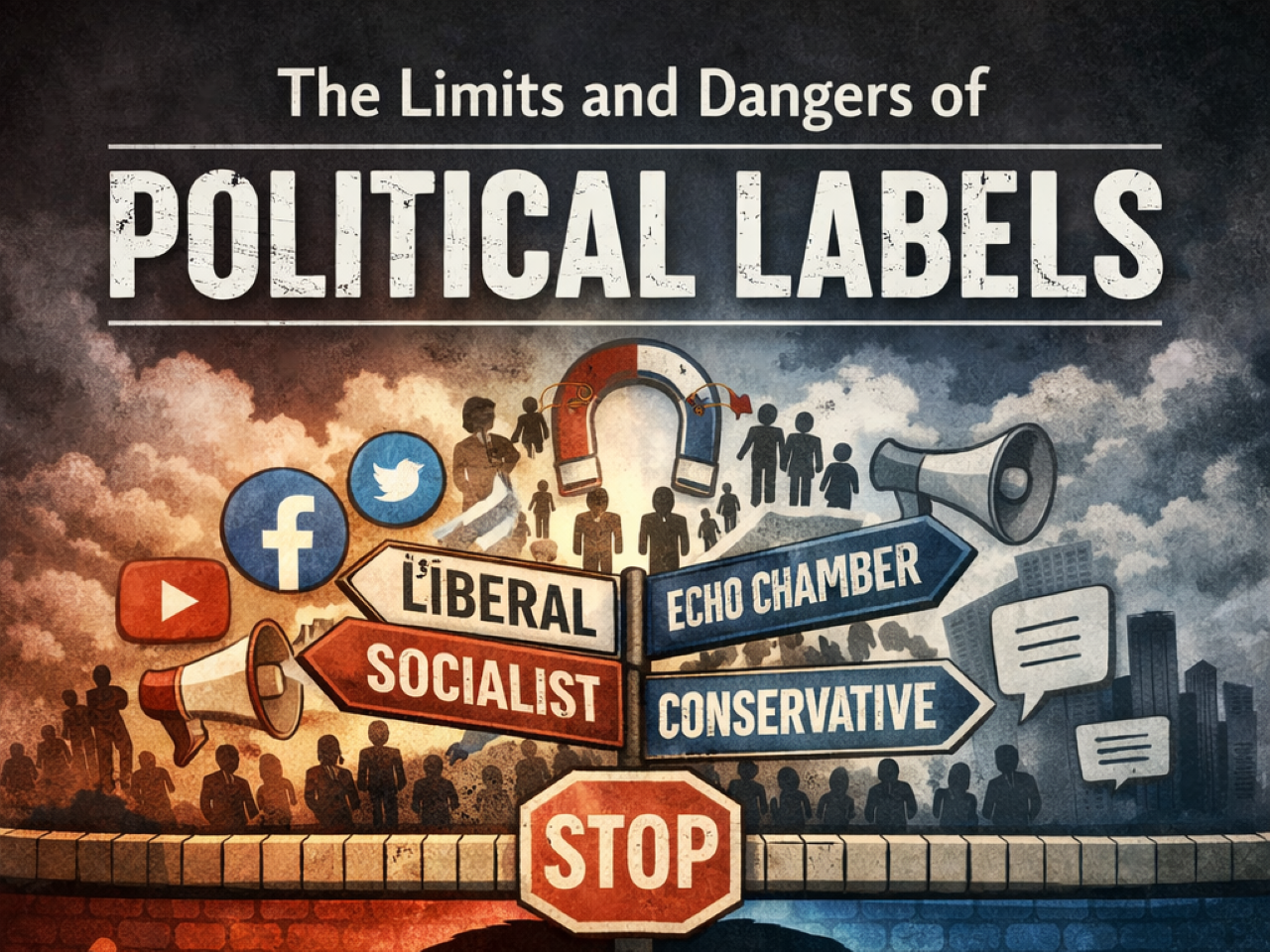
The “umbrella effect” of labels can also discourage meaningful engagement. When labels enter a discussion, dialogue is often shut down before it can properly begin. This is particularly visible on social media platforms—Facebook being a prime example—where attempts at civil political discussion are frequently met with mockery, hostility, or outright dismissal from those holding opposing views.
Echo Chambers and Online Discourse
The widespread adoption of political labels has contributed to the rise of ideological echo chambers. Once individuals publicly align themselves with a particular label, algorithms and social behaviour tend to funnel them into spaces filled with like-minded people. While such environments can feel validating, they also restrict exposure to alternative perspectives and discourage intellectual challenge.
Engaging only with those who already agree with us may be emotionally comfortable, but it significantly limits growth. Political understanding stagnates when new ideas are filtered out, and disagreement is treated as hostility rather than an opportunity for learning.
The Rise of Simplified Political Tools
In an age where political education can feel overwhelming, many people turn to simplified tools—most notably online political compass quizzes. These quizzes have become immensely popular, but they warrant closer scrutiny.
One major limitation is their forced-choice structure. Most quizzes offer no option for “I don’t know” or “It depends,” pushing participants to take positions on issues they may not fully understand. This not only skews results, but also suggests that entertainment, rather than education, is often the primary goal.
Additionally, the questions themselves frequently lack context. They ignore national, cultural, and economic differences, instead encouraging sweeping generalisations such as: “People are ultimately divided more by class than by nationality.” Answering such questions responsibly requires access to reliable data and the ability to interpret it—skills many participants may not yet possess.
Some questions are framed in ways that bypass real-world complexity. For instance: “Those who are able to work, and refuse the opportunity, should not expect society’s support.” Such framing ignores underemployment, exploitative labour conditions, and precarious work, risking the formation of dehumanising views about those already in vulnerable positions.
Information, Entertainment, and Misinformation
Ironically, one of these quizzes states: “There is now a worrying fusion of information and entertainment.” Whether intentional or not, the quiz itself exemplifies this problem.
YouTube and other platforms are now saturated with political commentary. While this accessibility has democratised discussion, it has also blurred the line between informed analysis and confident speculation. As noted by commentators such as J.J. McCullough, popularity often stems from confidence and repetition rather than depth of knowledge. Meanwhile, the relentless demands of the 24-hour news cycle incentivise speed and sensationalism over accuracy.
Traditional media, once seen as a corrective, faces declining trust. Reports such as the Columbia Journalism Review’s “The Fall, Rise, and Fall of Media Trust” question whether healthy scepticism has turned into disabling cynicism.
Education, Memes, and the Next Generation
Formal education systems have largely failed to keep pace. Political education in schools is often minimal or avoided altogether, leaving students to encounter political concepts for the first time on social media rather than in classrooms.
In this vacuum, memes have emerged as powerful—if problematic—educational tools. A simple search for political labels online reveals pages and communities built entirely around simplified, often distorted representations of complex ideologies. While this can spark curiosity, it more often promotes shallow understanding and reinforces tribal thinking.
A Complex Responsibility
Political labels are not inherently harmful. They can serve as entry points into political thought and collective action. However, when adopted uncritically—especially through bite-sized, decontextualised content—their negative effects can far outweigh the positives.
In the end, the responsibility of meaningful political education increasingly falls on young, impressionable audiences navigating an information landscape designed more for engagement than understanding. Without greater emphasis on nuance, context, and critical thinking, political labels risk becoming less a tool for clarity and more a barrier to genuine political awareness.