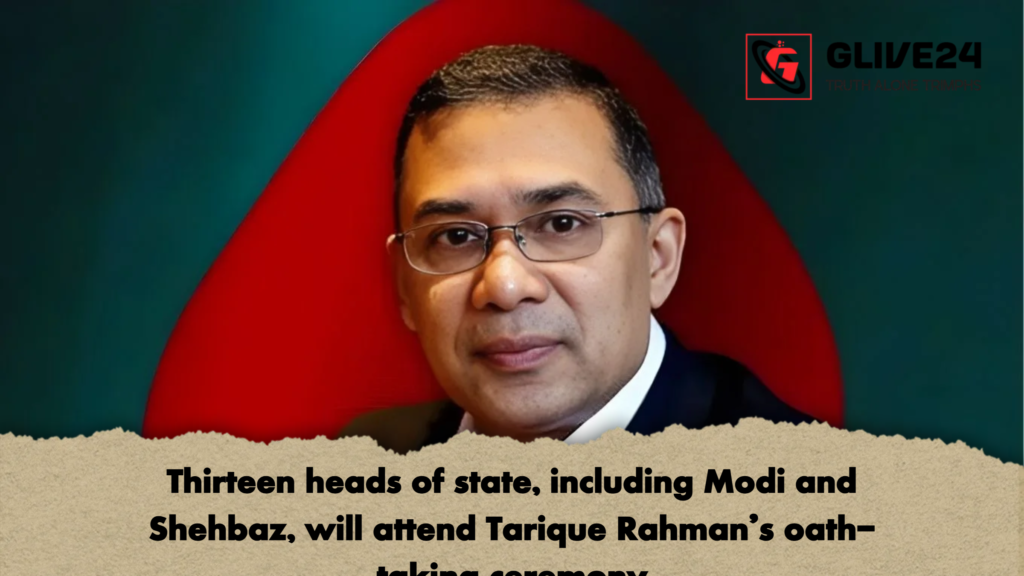
Following its decisive victory in the 13th National Parliamentary Elections, the Bangladesh Nationalist Party (BNP) is poised to form the next government, having secured an outright majority. The swearing-in ceremony of the new government is scheduled for Tuesday, 17 February, with the interim administration extending invitations to thirteen foreign heads of state to attend the historic event.
Among the invitees are Indian Prime Minister Narendra Modi and Pakistani Prime Minister Shehbaz Sharif, highlighting the regional significance of the occasion. Other leaders invited include the heads of state of China, Saudi Arabia, Turkey, the United Arab Emirates, Qatar, Malaysia, Brunei, Sri Lanka, Nepal, Maldives, and Bhutan.
| Country | Invited Head of State |
|---|---|
| India | Prime Minister Narendra Modi |
| Pakistan | Prime Minister Shehbaz Sharif |
| China | President Xi Jinping |
| Saudi Arabia | King Salman bin Abdulaziz |
| Turkey | President Recep Tayyip Erdoğan |
| UAE | President Mohammed bin Zayed |
| Qatar | Emir Sheikh Tamim bin Hamad |
| Malaysia | Prime Minister Anwar Ibrahim |
| Brunei | Sultan Hassanal Bolkiah |
| Sri Lanka | President Ranil Wickremesinghe |
| Nepal | Prime Minister Pushpa Kamal Dahal |
| Maldives | President Ibrahim Mohamed Solih |
| Bhutan | King Jigme Khesar Namgyel Wangchuck |
According to NDTV, while Prime Minister Modi has received an official invitation, he is unlikely to travel to Dhaka due to prior commitments, including a scheduled meeting with French President Emmanuel Macron. In his stead, India may be represented by Foreign Minister S. Jaishankar or Vice President C.P. Radhakrishnan.
The ceremony is expected to carry considerable geopolitical weight, reflecting Bangladesh’s intention to maintain balanced relations with all regional powers, including India, Pakistan, and China. Observers note that BNP leader Tarek Rahman has signalled a pragmatic foreign policy approach, emphasising equitable engagement with all neighbours.
Sources report that, despite strained ties over recent years, Tarek Rahman and Narendra Modi held a cordial conversation last Friday, during which Modi extended his congratulations and expressed interest in improving bilateral relations with Bangladesh. This exchange underscores the diplomatic significance of the forthcoming oath-taking event, which may set the tone for the country’s regional and international engagements under the new administration.
The inclusion of multiple prominent world leaders, coupled with Bangladesh’s efforts to project itself as a balanced regional actor, has generated widespread anticipation for a ceremony that is expected to be both symbolically and strategically significant.