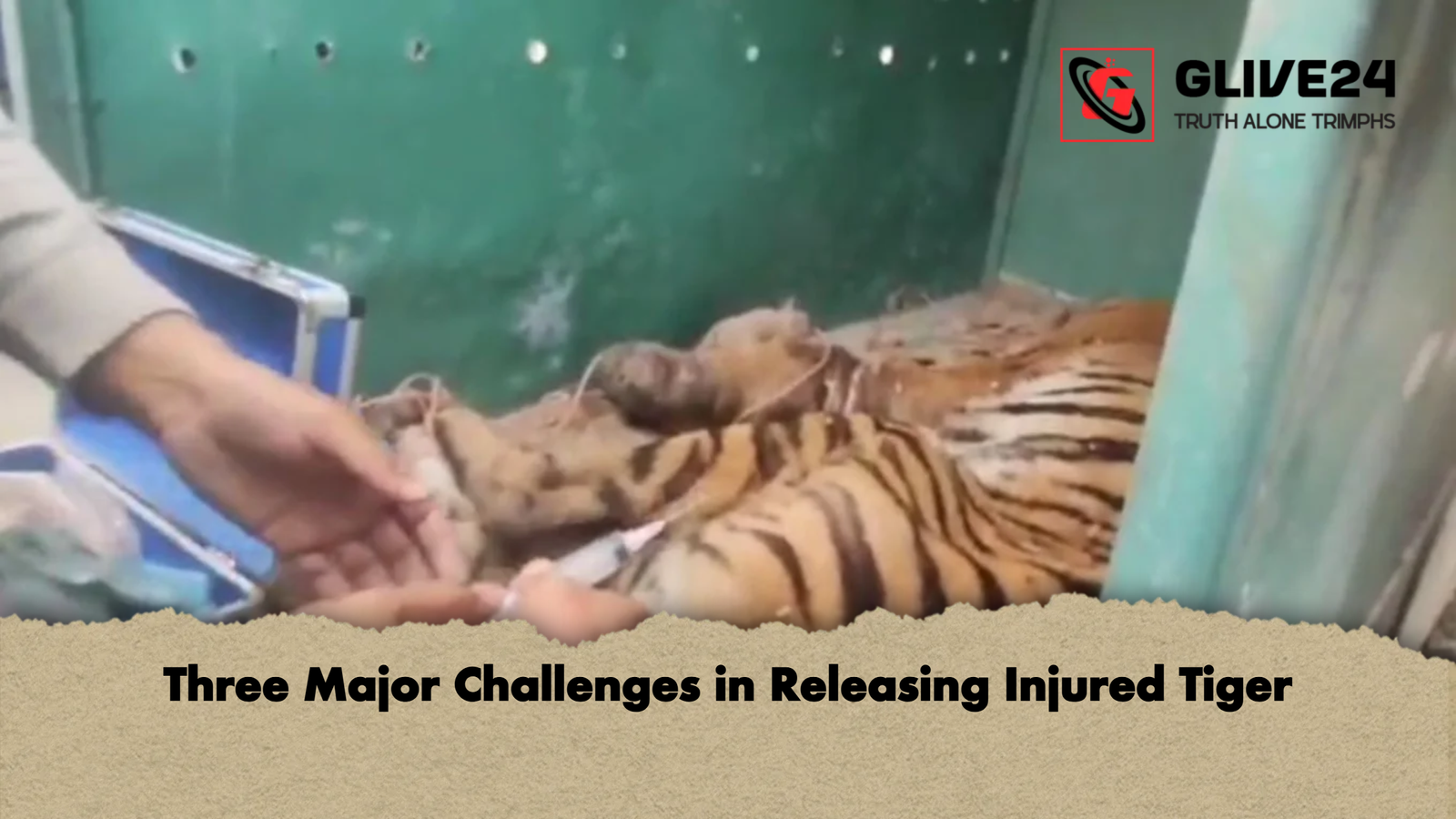
In the Sundarbans, a four-year-old female tiger, trapped in a deer-hunting snare, is undergoing intensive care before being considered fit for release into the wild. Wildlife officials, veterinary experts, and conservationists have identified three critical challenges that must be overcome to ensure the tiger can survive independently.
The tiger, rescued on 4 January from the Chandpai Range of the Sundarbans’ Eastern Forest Division, is currently being treated at the Wildlife Rescue and Rehabilitation Centre in Khulna. Regional Forest Conservator Imran Ahmed told a press conference on Wednesday (7 January) that the animal was initially extremely weak, but following treatment, she has started drinking water and consuming food. Her natural alertness and aggression are returning, indicating improving health.
Veterinary Officer Hatem Sajjad Zulkarnaine emphasised that while progress is evident, the tiger is not yet fully out of danger. A team of specialists, led by Professor Hadi Nur Ali Khan from Bangladesh Agricultural University’s Veterinary Faculty, visited the centre on Wednesday morning for detailed assessment and advised on treatment and rehabilitation. Dr Nazmul Huda, Additional Veterinary Officer at Dhaka Central Veterinary Hospital, confirmed that although the tiger’s left forelimb was injured in the snare, her bones appear intact—a positive sign. He estimated that she could be ready for release in two to three weeks, provided three main rehabilitation challenges are successfully addressed.
These three challenges are:
| Challenge | Description | Objective |
|---|---|---|
| Left Forelimb Function | Injured paw must regain full strength | Effective hunting and prey capture |
| Dehydration Recovery | Body weakness due to fluid loss | Restore energy and stamina |
| Muscle Rehabilitation | Muscle damage from restraint and inactivity | Ensure hunting efficiency |
Dr Huda explained, “In the wild, no one will provide food. The tiger must be capable of catching prey independently. If her paw function, hydration, or muscle strength remain insufficient, releasing her could be fatal.”
The press conference, held at Khulna Press Club, was attended by Sundarbans Eastern Forest Division officials, veterinary professors from Bangladesh Agricultural University and Gazipur Agricultural University, as well as experts from the Central Disease Investigation Laboratory (CDIL). Officials also confirmed that an investigation is ongoing into the snaring incident and illegal deer hunting in the area.
Conservationists highlighted the logistical and infrastructural limitations even in one of the world’s largest mangrove ecosystems, citing a shortage of regional veterinary hospitals, emergency rescue equipment, and trained personnel. They urged urgent measures, including water ambulances and adequate staffing, to improve rapid rescue and treatment capacity.
For now, the injured tiger remains in a completely secluded and secure environment to prevent infection and stress. Forest officials have requested the public to avoid unnecessary crowding, ensuring her recovery proceeds smoothly.