
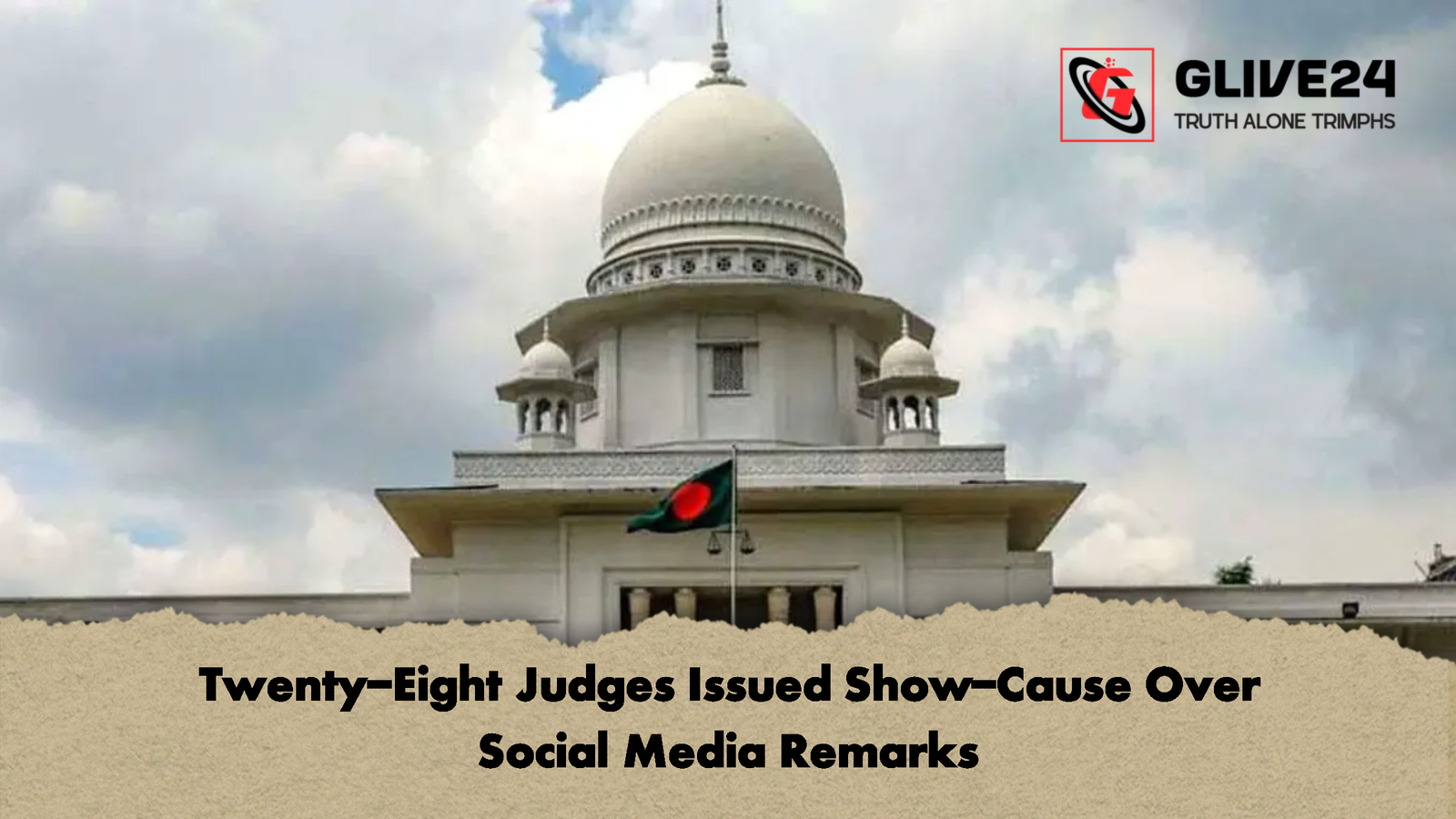
In a significant administrative move underscoring the judiciary’s emphasis on discipline and institutional decorum, the Ministry of Law has issued show-cause notices to 28 judges serving in subordinate courts across Bangladesh. The action follows allegations that these judicial officers made inappropriate or critical remarks about the judiciary on social media platforms, in apparent violation of established conduct guidelines.
The notices, formally issued on Tuesday, 7 April, require the judges concerned to submit written explanations within seven working days. According to officials, the directive aims to ensure accountability while reinforcing professional standards expected of members of the judicial service.
Table of Contents
Grounds for Disciplinary Action
The show-cause letters explicitly state that the judges used social media to express personal opinions and, in doing so, made “provocative and adverse comments” regarding their appointing and controlling authority. Such actions are deemed to contravene directives previously issued by the Supreme Court’s High Court Division concerning the appropriate use of social media by judicial officers.
The notice further characterises these actions as misconduct, noting that they undermine the dignity and neutrality of the judiciary—an institution that relies heavily on public trust and perceived impartiality.
Relevant Legal Provisions
Authorities have cited specific clauses under the Bangladesh Judicial Service (Discipline) Rules, 2017, to justify the disciplinary proceedings. The alleged conduct falls under provisions that prohibit activities detrimental to service discipline.
Below is a summary of the relevant legal framework:
| Provision | Description | Implication |
|---|---|---|
| Rule 2(Cha)(2) | Defines acts harmful to service discipline | Social media remarks deemed damaging to institutional integrity |
| Rule 3(2) | Governs procedures for disciplinary action | Mandates written explanation within stipulated timeframe |
According to the notice, the judges’ conduct—by publicly expressing discontent or criticism—has potentially compromised the ethical standards expected of judicial officers. The authorities argue that such behaviour may erode confidence in the judiciary and disrupt hierarchical discipline within the judicial service.
Institutional Context and Implications
The judiciary in Bangladesh operates under a strict code of conduct designed to maintain independence, impartiality, and public confidence. While freedom of expression is a fundamental right, judicial officers are subject to additional restrictions to prevent conflicts of interest or perceptions of bias.
Legal analysts observe that the rise of social media has created new challenges for maintaining these standards. Judges, like other public officials, must navigate the balance between personal expression and professional responsibility. In this instance, the authorities appear to have taken a firm stance to reaffirm that boundaries must not be crossed.
Next Steps
The 28 judges are now required to respond individually, providing explanations for their alleged actions. Upon reviewing these responses, the competent authority may decide whether further disciplinary measures are warranted. These could range from warnings to more severe penalties, depending on the gravity of the misconduct and the adequacy of the explanations provided.
Officials emphasise that the process will adhere to due procedure, ensuring that the judges have a fair opportunity to present their defence. Nonetheless, the development sends a clear message regarding the expected standards of conduct within the judiciary.
Broader Significance
This episode highlights the growing scrutiny of public officials’ behaviour in digital spaces. It also reflects an institutional effort to safeguard the credibility of the judiciary at a time when public discourse increasingly unfolds online.
Observers suggest that clearer guidelines and training on digital conduct may be necessary to prevent similar incidents in the future. As the matter progresses, it is likely to prompt wider discussion about the intersection of judicial ethics, freedom of expression, and the evolving role of social media in professional life.