Efforts to broker peace between Ukraine and Russia faced a serious setback this week as three days of discussions between Ukrainian and US officials ended without meaningful progress. The Florida-hosted talks, designed to explore potential avenues for de-escalation, concluded on Saturday. Both sides acknowledged that any substantive breakthrough depends entirely on Russia’s willingness to genuinely pursue peace.
Almost immediately following the talks, Russia launched a major air offensive targeting multiple Ukrainian cities and critical infrastructure points. Ukrainian officials reported that 653 drones and 51 missiles were deployed in the strikes, with energy facilities and key installations bearing the brunt. The assaults resulted in damage at 29 locations and left at least eight civilians injured.
The Zaporizhzhia nuclear power plant, already under international scrutiny, suffered a temporary power cut, triggering fears over reactor safety. The International Atomic Energy Agency emphasised the necessity of continuous electricity to keep six offline reactors cool and avert catastrophic failure.
President Zelensky described the strikes on fuel and energy facilities as the principal targets of the Russian offensive. A railway station in Fastiv near Kyiv was destroyed, according to Ukrainian sources. Air defence systems successfully neutralised 585 drones and 30 missiles, mitigating the scale of the attacks.
On the military front, Russian forces continue to consolidate control in eastern Ukraine. They are approaching Pokrovsk in Donetsk and nearly encircling Mirnohrad. Moscow currently holds full control of Luhansk and significant portions of the Kherson coastal region. Although some frontlines remain relatively stable, Russian forces continue to make gradual gains. November alone saw the capture of approximately 505 square kilometres, nearly doubling gains from October.
Diplomatic efforts are ongoing. French President Emmanuel Macron will meet President Zelensky in London on Monday, joined by UK Prime Minister Keir Starmer and German Chancellor Friedrich Merz, to assess the status of US-mediated negotiations. Macron underscored the importance of maintaining pressure on Russia to secure lasting peace.
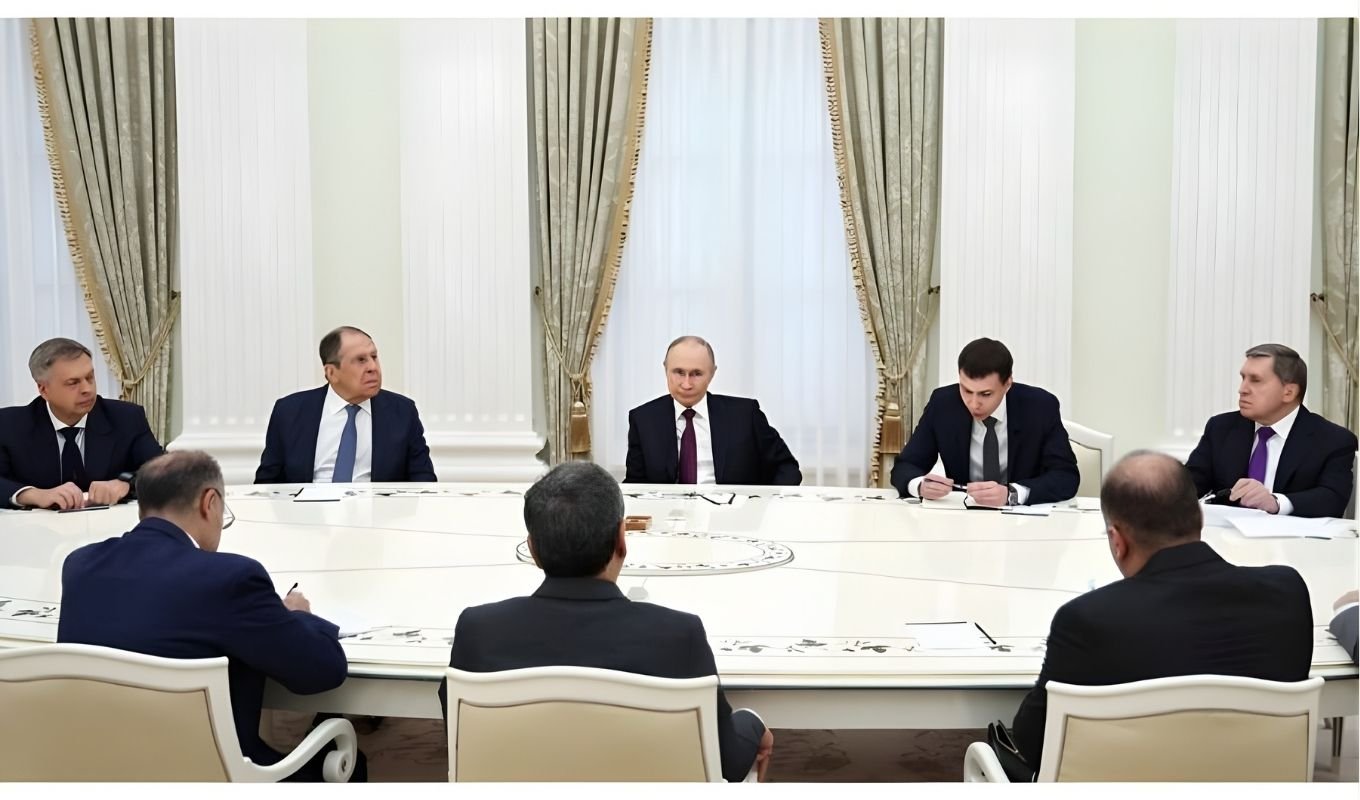
Prior talks in Moscow, involving Whitlock, Kushner, and President Putin, also failed to produce any agreement. A joint statement reaffirmed that real progress is entirely dependent on Moscow’s willingness to commit to a long-term peace framework.
Russian officials continue to assert that no territorial concessions were discussed during negotiations with the US. The ICC reaffirmed that the arrest warrant for President Putin concerning alleged war crimes remains in effect, unaffected by diplomatic efforts, unless formally overturned by the UN Security Council.