
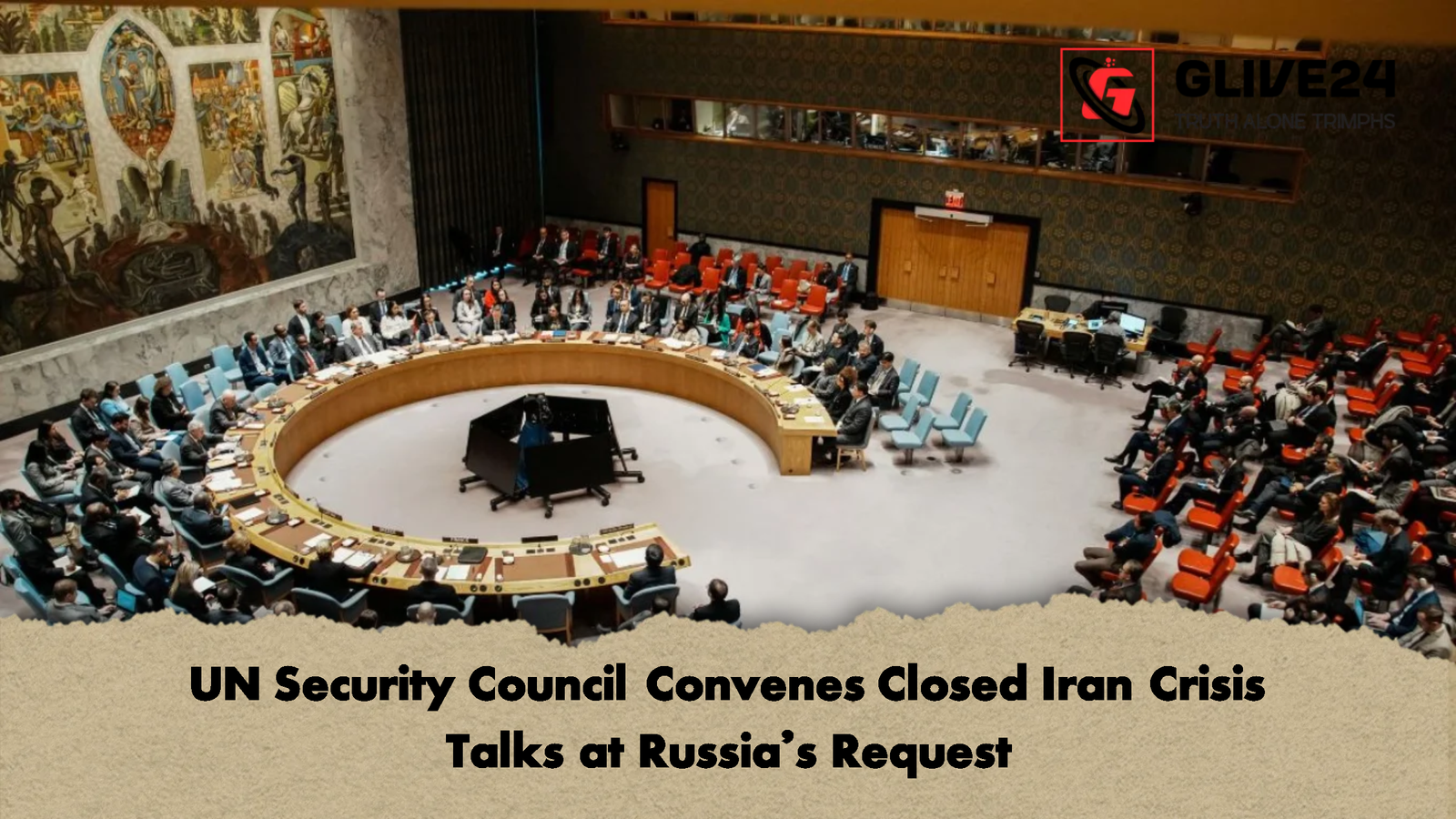
The United Nations Security Council is set to hold a closed-door meeting in New York on Friday at 10:00 a.m. local time (1400 GMT) to address the escalating conflict involving Iran, according to diplomatic sources.
The consultation has been formally requested by the Russian Federation amid growing international concern over the widening scope of military hostilities in the region. The discussions are expected to focus on reported strikes affecting civilian infrastructure inside Iran, alongside broader questions surrounding the conduct and consequences of ongoing military actions involving the United States and Israel.
Table of Contents
Urgent diplomatic engagement behind closed doors
The Associated Press, citing two unnamed United Nations diplomats, reported that the meeting has been convened specifically to examine allegations of attacks on civilian facilities within Iranian territory. The situation has prompted renewed scrutiny within the Security Council, as member states assess both humanitarian implications and potential breaches of international law.
Diplomats suggest the session will provide an opportunity for members to exchange views on the legal framework governing the use of force, civilian protection obligations, and the risk of further regional escalation should hostilities continue unchecked.
Meeting overview
| Item | Details |
|---|---|
| Forum | United Nations Security Council |
| Format | Closed-door consultation |
| Date | Friday |
| Time (New York) | 10:00 a.m. |
| GMT equivalent | 14:00 GMT |
| Requested by | Russian Federation |
| Core issue | Alleged strikes on civilian infrastructure in Iran |
| Current presidency | United States |
Rising tensions shaping the agenda
The decision to convene the meeting reflects heightened international alarm over the trajectory of the Iran-related conflict and its broader regional consequences. Reports of damage to civilian infrastructure have intensified calls from several member states for urgent multilateral engagement within the Security Council framework.
Russia’s request underscores the deep divisions that continue to characterise Council deliberations on Middle Eastern security crises, particularly regarding attribution of responsibility, proportionality in military action, and the protection of non-combatants.
Procedural role of the Council presidency
The United States currently holds the rotating presidency of the Security Council, giving it responsibility for organising meetings and setting the formal agenda. Despite being referenced in discussions surrounding the conflict, Washington has overseen the scheduling of the closed consultation in accordance with established UN procedures.
Closed consultations allow member states to deliberate privately, without issuing immediate resolutions or formal public statements. Such sessions are often used to test diplomatic positions, reduce tensions, and explore potential avenues for consensus before any official action is considered.
Diplomatic significance and possible outcomes
Although no binding resolutions are expected to emerge from Friday’s meeting, diplomats indicate that the discussions may help shape future Council responses depending on how the situation develops on the ground.
The talks are also expected to contribute to wider international efforts aimed at preventing further escalation between Iran, Israel, and the United States. Observers note that even informal exchanges within the Security Council can influence the tone of subsequent diplomatic statements and negotiations.
The broader international community is closely monitoring both military developments and diplomatic efforts, with particular attention on adherence to international humanitarian law and the protection of civilian populations.
Outlook
As tensions remain elevated, Friday’s closed-door session is viewed as a critical moment for assessing the current trajectory of the conflict and the willingness of major powers to pursue diplomatic avenues for de-escalation. While immediate breakthroughs are unlikely, the meeting is expected to provide an important platform for shaping the next phase of international engagement on the crisis.