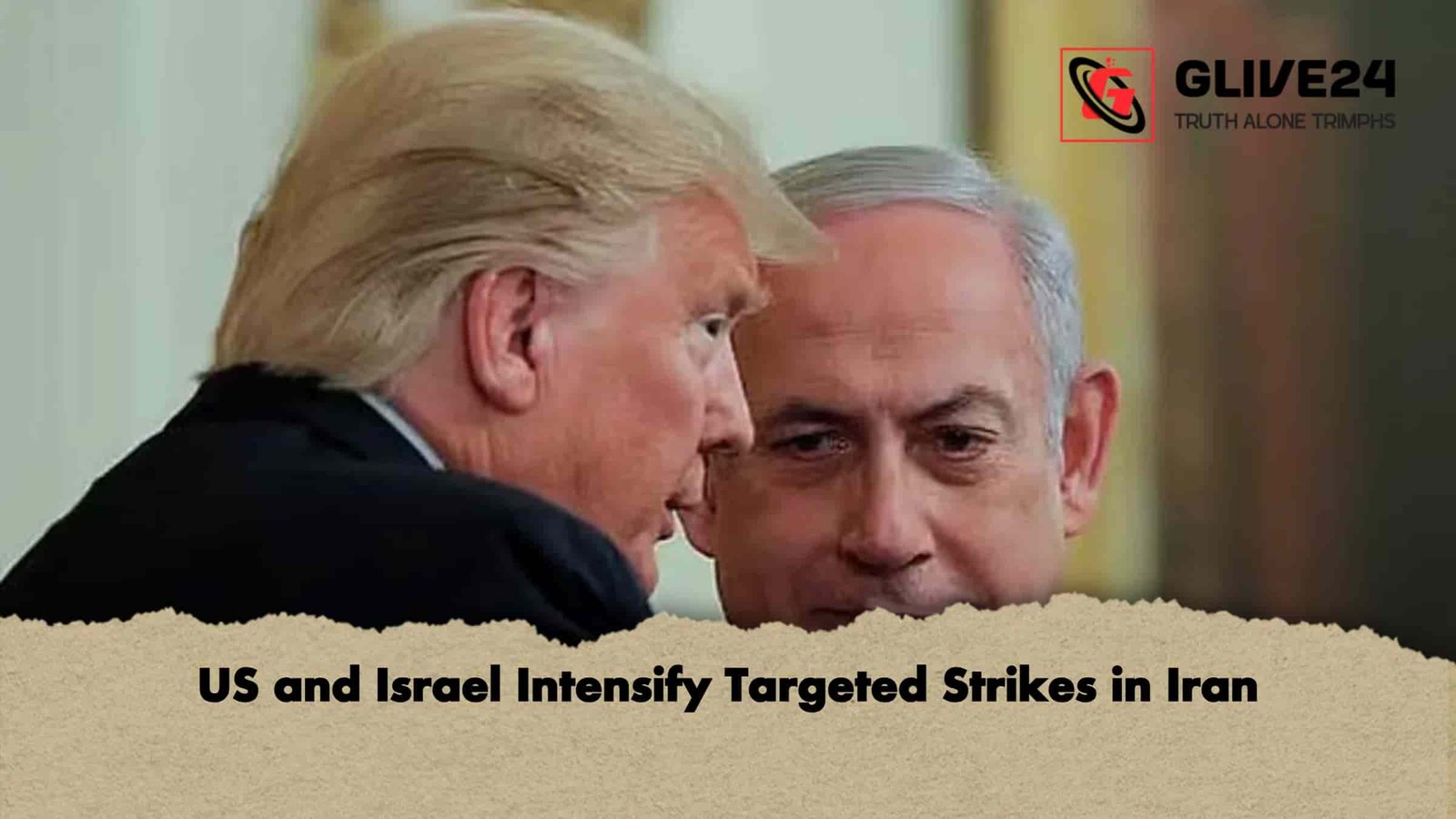
The United States and Israel have escalated military operations in Iran amid mounting regional tensions, as efforts to secure allied support have largely failed. President Donald Trump faces resistance from NATO and Arab partners, who have declined to engage in a broader conflict, leaving critical shipping lanes in the Strait of Hormuz blocked and global oil and gas prices surging.
Now entering the third week of hostilities, Washington and Tel Aviv appear increasingly determined to eliminate Iran’s top leadership. Over consecutive nights, missile and drone strikes have reportedly killed at least three senior Iranian officials, including the intelligence minister, Ismail Khatib. Tehran later confirmed Khatib’s death.
In retaliation, Iran has intensified attacks on US and Israeli positions across the Middle East. In Israel, missile strikes claimed two civilian lives, while debris from Iranian ordnance caused significant damage to three civilian aircraft at Ben Gurion Airport. Fires were reported on at least one plane, highlighting the growing civilian risk.
Elsewhere, a UAE airbase housing Australian assets was damaged during Iranian attacks. According to the UAE Ministry of Defence, Tehran launched 13 ballistic missiles and 27 drones. Saudi Arabia reported shooting down several drones targeting diplomatic districts, while Kuwait and Qatar also intercepted incoming missiles and drones. In Bahrain and Iraq, sirens and strikes near US embassies signalled the widening reach of Iranian operations.
Despite the targeted killings, Iranian Foreign Minister Abbas Araghchi has insisted that the government remains resilient. “The political, economic, and social institutions of the Islamic Republic are robust,” he stated, emphasising that the elimination of individual leaders will not destabilise the regime.
Israel has confirmed that, in addition to Khatib, several senior commanders have been killed in what it terms a “series of targeted assassinations.” Among the earlier casualties were Ali Larijani, secretary of the Iranian National Security Council, and Gholamreza Soleimani, head of the Basij forces under the Islamic Revolutionary Guard Corps. Large funeral processions in Tehran drew both military and civilian participation.
The escalating conflict has also directly affected Iran’s energy infrastructure. Attacks on the South Pars gas field have prompted threats of retaliatory strikes against Saudi, UAE, and Qatari energy facilities. Meanwhile, Israeli operations in Lebanon caused extensive destruction in Beirut, killing ten people, including prominent media figures linked to Hezbollah, and injuring 27.
The ongoing violence has intensified scrutiny of President Trump’s handling of the crisis. Critics within the US, including former counterterrorism officials and long-time supporters, have accused the administration of pursuing war under Israeli influence, highlighting deepening domestic opposition to military escalation.
Key Strikes and Casualties
Date Target Location Victims/Impact Perpetrator
28 Feb 2026 Tehran Ayatollah Ali Khamenei, 48 senior officials killed US-Israel joint
16 Mar 2026 Iran (various) Ali Larijani, Gholamreza Soleimani killed Israel
18 Mar 2026 Tehran Ismail Khatib killed Israel
17-18 Mar 2026 Israel (Ramat Gan, Ben Gurion Airport) 2 civilians killed; 3 aircraft damaged Iran
17-18 Mar 2026 UAE, Kuwait, Qatar Missile/drone attacks intercepted; base damage Iran
17 Mar 2026 Beirut, Lebanon 10 killed, 27 injured, 15-storey building demolished Israel
Analysts note that despite repeated assaults, Iran continues to maintain control over the Strait of Hormuz, potentially leveraging the vital waterway in any future negotiations to end hostilities.