
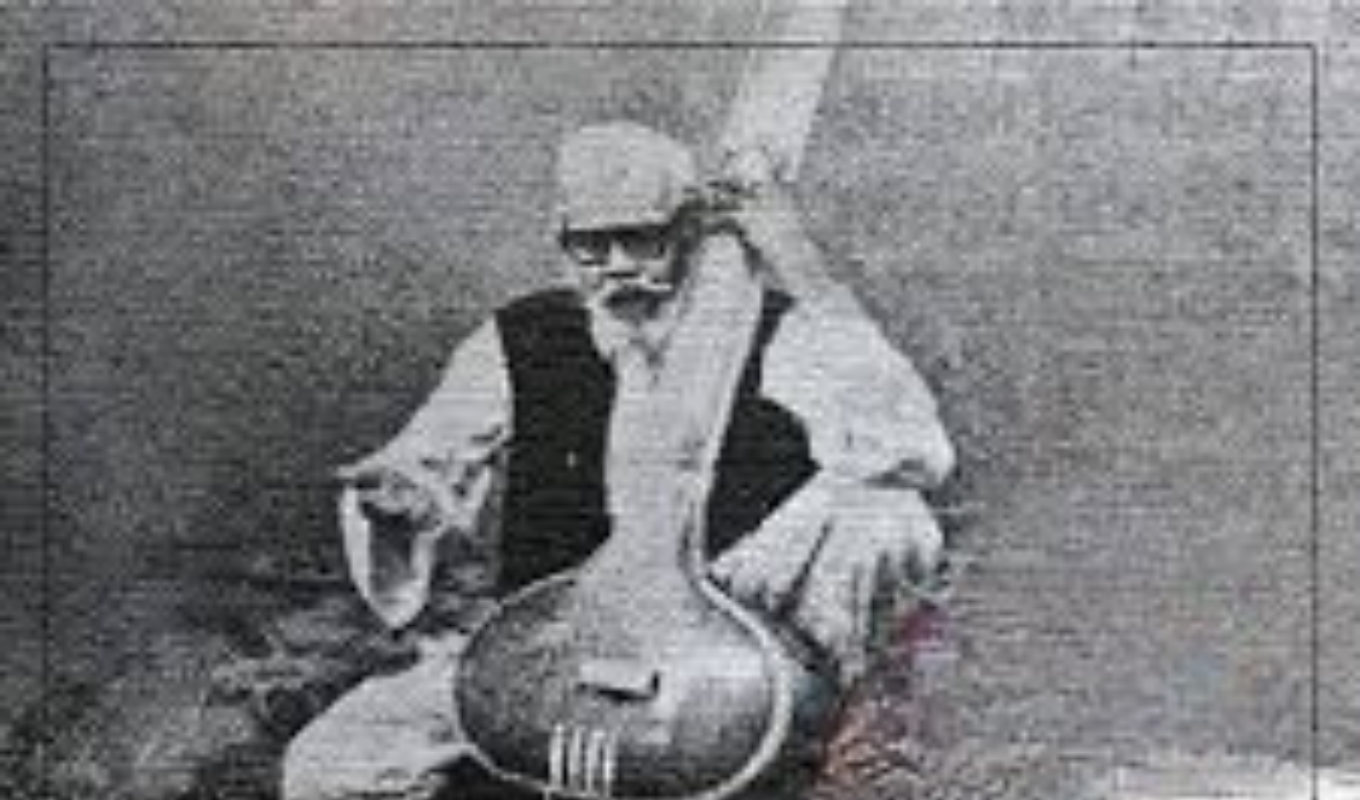
The name Ustad Alauddin Sarkar evokes the image of a visionary figure in the music heritage of the subcontinent. He is a shining legend on the gray pages of history, a sage artist who transcended time and stood as a beacon of knowledge and creativity.
He witnessed three significant eras in history: the oppressive British rule, the darkness of Pakistani misrule, and the prosperity of independent Bangladesh. Born in 1901 in a distinguished family in the village of Vrindavanpara, Bogura, his father, Abdur Rahman Sarkar, was a clerk at the Bogura Registry Office.
From childhood, music became his first and foremost passion. His deep immersion in music during his school years meant that he could not pursue formal education, though he had a rare love for reading books. His musical prowess amazed artists across the subcontinent. Renowned dancer Bulbul Chowdhury highly praised his performances, and Ustad Enayat Khan shared a deep friendship with him.
On one occasion, a senior officer from the Megaphone Company, impressed by his sharp wit and sweet musical performance, awarded him a rare honor—400 rupees, which was a significant sum in those days.
He spent many years in Kolkata alongside the famous Baul singer Abbasuddin Ahmed, and it was during this time that he met the revolutionary poet Kazi Nazrul Islam. Nazrul, moved by his music, later worked with him in films when he joined the film industry. In 1939, Ustad Alauddin Sarkar appeared in several films directed by Nazrul, including “Sapuresh.” Today, these moments are just gray memories of history.
He had a profound love for people, but even more so, he was an avid animal lover. During his student days, he was often seen walking to the historic Woodburn Public Library in Bogura in his signature white pajama and kurta, with his hair and beard stained with henna. If he encountered a goat along the way, he would break off a branch of jackfruit leaves from a tree and feed it with great affection.
On November 14, 1991, Ustad Alauddin Sarkar passed away in his own home in Bogura. With his death, a living history, a golden era, and a world of melody were lost forever.
With deep reverence, we remember Ustad Alauddin Sarkar.