
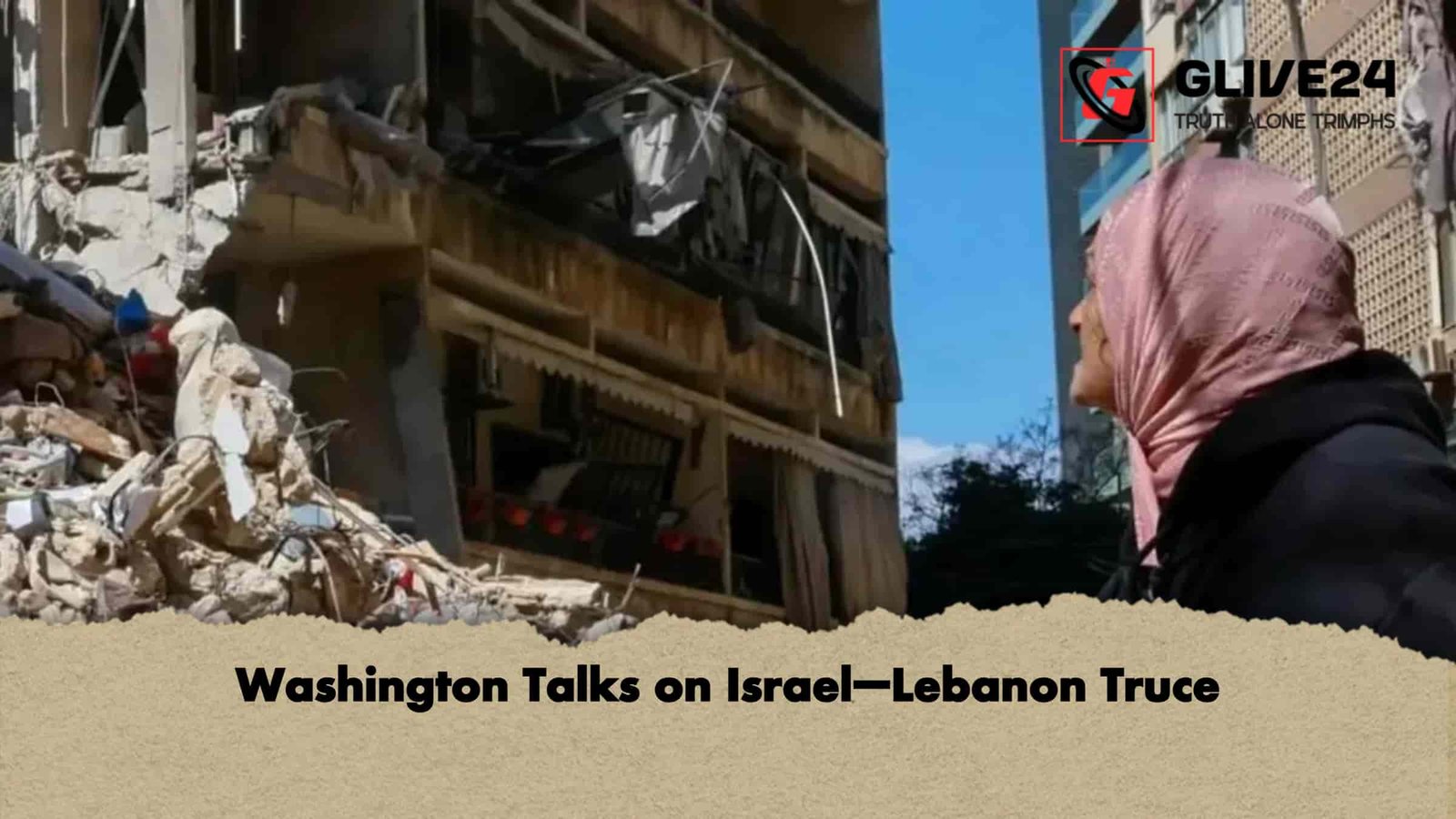
A new round of diplomatic discussions involving Israel and Lebanon is set to take place in Washington next week, as international efforts intensify to contain cross-border hostilities and explore the possibility of a broader ceasefire arrangement in the region.
Israeli Prime Minister Benjamin Netanyahu has confirmed that his government is preparing to enter direct discussions with Lebanon. According to his statement, the agenda will focus heavily on the disarmament of Hezbollah, the Iran-backed armed group operating in Lebanon, as well as the establishment of a more stable and peaceful bilateral relationship between the two neighbouring states.
A United States State Department official has also verified that a meeting is scheduled in Washington, where representatives from Israel and Lebanon are expected to engage in talks aimed at reducing tensions and examining the feasibility of a ceasefire framework.
Prior to the planned negotiations, Lebanese officials had publicly called for an immediate cessation of hostilities. However, Netanyahu has maintained a firm stance, stating that no formal ceasefire with Lebanon will be implemented at this stage. He further reiterated that Lebanon was not included in earlier ceasefire understandings announced in connection with Iran-related hostilities.
In contrast, former US President Donald Trump suggested in an interview that Israel may reduce the intensity of its military operations in Lebanon to facilitate diplomatic progress. Following a telephone conversation with Netanyahu, Trump told NBC News that he believed Israel would scale back its strikes somewhat, adding that all parties should exercise greater restraint to allow negotiations to advance.
Meanwhile, Iranian officials have strongly criticised Israeli military activity in Lebanon, describing it as a violation of emerging diplomatic understandings. Tehran has also issued warnings, including threats to disrupt maritime traffic through the Strait of Hormuz and to respond with retaliatory measures if regional escalation continues.
The Strait of Hormuz remains one of the world’s most strategically significant maritime chokepoints, with roughly one-fifth of global oil and liquefied natural gas shipments passing through it.
Strategic Overview
| Issue | Position / Development |
|---|---|
| Israel–Lebanon talks | Direct discussions planned in Washington |
| Israel’s stance | No immediate ceasefire; focus on security conditions |
| Lebanon’s position | Calls for urgent ceasefire |
| Hezbollah issue | Disarmament expected to be central topic |
| US involvement | Facilitating talks and diplomatic coordination |
| Iran’s response | Condemns strikes; issues maritime and retaliatory warnings |
| Strait of Hormuz | Critical global energy transit route (~20% of oil/LNG flows) |
The forthcoming Washington talks are widely seen as a crucial diplomatic test, with regional and global powers closely watching whether limited de-escalation can evolve into a structured ceasefire process or whether tensions risk further expansion across the Middle East.