
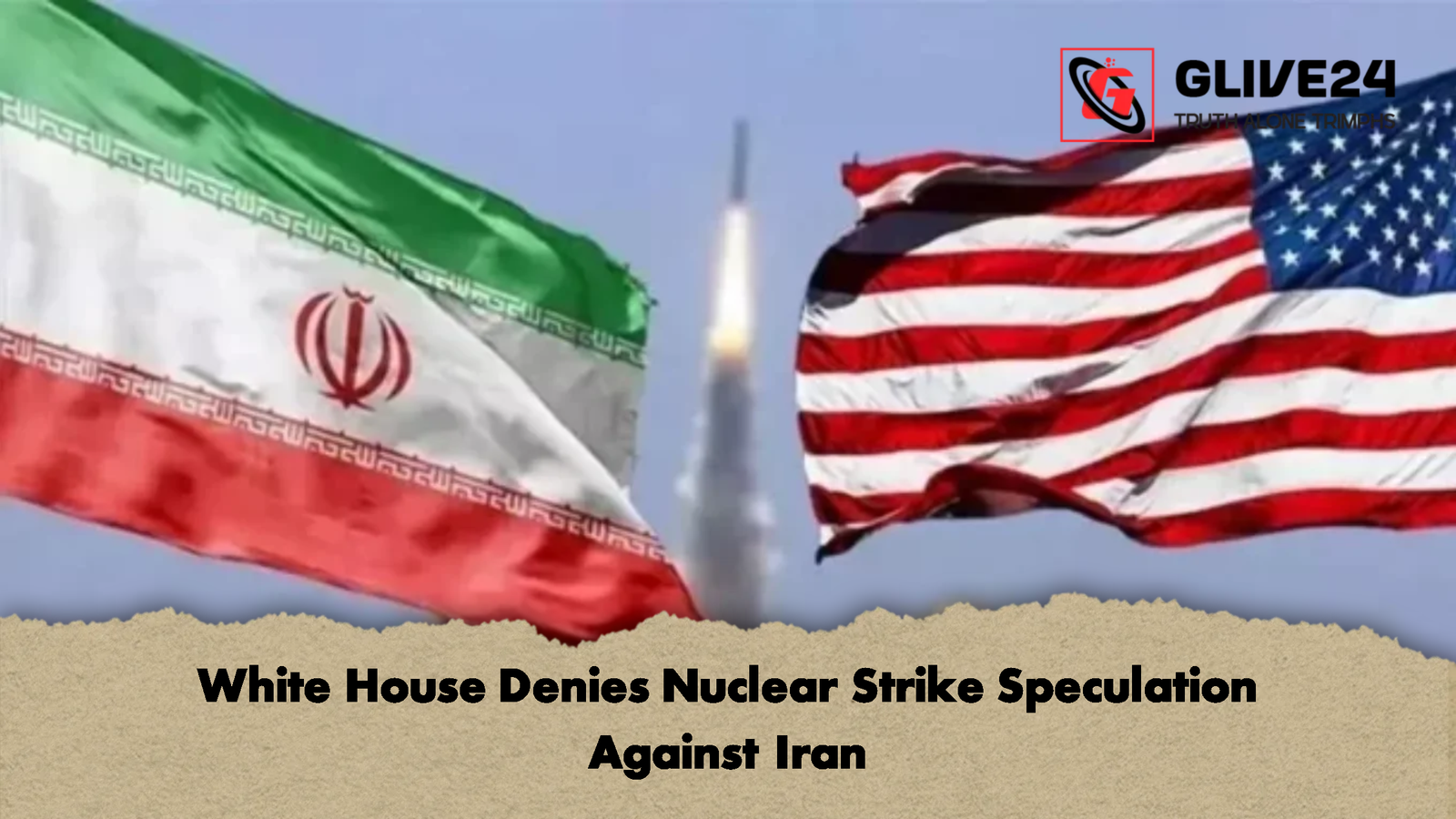
The White House has firmly dismissed speculation that the United States is considering a nuclear strike against Iran, seeking to quell rising concerns triggered by recent political rhetoric. The clarification follows remarks made by Vice-President J. D. Vance, which some critics interpreted as implying the possible use of nuclear weapons in a future military confrontation.
In an official response issued via the social media platform X, the White House categorically rejected such interpretations, stressing that the Vice-President’s comments contained “absolutely no indication” of nuclear escalation. The unusually sharp tone of the statement underscored the administration’s frustration with what it described as a mischaracterisation of its position.
The controversy originated after Vice-President Vance remarked that, in enforcing a stern ultimatum issued by President Donald Trump, the US military possessed capabilities that “have not yet been utilised.” While the statement was intended to signal strategic deterrence and military preparedness, it quickly drew criticism from political opponents and analysts, who argued that such phrasing could be construed as alluding to extreme measures, including nuclear options.
In response, the White House clarified that the Vice-President’s comments referred broadly to conventional and strategic capabilities within the US defence arsenal, rather than any specific reference to nuclear weapons. Officials emphasised that American military doctrine continues to prioritise proportionality, deterrence, and the avoidance of catastrophic escalation, particularly in volatile regions such as the Middle East.
The rebuttal was directed in part at claims circulated online, including a post linked to supporters of former Vice-President Kamala Harris. That post alleged that President Trump might be contemplating the use of nuclear arms against Iran, citing Vance’s remarks as evidence. The White House swiftly countered this assertion, describing it as misleading and unfounded.
Context of Heightened Tensions
The exchange comes amid an already fragile geopolitical environment, where tensions between Washington and Tehran have fluctuated in recent months due to disagreements over nuclear policy, regional security, and sanctions. Although no direct military confrontation is currently underway, the rhetoric from both sides has contributed to a climate of uncertainty.
Key Developments Surrounding the Controversy
| Issue | Details |
|---|---|
| Triggering Statement | Vice-President Vance noted unused US military capabilities |
| Misinterpretation | Critics suggested nuclear strike implications |
| White House Response | Denied any nuclear intent and criticised misreading |
| Political Reaction | Linked to posts associated with Kamala Harris supporters |
| Broader Context | Ongoing US–Iran geopolitical tensions |
Defence analysts note that references to “unused capabilities” are not uncommon in strategic communication, often serving as a deterrent signal rather than a declaration of intent. However, in an era of rapid information dissemination and political polarisation, such statements can quickly be amplified and reframed, sometimes inaccurately.
Strategic Messaging and Public Perception
Experts argue that the incident highlights the delicate balance policymakers must maintain when communicating about national security. While signalling strength is a cornerstone of deterrence, ambiguity can lead to unintended interpretations, especially when amplified through social media platforms.
The White House’s forceful rebuttal suggests a heightened sensitivity to the risks of miscommunication, particularly when it involves nuclear weapons—an issue that carries profound global implications. By decisively rejecting the notion of a nuclear strike, the administration appears keen to reassure both domestic and international audiences that escalation remains neither imminent nor under consideration.
As geopolitical tensions persist, the episode serves as a reminder of the importance of clarity in official communications. Even a single phrase, when taken out of context, can reverberate widely, influencing public discourse and diplomatic perceptions alike.