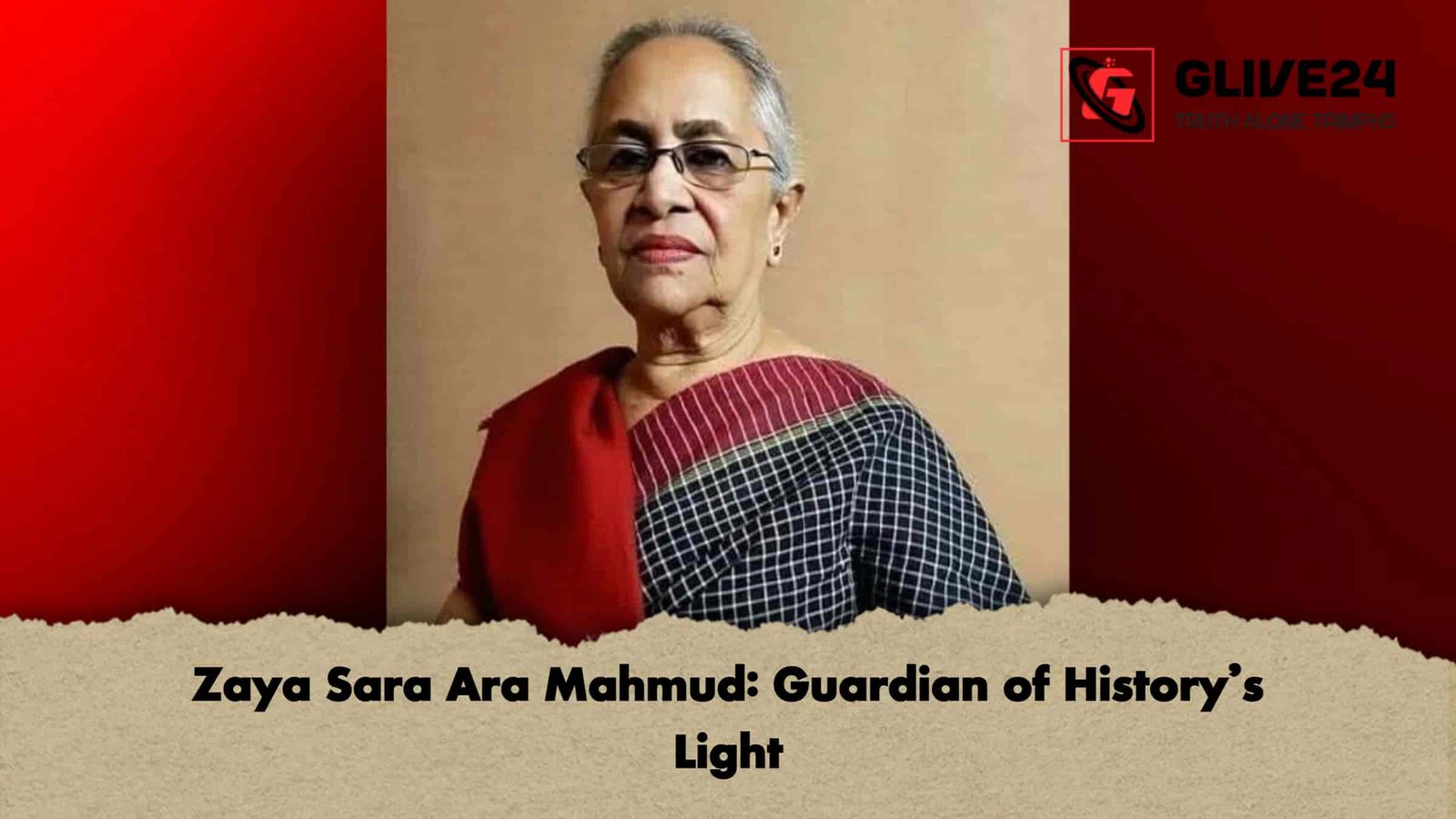
Zaya Sara Ara Mahmud was far more than a name; she embodied the living spirit of history, a vigilant custodian of memory, and a luminous chapter in the narrative of Bangladesh’s Liberation War. Following in the legacy of her husband, the immortal composer Shaheed Altaf Mahmud, she navigated life with silent dignity, steadfast devotion, and profound sorrow. Through her unwavering commitment, sacrifice, and quiet struggle, Altaf Mahmud did not merely exist in the pages of history—he became immortal in the hearts of generations. Zaya Sara Ara Mahmud herself was recognised as a keeper of memory and a vigilant guardian of the nation’s cultural history.
On 30 August 1971, during the height of the Liberation War, Pakistani forces abducted Altaf Mahmud from a house opposite Dhaka’s Razarbagh Police Lines. Blindfolded and handcuffed, he was taken alongside his brother, the renowned fine arts teacher Abul Barkat. In a cruel twist of fate, Barkat was released three days later, but Altaf Mahmud was never seen again. That house had served as a clandestine cultural hub, where Mahmud composed songs for Swadhin Bangla Betar Kendra, inspiring freedom fighters with music that became the soundtrack of resistance.
Alongside luminaries like Shahidullah Kaiser, Munir Chowdhury, and Zahir Raihan, Altaf Mahmud’s disappearance symbolised the profound human cost of the nation’s struggle, cementing his place among the martyrs of Bangladesh.
In the face of such personal loss, Zaya Sara Ara Mahmud devoted her life to the nation with quiet resilience. The joys of their brief five-year marriage were transformed into a lifelong mission of cultural preservation. Born on 10 January 1951 and affectionately known as “Jhinu,” she served as the director of theatre and film at the Bangladesh Shilpakala Academy. Until her passing, she remained actively engaged in social, cultural, and Liberation War-related initiatives.
Her personal courage was evident even in her early years. On 16 October 1966, overcoming familial objections and with the mediation of poet Begum Sufia Kamal, she married Altaf Mahmud while still a tenth-grade student. Their daughter, cultural figure Shaon Mahmud, alongside her husband, musician Saeed Hasan Tipu, continues to carry forward the family’s rich cultural legacy.
Zaya Sara Ara Mahmud’s extended family included prominent cultural figures such as Shimul Yousuf, Dinu Billah, Linu Billah, and the acclaimed dancer Minu Haque, forming a vibrant nexus of Bangladesh’s artistic heritage.
She passed away peacefully at her residence on 23 February 2025. Her departure was not only the loss of a remarkable individual but also the farewell of a silent guardian of Bangladesh’s cultural memory. Zaya Sara Ara Mahmud will forever remain an enduring symbol of courage, remembrance, and the light of history.
Key Milestones in Zaya Sara Ara Mahmud’s Life
| Date | Event | Significance |
|---|---|---|
| 10 Jan 1951 | Birth (‘Jhinu’) | The birth of a cultural icon |
| 16 Oct 1966 | Marriage to Altaf Mahmud | A union of love and cultural collaboration |
| 30 Aug 1971 | Altaf Mahmud abducted | Personal tragedy and national loss |
| 23 Feb 2025 | Passed away | Farewell to a guardian of history; end of an era |
Zaya Sara Ara Mahmud’s legacy remains an eternal beacon—illuminating the past while inspiring future generations to safeguard the memory and spirit of Bangladesh.