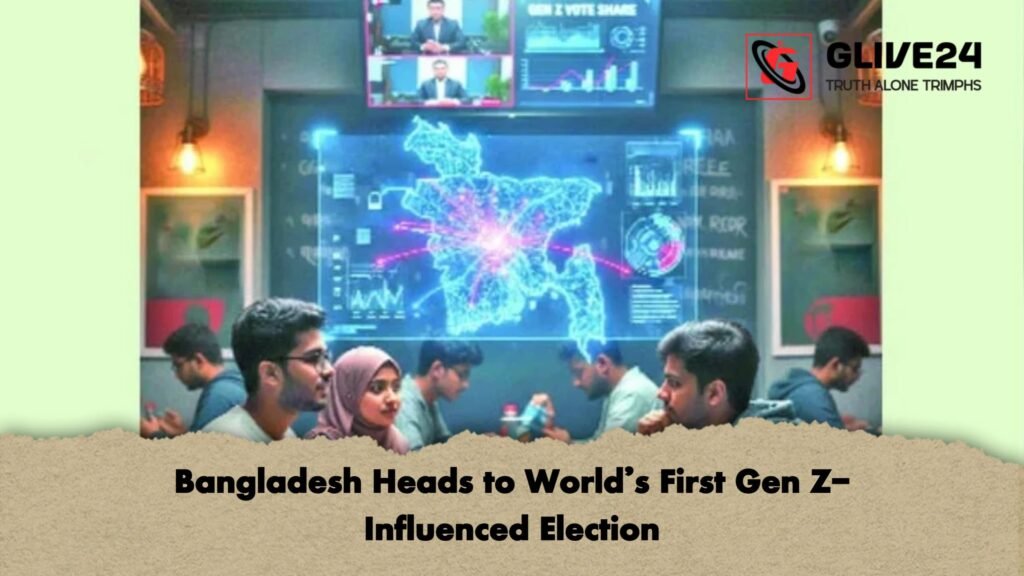
Following three electoral cycles marred by controversy, Bangladesh stands at a critical juncture for democratic restoration. The Thirteenth National Parliamentary Election is unprecedented, not only as the first truly competitive contest in years but also because it is being held concurrently with a national referendum. This dual exercise makes it the most distinct electoral event since the nation’s independence.
Table of Contents
A Tectonic Shift in Political Calculations
The “July Mass Uprising” of 2024 has fundamentally recalibrated the nation’s political arithmetic. Traditional power dynamics have been replaced by a more nuanced landscape where victory or defeat may no longer be determined by street-level fanfare, but by the “Silent Voter.” This group—comprised of the youth, women, and religious minorities—remains publicly unaligned, choosing instead to express their definitive will through the privacy of the ballot box.
Key Demographics of the Silent Majority
Political observers are focusing on four specific segments of the population whose decisions are currently shrouded in silence.
| Demographic Segment | Estimated Size | Primary Influence |
| Youth Voters | ~50 Million (Aged 18–35) | Favour “clean image” candidates and local development. |
| Female Voters | 62.88 Million | Roughly half the electorate; often politically unaffiliated at the grassroots level. |
| Minority Voters | 10 Million+ | Decisive in constituencies where they exceed 40% of the vote. |
| Unaligned Loyalists | Millions | Supporters of the former governing party who are currently without a ticket. |
The “Kingmaker” Generation
According to the Election Commission (EC), nearly five crore voters are between the ages of 18 and 35. This massive cohort is emerging as the ultimate “kingmaker.” These voters are increasingly detached from traditional partisan loyalties, prioritising a candidate’s personal integrity, “clean” reputation, and physical presence on the ground over historical party symbols.
The Mystery of the Disenfranchised
The Awami League, which dominated the political scene for fifteen years, is conspicuously absent from the ballot following the transition of power on 5 August 2024. With their top leadership either in custody or in exile, their vast grassroots base has retreated into a strategic silence. Despite official calls for a boycott, their supporters’ potential as “floating voters” has led other candidates to court them discreetly. In a tight race, the direction these silent votes take could easily tilt the scales.
Expert Analysis on the Outcome
Dr Abdul Alim, a former member of the Election System Reform Commission, suggests that the margins in this election will be razor-thin. “The silent voters, especially the youth, will be the decisive factor,” he noted. “In an environment where candidates are neck-and-neck, whichever individual manages to lean into the aspirations of these quiet demographics will likely emerge as the Member of Parliament.”