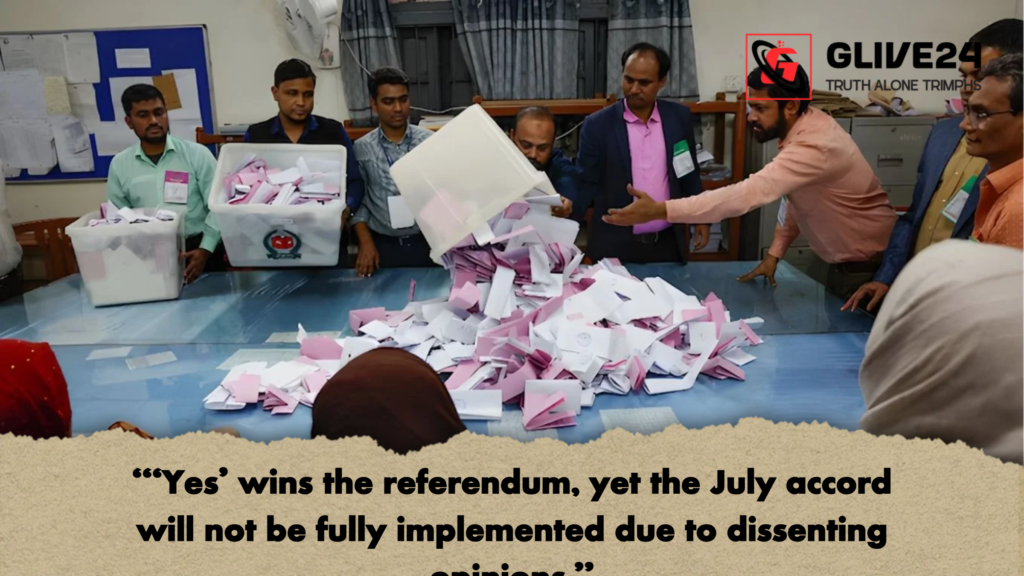
Despite the overwhelming “Yes” vote in the recent referendum, certain constitutional reform proposals under the July Charter will not be implemented due to dissent from political parties.
On 12 February, coinciding with the 13th national parliamentary elections, a nationwide referendum was held on the implementation of the July Charter. Out of 127.7 million registered voters, 77.7 million cast their ballots. With over 62 per cent voting in favour, the path to implement the July Charter reforms was formally opened.
Under the July National Charter (Constitutional Reform) Implementation Order, elected Members of Parliament will simultaneously serve on the Constitutional Reform Council. The council is mandated to complete reforms stipulated in the Charter within 180 working days from the first parliamentary session.
Scope of Proposed Reforms
The reform proposals were developed following extensive consultations between the reform commission and various political parties. A total of 84 proposals were included in the referendum, 47 of which were constitutional in nature. Several of these proposals, however, faced objections or “notes of dissent” from the Bangladesh Nationalist Party (BNP) and other parties.
Political analysts note that reforms without dissent are unlikely to face obstacles, particularly given BNP’s clear majority in over two-thirds of parliamentary seats in the recent elections. However, debate has already emerged around the formation of the upper chamber of the bicameral parliament. While the referendum specified proportional representation for the upper chamber, BNP’s election manifesto proposes formation based on seat count, creating potential conflict.
Monir Haider, special assistant to the Chief Adviser, told BBC Bangla, “BNP’s manifesto proposals were not directly presented to voters. By contrast, the question of proportional representation for the upper chamber was directly approved through the referendum.”
Referendum Outcome
| Vote Type | Number of Votes | Percentage |
|---|---|---|
| “Yes” | 48,074,429 | 61.9% |
| “No” | 22,565,627 | 29.1% |
| Abstain/Invalid | 7,059,944 | 9% |
| Total Votes | 77,700,000 | 100% |
The successful “Yes” vote cleared the primary hurdle for implementing constitutional reforms, including measures to balance power between the Prime Minister and the President, ensure independent appointments to key constitutional posts, limit the Prime Minister’s term to ten years, and separate party leadership from executive office. However, proposals where BNP lodged dissent, such as prohibiting the Prime Minister from simultaneously holding the party leadership, will remain unimplemented despite the referendum’s overall approval.
Next Steps
The next phase begins with the swearing-in of the newly elected MPs, who will simultaneously assume roles in the Constitutional Reform Council. Within 180 working days, the council is expected to enact reforms based on the July Charter and referendum outcomes.
Analysts predict that issues surrounding the upper chamber’s composition and certain contentious reforms will continue to spark political debate, even as the bulk of constitutional amendments proceed. The overarching aim remains to create a more balanced distribution of power across the executive, legislative, and judicial branches of government.