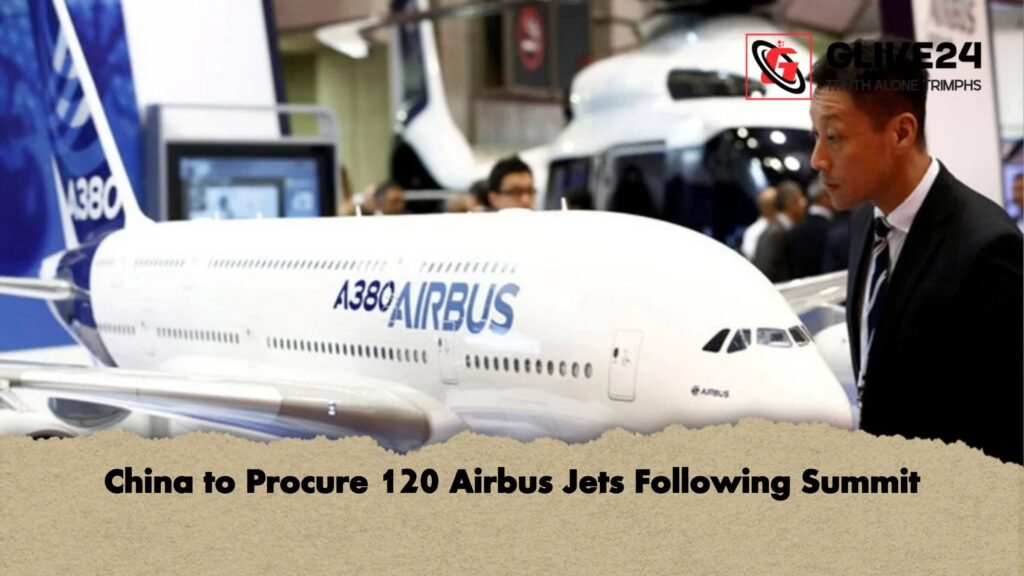
In a significant boon for the European aerospace industry, China has committed to purchasing approximately 120 additional aircraft from the aviation titan Airbus. The announcement was made by the German Chancellor, Friedrich Merz, following high-level bilateral discussions with Chinese President Xi Jinping in Beijing on Wednesday.
The deal underscores a deepening economic engagement between Europe’s largest economy and the Asian superpower, despite broader geopolitical tensions. Chancellor Merz, who assumed office in 2025, highlighted the agreement as a cornerstone of his inaugural state visit to China, framing it as a testament to the tangible rewards of direct diplomatic dialogue.
A Diplomatic and Industrial Milestone
Speaking to journalists shortly after the summit, Chancellor Merz confirmed the scale of the impending procurement. “China will place substantial orders for more Airbus aircraft. The total order will encompass up to 120 units,” Merz stated. He added that the agreement serves as “proof of just how productive such visits can be” for European manufacturing.
While the Chancellor refrained from specifying the exact mix of aircraft models—whether narrow-body jets like the A321neo or wide-body carriers such as the A350—industry analysts suggest the order is likely to support China’s rapidly recovering domestic and international flight sectors. Furthermore, Merz hinted that additional secondary agreements involving Airbus and Chinese state entities are currently “under negotiation.”
Airbus and the Chinese Market: A Snapshot
| Metric | Details |
| New Order Quantity | Up to 120 Aircraft |
| Estimated Timeline | Pending final contract signing |
| Key Negotiator | Chancellor Friedrich Merz |
| Strategic Significance | Strengthens Airbus’s market share over Boeing |
| Local Presence | Supported by Airbus Final Assembly Line (FAL) in Tianjin |
Shifting the Transatlantic Balance
The timing of the deal is particularly noteworthy as Airbus continues to outpace its American rival, Boeing, in the lucrative Chinese market. China’s aviation strategy has increasingly favoured the European consortium, influenced in part by ongoing trade friction with the United States and Boeing’s recent technical and regulatory setbacks.
By securing an order of this magnitude, Airbus solidifies its dominance in the region. The company already operates a massive final assembly line in Tianjin, which serves as a vital hub for delivering A320-family aircraft to Chinese and Asian-Pacific carriers.
Looking Ahead
While the financial valuation of the 120-jet deal remains undisclosed, a purchase of this scale would typically be valued in the billions of euros at list prices. For Chancellor Merz, the deal represents a successful balancing act: maintaining a robust trade relationship with Beijing while navigating the complexities of European Union foreign policy. As negotiations for the remaining “process-oriented” contracts continue, the aviation sector will be watching closely for the formal signing ceremony, which is expected to take place in the coming months.