
Khabor Wala Desk
Published: 27th February 2026, 4:55 PM
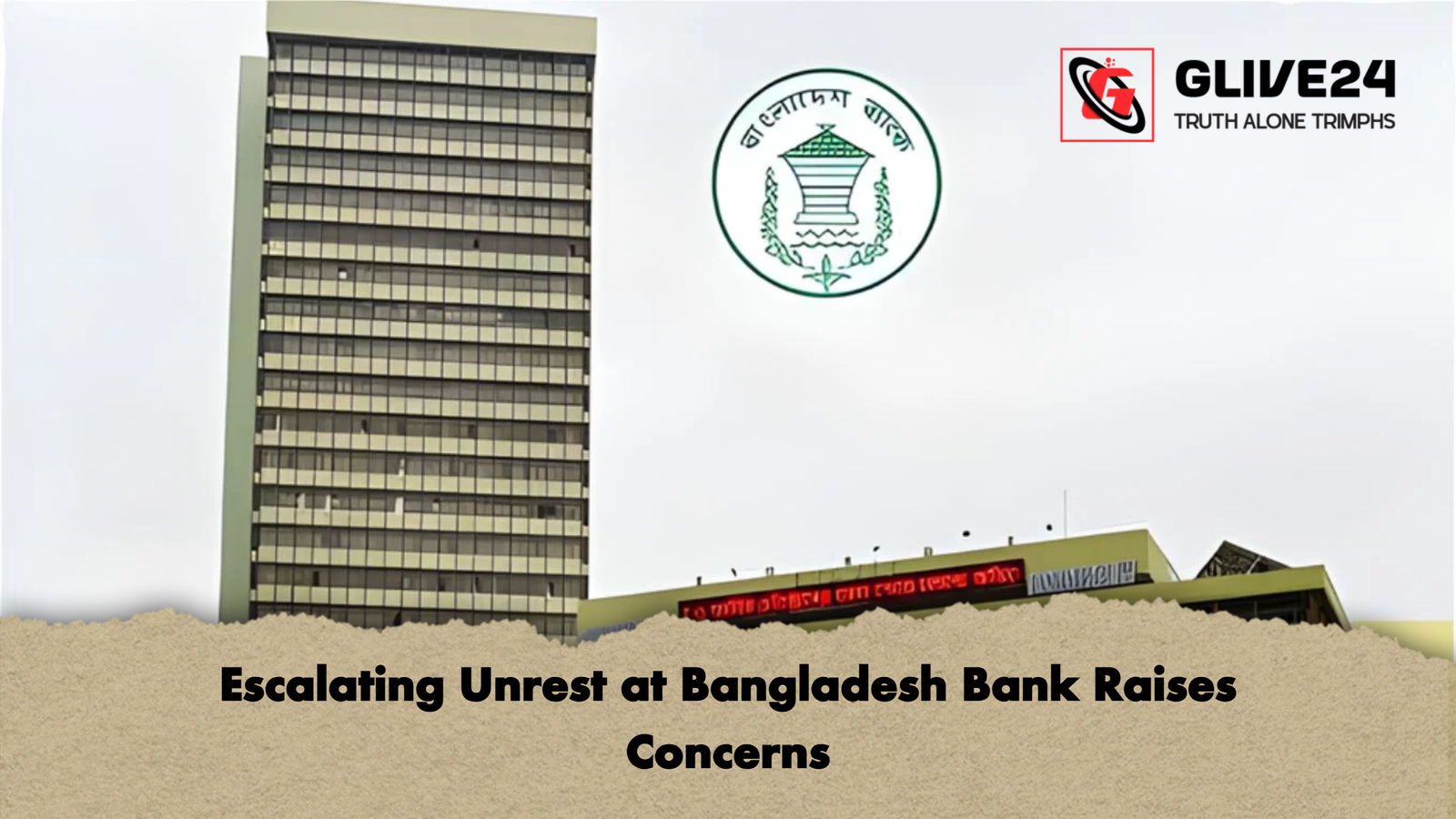
Long-standing internal unrest at Bangladesh Bank has intensified, with recent events marking a sharp escalation. Employees have repeatedly staged protests and created disorder within the central bank, but the latest incident drew widespread attention after Ahsan Ullah, an adviser to the governor, was publicly forced out of the premises. While internal disputes are not new to the institution, effective measures to curb such behaviour have consistently been absent. Analysts point to political patronage as the primary factor behind this persistent unrest.
On Wednesday, Touhidul Islam, an additional director, reportedly led a group attempting to forcibly remove Ahsan Ullah by taking him into a vehicle. This followed earlier rumours regarding a possible change in the governor’s position, which also prompted Ahsan H. Monsur to resign from the bank.
Bangladesh Bank is classified as a “Key Point Installation (KPI)” due to its strategic importance for public interest and national security. Globally, similar central banking institutions restrict gatherings and assemblies on their premises to maintain security. In line with these measures, since November, the bank has suspended certain public services, including the sale of savings certificates and prize bonds, as well as the exchange of torn or damaged notes. A statement from the bank explained: “As a KPI institution, these measures have been taken to prioritise security.”
Despite this, a segment of officials and employees has long been mobilising under the banner of associations and clubs, often engaging in protests and creating disturbances. Currently, there are nine recognised associations and clubs within the bank, each representing various employee groups and interests.
Bangladesh Bank Associations and Clubs
| Association / Club | Target Members | Election Frequency |
|---|---|---|
| Officers Welfare Council | Assistant directors and above | Annually / every two years |
| Officers Association | Cash officers | Annually / every two years |
| Bangladesh Bank Club | All employees | Annually / every two years |
| Yellow Faction | Politically affiliated officers | Participation in elections |
| Green Faction | BNP-supported officers | Participation in elections |
| Blue Faction | Awami League-supported officers | Participation in elections |
| Nationalist Forum | Various employees | Participation in elections |
| Bangabandhu Parishad | Politically affiliated officers | Participation in elections |
| Zia Parishad | Politically affiliated officers | Participation in elections |
The Yellow, Green, and Blue factions are predominantly politically aligned. The Blue faction supports the Awami League, the Green faction supports the BNP, while the Yellow faction represents a mix of political supporters. Members of these factions actively participate in the elections of the Officers Welfare Council, Officers Association, and Bangladesh Bank Club.
Experts warn that political influence and factional activity within the bank jeopardise both operational security and public service delivery. Without stronger administrative oversight and reinforced security protocols, unrest and internal harassment are likely to persist.
What began as an internal issue has now evolved into a matter affecting national economic stability and public confidence in the country’s central banking system.


Comments