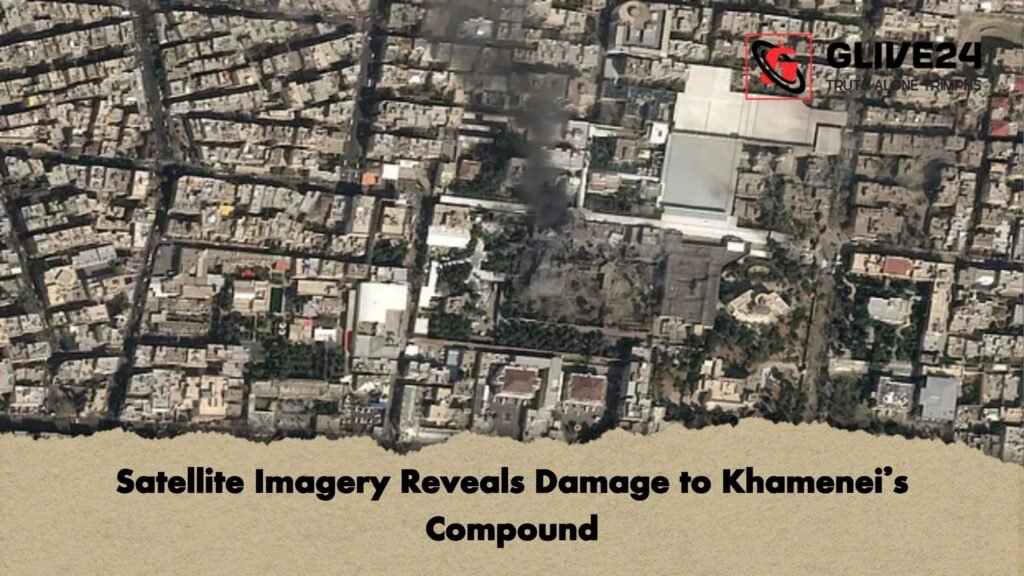
The geopolitical crisis in the Middle East reached a fever pitch on Saturday, 28 February 2026, as high-resolution satellite imagery confirmed a direct strike on the residential and administrative compound of Iran’s Supreme Leader, Ayatollah Ali Khamenei. The imagery, captured by Airbus and disseminated globally, shows significant structural damage and plumes of black smoke rising from the heavily fortified complex in central Tehran.
Table of Contents
A Nation Under Siege
The strike on the Supreme Leader’s compound was part of a broader, unprecedented military offensive conducted by a coalition of United States and Israeli forces. This coordinated aerial campaign targeted strategic assets across 20 different Iranian provinces simultaneously. While the capital faced high-precision strikes, the humanitarian toll in other regions has been catastrophic. In the southern province of Hormozgan, the semi-official Tasnim News Agency reported that a missile strike on a girls’ school in Minab has resulted in at least 85 fatalities, a figure that continues to climb as rescue efforts proceed.
Status of the Supreme Leader
The visual confirmation of damage to the Supreme Leader’s inner sanctum has ignited intense global speculation regarding his physical safety. Given the symbolic and political weight of the office, any harm to the Ayatollah would represent a tectonic shift in the regional power balance.
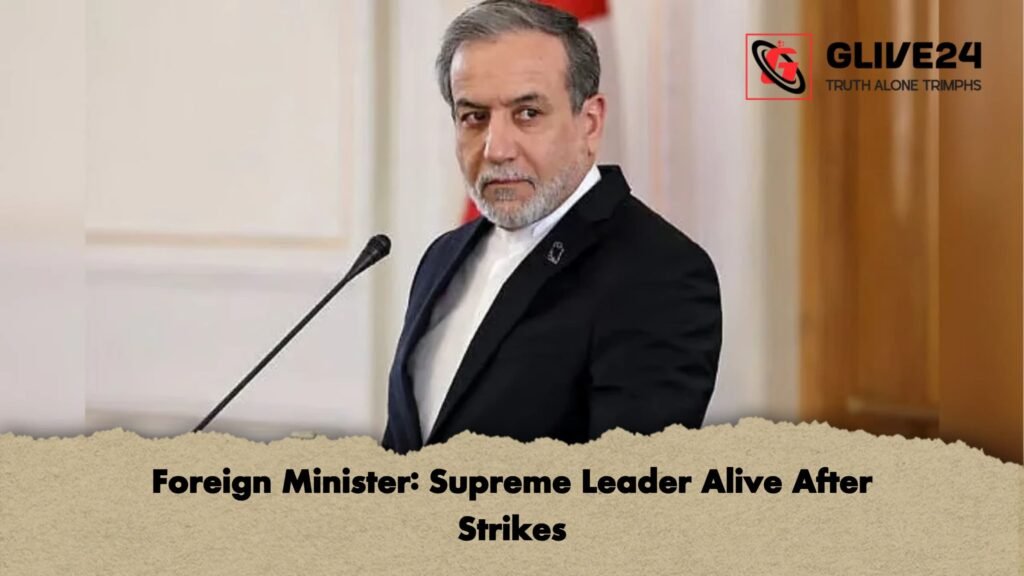
Seeking to quell the mounting rumours, Iranian Foreign Minister Abbas Araghchi addressed the situation in an exclusive interview with ABC News. “To the best of my knowledge,” Araghchi stated, “the Supreme Leader is alive.” However, the lack of a televised address or recent photographic proof from Tehran’s state media has left international observers and the Iranian public in a state of profound uncertainty.
Impact of the Multi-Province Offensive
The joint US-Israeli operation appears to have targeted both leadership hubs and critical infrastructure to cripple Iran’s retaliatory capacity.
| Province | Primary Target Type | Reported Impact / Casualties |
| Tehran | Leadership Compound (Khamenei) | Structural damage; heavy smoke observed |
| Hormozgan | Minab (Educational Facility) | 85 confirmed dead; catastrophic damage |
| Isfahan | Nuclear/Military Infrastructure | Strategic sites reportedly neutralised |
| Khuzestan | Oil & Energy Hubs | Significant disruption to production |
| Various | Air Defence Systems | Widespread suppression of radar units |
The Threshold of Total War
This incursion marks a departure from previous “grey zone” warfare, representing a direct challenge to the very heart of the Islamic Republic’s sovereignty. By targeting the Supreme Leader’s residence, the coalition has signalled that no individual or institution remains off-limits.
As the dust settles over Tehran, the international community remains on high alert for a potential “Doomsday” response from the Islamic Revolutionary Guard Corps (IRGC). With the fate of the Iranian leadership shrouded in ambiguity and civilian casualties mounting, the prospect of an immediate de-escalation seems increasingly remote.