
Khabor Wala Desk
Published: 2nd March 2026, 7:00 AM
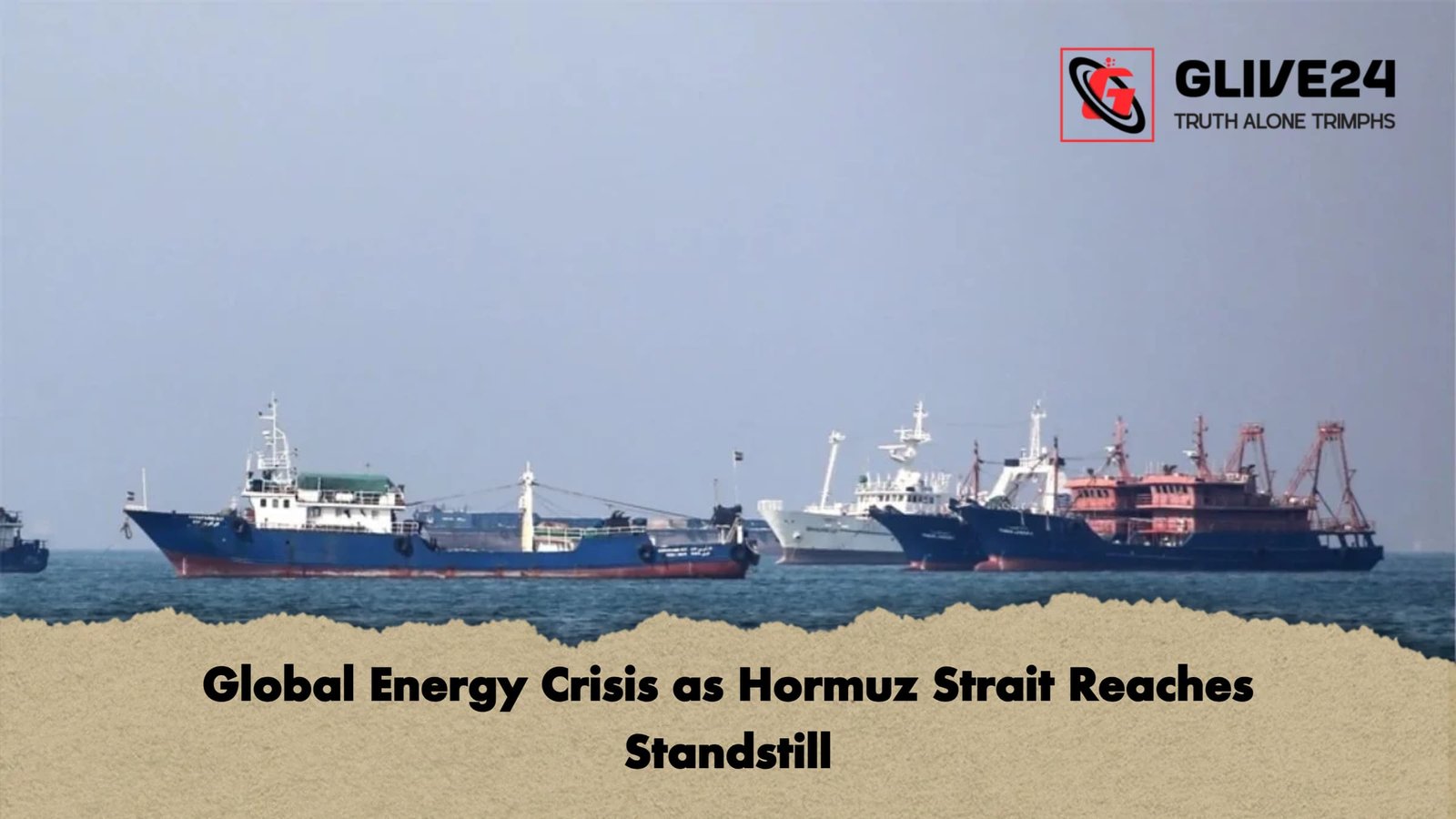
The geopolitical landscape of the Middle East has suffered a seismic shift following the joint US-Israeli strategic offensive against Iran. Beyond the immediate military fallout, the world now faces a dire economic threat: a total paralysis of the Strait of Hormuz. As of Monday, 2 March, this vital maritime artery—the world’s most significant energy chokepoint—is effectively blocked, leaving hundreds of vessels stranded and the global energy supply chain in a state of high-altitude turbulence.
Real-time satellite data from the ship-tracking platform MarineTraffic reveals a harrowing scene at the mouth of the Persian Gulf. Approximately 150 ultra-large crude carriers (ULCCs) and Liquefied Natural Gas (LNG) tankers are currently riding at anchor in the open sea, unable to navigate the narrow passage.
Industry analysts, speaking to Reuters, have described this unprecedented congestion as a “floating mountain of oil.” With Iran declaring the waterway a closed military zone in retaliation for the strikes, shipping giants have been forced to halt operations. Most vessels belonging to major energy firms from Saudi Arabia, Iraq, and Qatar are now maintaining a cautious distance, idling in deeper waters to avoid becoming collateral damage in the burgeoning kinetic conflict.
The Strait of Hormuz is the jugular vein of the global economy. The sheer volume of energy that transitions through this 21-mile-wide passage is staggering, making any disruption a matter of international security.
Table: Global Energy Dependency on the Strait of Hormuz
| Metric | Daily Volume / Global Share | Economic Impact of Blockage |
| Crude Oil Transit | ~21 Million Barrels Per Day | Immediate 15-20% price surge. |
| Global Oil Supply | 20% of Total World Demand | Threat of hyper-inflation in transport. |
| Global LNG Supply | 25% of Total World Demand | Risk of power outages in Europe/Asia. |
| Vessels Stranded | 150+ Large Tankers | Daily demurrage costs in millions. |
| Primary Exporters Affected | Saudi Arabia, UAE, Qatar, Kuwait | Massive sovereign revenue loss. |
The suspension of transit has sent shockwaves through the commodities trading floors in London and New York. With a significant portion of the world’s daily oil requirement currently sitting idle, experts predict that Brent crude could comfortably eclipse $100 per barrel by the end of the week.
Major trading houses have issued “force majeure” notices, warning that contractual obligations for energy delivery may not be met. This crisis transcends the petrol pump; it threatens to derail global industrial manufacturing, spike electricity costs across the EU and Asia, and ignite a fresh wave of global inflation that could stifle post-pandemic economic recovery.
As the “Axis of Resistance” continues to trade fire with the US-Israeli alliance, the Strait of Hormuz remains the ultimate economic lever. The world now watches with bated breath to see if diplomacy can reopen the gates, or if the global economy will be the next casualty of war.



Comments