
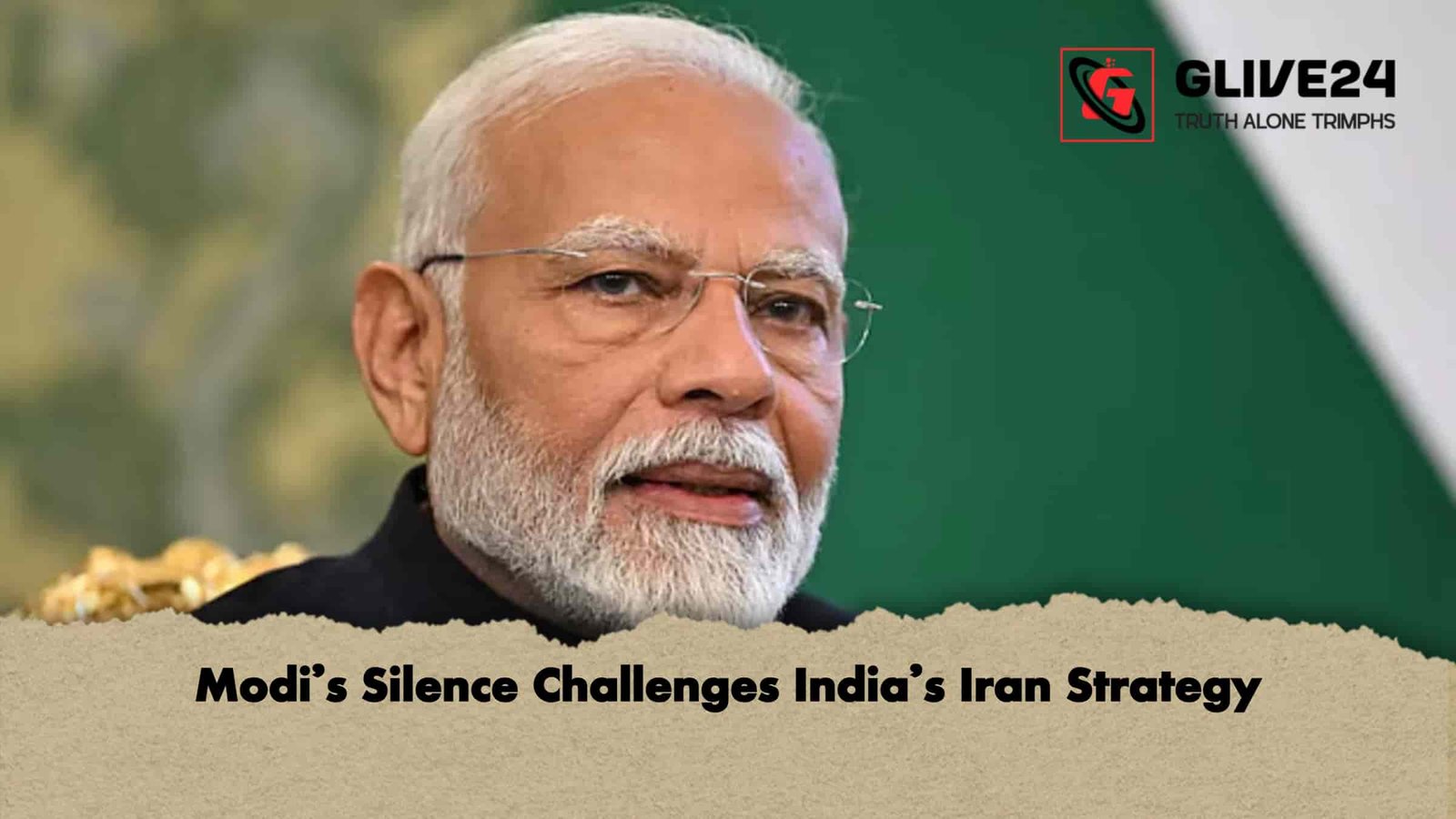
The recent escalation of tensions in Iran, compounded by United States and Israeli military activities, has placed India’s diplomatic stance under intense scrutiny. Amid this volatile backdrop, Prime Minister Narendra Modi’s apparent silence has drawn particular attention. Following the death of Iran’s Supreme Leader Ayatollah Ali Khamenei, neither the Prime Minister nor any official representative has issued a formal statement of condolence, prompting criticism from opposition parties and sections of public opinion.
Analysts have questioned whether Modi’s restraint reflects India’s strategic alignment with the United States and Israel. In a brief statement during a joint press conference with Canadian Prime Minister Mark Carney, three days after attacks in Iran, Modi limited his remarks to:
“The situation in West Asia is a matter of serious concern for India. We hope that all disputes will be resolved through dialogue and diplomatic channels.”
Beyond this, he offered no further comment.
Modi’s recent visit to Israel has also come under scrutiny. Speaking in the Israeli parliament amid election fervour, his cautious stance has raised questions about India’s position in light of potential military action in Iran. Balancing domestic political pressures with the complexities of international diplomacy has emerged as a significant challenge for New Delhi.
Opposition leaders have voiced strong reactions. Congress spokesperson Jairam Ramesh observed on social media that while the United States and Israel could strike Iran at any moment, Modi continued with his Israel visit. Priyanka Gandhi described any assassination campaign as morally unacceptable and inconsistent with India’s ethical standing. The Aam Aadmi Party echoed concerns about the Prime Minister’s silence and the safety of Indian citizens abroad.
Sources from the Ministry of External Affairs emphasised:
“This requires extremely sensitive coordination. India cannot openly support any side. Careful and restrained diplomacy remains the only effective approach.”
Following Khamenei’s death, mourning rallies and protests have occurred across multiple states. Left-leaning regions such as Kerala, Karnataka, Telangana, and parts of Kashmir saw schools and colleges closed, and internet services limited to maintain order. Major public gatherings were reported in Madhya Pradesh, Uttar Pradesh, and Punjab.
The table below summarises the situation across key states:
| State | City/Area | Situation & Mourning | Administrative Measures |
|---|---|---|---|
| Kerala | Thiruvananthapuram | Left-led mourning procession | Police supervision |
| Karnataka | Bengaluru | Mourning assemblies | Security monitoring |
| Telangana | Hyderabad | Processions and mass gatherings | Enhanced security |
| Kashmir | Shia-majority areas | Street mourning, two-day closures | Internet restricted, schools closed |
| Madhya Pradesh | Bhopal | Large mourning assembly | Administrative oversight |
| Uttar Pradesh | Lucknow | High attendance in gatherings | Peacekeeping supervision |
| Punjab | Ludhiana | Extensive mourning assemblies | Police supervision |
These events underline the sensitivity of India’s position in West Asian geopolitics. With the United States and Israel on one side, and Iran and other Arab states on the other, India faces the dual challenge of protecting its strategic interests while maintaining ethical and diplomatic credibility on the global stage.