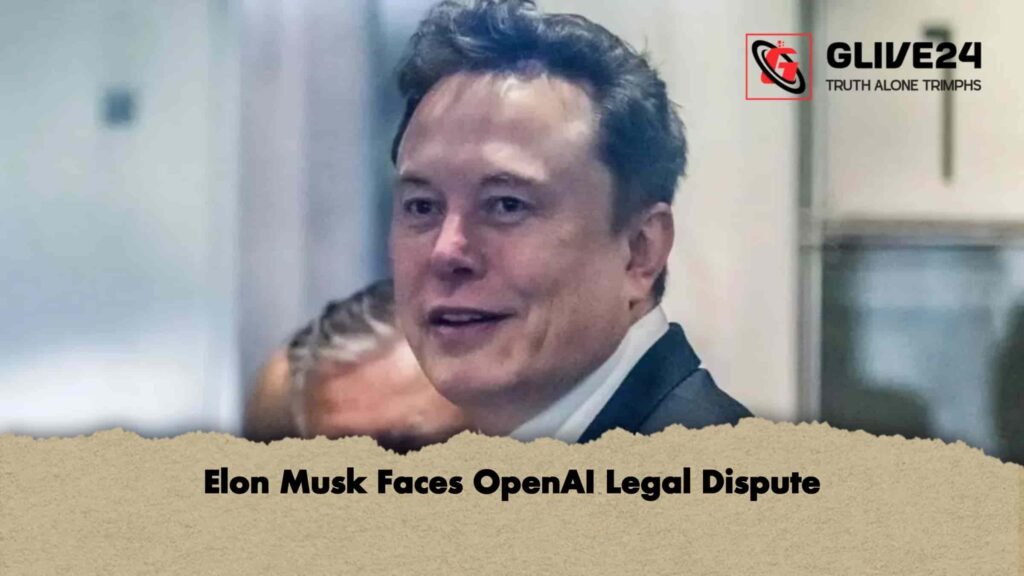
A courtroom dispute concerning artificial intelligence company OpenAI has intensified in California, where testimony involving Elon Musk and legal representatives of the organisation led to a tense exchange during the second day of proceedings. The case, being heard in Oakland, is regarded as potentially significant for the future governance and commercial structure of advanced artificial intelligence firms.
Mr Musk is providing evidence in a lawsuit that centres on allegations he has brought against OpenAI and its chief executive, Sam Altman. He claims that the organisation, initially established in 2015 as a non-profit research body, later shifted its operational model towards profit-making activity, departing from its founding principles.
In court, Mr Musk argued that it is not feasible for a single organisation to retain the benefits and public perception of a charitable institution while simultaneously operating with commercial profit motives. He stated that such an arrangement creates an inherent conflict between stated purpose and financial structure.
OpenAI’s legal counsel, Bill Savitt, challenged this account, disputing the assertion that Mr Musk consistently supported the organisation remaining non-profit in structure. During cross-examination, exchanges between both sides became notably contentious, prompting the judge to intervene and instruct participants to maintain decorum.
The proceedings also examined Mr Musk’s financial involvement with OpenAI. He previously pledged around US$1 billion in funding to the organisation. However, in his testimony, he confirmed that this commitment was not fully fulfilled. He stated that concerns regarding the direction of the organisation influenced his decision to withhold the remaining funds, though he did contribute approximately US$38 million.
OpenAI was founded as a non-profit entity focused on artificial intelligence research and safety. Over time, it transitioned into a hybrid structure with increasing commercial orientation. In October, the organisation completed a major restructuring process, further aligning its operational framework with a profit-driven model, while retaining a non-profit foundation with oversight responsibilities. The company has also recently secured substantial external investment, reported at approximately US$122 billion in a major funding round.
Mr Musk is seeking a court order to prevent OpenAI from fully converting into a profit-oriented company. He is also pursuing damages estimated at US$134 billion against OpenAI and its significant investor Microsoft, alleging that the organisation’s evolution represents a departure from its original mission.
OpenAI, however, maintains that Mr Musk voluntarily left its governing structure and was unable to gain the level of influence over decision-making that he sought. The company also disputes his account of funding commitments, stating that promised financial contributions were not fully delivered.
During his testimony, Mr Musk stated that his involvement in OpenAI extended beyond financial pledges, including advisory input, professional networks, and strategic guidance during its early development. The judge, however, directed him to provide more direct responses during questioning.
Mr Musk stepped down from OpenAI’s board in 2018. In 2023, he founded a competing artificial intelligence company, xAI, which operates under a profit-oriented structure from its inception.
Key Issues in the Case
| Issue | Elon Musk’s position | OpenAI’s position |
|---|---|---|
| Organisational change | Departure from non-profit mission | Necessary evolution of structure |
| Funding pledge | Partial payment due to concerns | Commitment not fully honoured |
| Governance role | Dispute over organisational direction | Musk exited voluntarily |
| Damages claim | US$134 billion sought | Claim contested |
The case remains ongoing and is expected to further examine questions surrounding corporate governance, funding obligations, and the evolving nature of artificial intelligence institutions.